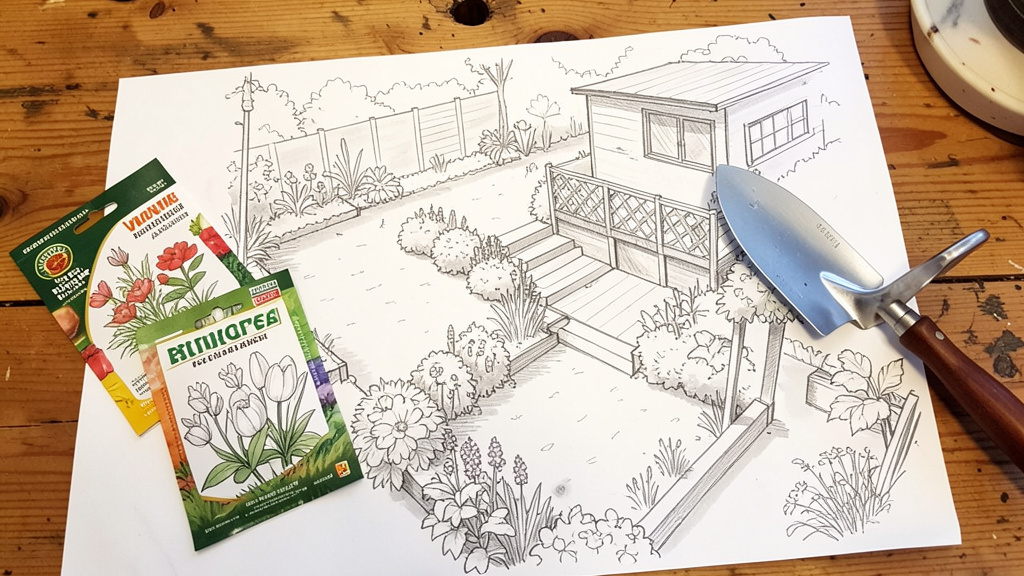
Stop dreaming and start building—this practical framework turns overwhelming blank slates into personalized, thriving gardens with confidence and clarity.
Imagine stepping into your backyard at golden hour, the air fragrant with lavender and damp earth, the gentle sound of water trickling from a stone fountain, pathways inviting exploration past vibrant flower clusters and secluded seating nooks. This experience isn’t reserved for estates with professional crews. Right now, regardless of your space’s size, shape, or current condition—from a compact urban patio to a half-acre suburban lot overgrown with weeds—you hold the potential to cultivate profound beauty and function. This comprehensive garden design system guides you through every phase with meticulous, actionable steps grounded in timeless landscape principles and ecological wisdom. No prior experience required; just follow the sequence, adapt to your unique context, and witness transformation unfold at nature’s pace.
Introduction
Gardens are living architecture. Unlike static rooms indoors, they breathe, shift with seasons, respond to weather, and evolve over years. This dynamism is their magic—and their greatest design challenge. Too often, enthusiasm leads to scattered efforts: planting impulsively at the nursery, installing hardscape without considering drainage, or choosing plants that clash with local climate realities. The result? Frustration, wasted resources, and spaces that feel disjointed rather than harmonious. This system synthesizes widely recognized landscape architecture methodologies, horticultural science, and human-centered design principles into a repeatable, scalable workflow. It respects that your garden must serve you—your lifestyle, your sensory preferences, your available time—while nurturing the ecosystem it inhabits. Whether you have 100 square feet of balcony or two acres of rural land, this framework adapts. We begin not with shovels or seeds, but with observation. True design emerges from deep listening to the land itself and honest reflection on your intentions. This isn’t about replicating idealized images; it’s about cultivating a space that feels authentically yours, resilient through seasons, and deeply satisfying to inhabit. Let’s lay the first stone.
The Garden Blueprint Framework: Four Phases to Paradise
Forget vague inspiration boards. Sustainable garden design follows a logical sequence where each phase builds intentionally on the last. Skipping steps often leads to rework. Rushing assessment may contribute to plant stress. Ignoring maintenance realities can lead to neglect. This four-phase framework—Foundation & Assessment, Vision & Design, Implementation & Build, Growth & Evolution—creates momentum while preventing overwhelm. Think of it as your project’s nervous system: interconnected, purposeful, and adaptable. You’ll move linearly through Phases 1–3, then cycle continuously through Phase 4 as your garden matures. Within each phase, concrete steps transform abstract goals into tangible actions. Bookmark this structure; return to it whenever uncertainty arises. Clarity compounds with each completed step.
Phase 1: Foundation & Assessment
Before a single seed is sown or stone laid, mastery begins with understanding. This phase transforms guesswork into informed strategy. Spend 7–14 days observing your space with fresh eyes. Carry a notebook. Take photos at different times of day. Feel the soil. Listen to the wind. This isn’t passive waiting—it’s active intelligence gathering. The insights you gather here help avoid many common garden challenges.
Step 1.1: Conduct a Comprehensive Site Inventory
Walk your entire property slowly, multiple times. Document everything, even elements you plan to remove. Create a simple sketch map (graph paper helps) noting boundaries, existing structures (house, shed, fences), utilities (hose bibs, electrical outlets, septic lines—call 811 before digging anywhere), and mature trees. Then layer in environmental factors:
- Sun Exposure Mapping: Track sunlight hourly for 2–3 days. Label zones: Full Sun (6+ hours direct sun), Partial Sun/Partial Shade (3–6 hours), Full Shade (<3 hours). Note seasonal shifts—deciduous trees create summer shade but winter sun. A south-facing wall in the Northern Hemisphere (north-facing in Southern) often creates a warmer microclimate suitable for less cold-hardy plants.
- Wind Patterns: Stand still at different spots. Feel direction and intensity. Is there a consistent breeze? A harsh winter wind tunnel between structures? Wind influences plant selection (wind-tolerant vs. sheltered species) and placement of seating areas.
- Water Flow & Drainage: After rainfall, observe where water pools, flows rapidly, or disappears quickly. Low spots may indicate drainage challenges; soil remaining soggy after 24 hours could affect root health. Note natural slopes—water follows gravity. This informs grading considerations, rain garden placement, or drainage solutions.
- Soil Assessment (Beyond the Bag): Dig 5–6 small holes (12″ deep) across your site. Examine texture: squeeze a damp handful. Does it form a tight ball (clay)? Crumble instantly (sand)? Hold shape loosely then break (loam—often ideal)? Note color (darker tones may indicate organic matter), smell (earthy = healthy; sour = possible compaction), and visible life (earthworms often signal biological activity). For detailed guidance, contact your local cooperative extension service. Many offer affordable soil testing with tailored amendment suggestions.
- Existing Vegetation Audit: Catalog every plant. Note health, size, seasonal interest. Is that mature tree a cherished feature or creating significant shade? Are there aggressive species requiring management? Preserve healthy mature trees—they provide structure, habitat, and cooling benefits no new planting replicates quickly.
Why this step is crucial: Plants respond to specific environmental conditions. Placing a sun-loving plant in deep shade greatly increases the risk of poor performance. Understanding drainage patterns supports healthier root systems. This inventory establishes your site’s unique parameters—essential guides for thoughtful choices.
Common mistake to avoid: Assuming uniform conditions across your entire yard. Microclimates exist within small spaces—a sheltered corner near the house may stay noticeably warmer than an exposed edge. Map meticulously.
Illustrative example: A gardener with a narrow backyard discovered the area beneath a mature maple received only dappled light. Instead of struggling with sun-loving plants there, they designed a shade-tolerant garden with hostas, ferns, and coral bells—creating a peaceful retreat that thrived in existing conditions.
Budget-friendly approach: No graph paper? Trace property lines from a printed satellite image. Use colored pencils: yellow for sun zones, blue for shade, green for existing plants. Digital option: Free apps like Sun Surveyor can help visualize sun paths.
Step 1.2: Define Your Human-Centered Needs & Constraints
A garden serves people first. Be honest about how you’ll actually use the space—not how you wish you would. Discuss with all household members. Consider:
- Functional Needs: “What must this space DO?” (e.g., “Grow vegetables for two,” “Provide safe play space,” “Host small gatherings,” “Offer a quiet morning coffee spot,” “Ensure dry access from garage”).
- Lifestyle Realities: “How much time can I realistically spend weekly on maintenance?” (Be specific: 20 minutes? 90 minutes?). “Who will participate?” “Do I enjoy hands-on tasks, or prefer lower-maintenance options?” “Any physical considerations?” (e.g., raised beds for reduced bending).
- Sensory & Emotional Goals: “What feelings should this space evoke?” (Calm? Energizing? Nostalgic?). “Which senses matter most?” (Fragrance? Bird activity? Rustling grasses? Color palettes?). “Any elements to avoid?” (e.g., “Minimal thorny plants near seating”).
- Budget & Timeline: Establish realistic parameters. Total project budget? Phased approach? (e.g., “Year 1: Hardscape; Year 2: Planting”). Include often-overlooked costs: soil amendments, tools, irrigation components, potential replacements. Track expenses consistently.
- Non-Negotiables: “What absolutely must remain or be included?” (e.g., “Preserve the mature apple tree,” “Retain existing patio footprint,” “Include space for composting”).
Why this step is crucial: Aligning design with actual use prevents beautiful-but-unused spaces. A high-maintenance design may become burdensome if time is limited. A vast lawn may feel empty if the household prefers intimate gathering spots.
Common mistake to avoid: Designing for an idealized future routine rather than present reality. Starting modestly—a well-tended 10×10 ft area often brings more satisfaction than an overwhelming larger project.
Illustrative example: A household wanting “low-maintenance” gardening but enjoying fresh-cut flowers created a dedicated 4×8 ft raised bed near the kitchen for easy-care zinnias and sunflowers—fulfilling their joy without creating unsustainable upkeep.
Streamlined approach: If overwhelmed, begin with one sentence: “My garden must provide __ for _ within ___ minutes of weekly care.” This anchors future decisions.
Step 1.3: Analyze Context & Regulations
Look beyond your property line. What surrounds your space? A busy street may suggest sound-buffering plantings or privacy screening. A neighbor’s tall structure creates shade patterns. Local wildlife (deer, rabbits) influences plant selection or protective strategies. Crucially, verify local requirements:
– Setbacks: Minimum distances for structures (sheds, patios) from property lines.
– Height Restrictions: For fences, walls, or trellises.
– Tree Preservation: Some municipalities protect specific species or mature trees.
– Water Guidelines: Especially relevant in regions with seasonal restrictions. Water-wise principles may be beneficial everywhere.
– HOA Guidelines: If applicable, review written rules before designing to avoid redesigns later.
Why this step is crucial: Awareness of context supports harmonious integration with your surroundings and avoids potential conflicts. Working with your environment fosters resilience.
Common mistake to avoid: Assuming neighboring properties share identical growing conditions. Soil composition, drainage, and microclimates can vary noticeably even between adjacent lots. Trust your own site observations.
Observational principle: Notice nature’s clues. Where does moss grow naturally (suggesting consistent moisture/shade)? Where do birds frequently gather? These patterns reveal your site’s inherent character. Honor them.
The Fundamental Principle: A garden thoughtfully aligned with human experience and ecological context tends to offer greater long-term satisfaction and resilience than one focused solely on visual aesthetics. Beauty often emerges from harmony—not imposition.
Phase 2: Vision & Design
Armed with insights from Phase 1, shift from observer to creator. This phase translates needs into a cohesive visual and functional plan. Resist jumping straight to plant lists. First, establish the “bones” of your garden—the permanent framework providing year-round structure. Think of designing the stage before selecting the performers.
Step 2.1: Establish Design Style & Mood Board
Style is less about rigid labels (“English cottage,” “Japanese Zen”) and more about a cohesive language of materials, forms, and feelings. Gather inspiration intentionally:
– Curate Purposefully: Save only images resonating with your Phase 1 answers. Does a photo spark genuine joy for you? Does it address your specific needs? Discard generic “pretty garden” shots lacking personal relevance.
– Identify Recurring Elements: Review saved images. What repeats? (e.g., “gently curved pathways,” “warm-toned local stone,” “predominantly green foliage with white accents”). These become your style anchors.
– Define Your Palette:
– Hardscape Palette: Select 1–2 primary materials (e.g., locally sourced stone + reclaimed brick). Limiting variety often enhances visual cohesion.
– Plant Color Palette: Choose a dominant scheme. Analogous (neighbors on color wheel: blues/purples/pinks) feels harmonious. Complementary (opposites: purple/yellow) creates vibrancy. Monochromatic (shades of green + white) feels serene. Include foliage colors (silver, burgundy, gold)—they provide structure when blooms fade.
– Texture Palette: Blend fine (ornamental grasses), medium (shrub roses), and bold (hostas, cannas) textures for visual depth.
Why this step is crucial: A unified palette creates perceived spaciousness and sophistication, even in compact areas. Random material or color choices can feel disjointed.
Common mistake to avoid: Attempting exact replication of a single photo. Adapt elements to suit your site conditions, climate, and needs. Translate the feeling, not the specifics.
Illustrative example: A gardener drawn to Mediterranean courtyard simplicity—but living in a colder climate—adapted the aesthetic using regionally appropriate plants: silver artemisia for foliage texture, gray river rock paths, and cold-hardy dwarf conifers for structure. The mood translated; the plants thrived locally.
Local insight: Visit public gardens or established neighborhoods in your area. Photograph styles using materials native to your region—they’re often more accessible and ecologically suitable.
Step 2.2: Create Functional Zoning & Flow
Divide your space into purpose-driven “rooms,” even in modest yards. Zones prevent functional conflict (e.g., play area overlapping quiet seating). Use the “Bubble Diagram” method:
1. On your site sketch, draw loose circles (“bubbles”) representing each need from Phase 1.2 (e.g., “Dining Area,” “Vegetable Patch,” “Shade Lounge,” “Compost”).
2. Size bubbles proportionally to importance/space required.
3. Arrange bubbles considering:
– Proximity: Place high-use zones (kitchen herb garden) near relevant house entrances.
– Privacy: Position quiet zones away from street noise or neighbor sightlines.
– Sun/Shade Alignment: Match vegetable patch to full-sun zones; reading nook to desired shade.
– Flow: Ensure logical pathways between zones. Avoid routing foot traffic through planting beds.
4. Refine bubbles into rough shapes matching your property’s geometry. Add connecting pathways.
Why this step is crucial: Clear zoning enhances intuitive usability. People naturally gravitate toward well-defined spaces. It also simplifies phased implementation—you can develop one “room” per season.
Common mistake to avoid: Over-zoning a small space. In areas under 500 sq ft, 2–3 zones max (e.g., “Seating + Dining,” “Planting Beds,” “Pathway”). Too many zones can feel cramped.
Illustrative example: A gardener with a compact urban backyard transformed a single undifferentiated space by creating a compact “Dining Nook” (bistro table against the house), a “Mini Orchard” (dwarf fruit trees in corners), and a “Pathway Garden” (narrow beds along the walkway to the shed). Each zone felt intentional and functional.
Accessibility consideration: Ensure main pathways are at least 36″ wide for comfortable passage. Use firm, non-slip surfaces (decomposed granite, pavers). Incorporate gentle slopes instead of steps where feasible.
Step 2.3: Draft the Hardscape Layout
Hardscape = non-living structural elements: paths, patios, walls, fences, decks, water features. This forms your garden’s skeleton. Draft on tracing paper over your bubble diagram:
– Pathways: Define width (main paths: 4–5 ft for two people; secondary: 2–3 ft). Gentle curves often feel more inviting than straight lines and encourage slower movement. Material considerations:
– Gravel: Affordable, permeable, rustic feel. Requires edging to contain.
– Pavers/Stone: Durable, elegant. Higher initial investment.
– Mulch: Soft underfoot, ideal for woodland settings. Needs periodic replenishment.
– Grass Stepping Stones: Charming, but requires mowing between stones.
– Patios/Decks: Size based on furniture needs + circulation space (add ~3 ft around seating). Position for desired sun exposure (morning sun patio vs. afternoon shade patio). Anchor visually with a focal point (fire pit, sculpture, specimen plant).
– Walls/Fences: Define boundaries, create privacy, or form raised beds. Consider height (6 ft blocks views; 3 ft defines space without enclosure). Material blending: wood fence with stone base; living willow panels.
– Water Features: Even small elements add sensory dimension. A wall-mounted copper bowl with recirculating pump offers sound and wildlife appeal. Position where sound carries to seating areas.
– Vertical Space: Utilize walls, fences, arbors! Install trellises for climbers (clematis, jasmine), hanging baskets, or vertical planters to maximize small areas.
Why this step is crucial: Hardscape is relatively permanent. Thoughtful layout upfront prevents costly changes later. It also defines planting bed shapes—organic curves feel natural; geometric shapes feel contemporary.
Common mistake to avoid: Designing patios disproportionately large for actual use. They can dominate visually and reduce planting area. Scale to verified needs: a 10×10 ft patio comfortably accommodates 6–8 people.
Illustrative example: A gardener initially planned a patio covering 40% of the yard. After scaling back to 25% and adding curved planting beds around it, the space felt lush, intimate, and balanced.
Sustainability consideration: Choose permeable materials (gravel, spaced pavers) for paths/patios to support rainwater infiltration. Source locally quarried stone when possible to reduce transportation impact.
Step 2.4: Develop the Planting Plan
Strategy precedes selection. Plants are living elements with specific needs and lifespans. Layer them thoughtfully for resilience and year-round interest:
- The Layering Framework (Apply to every bed):
- Canopy Layer: Existing or new small trees (dogwood, redbud, Japanese maple). Provide structure, shade, seasonal change.
- Understory Layer: Large shrubs (hydrangea, viburnum, serviceberry). Fill mid-height space, offer flowers/berries.
- Shrub Layer: Medium/small shrubs (spirea, boxwood alternatives, rose of Sharon). Define edges, provide evergreen structure where desired.
- Herbaceous Layer: Perennials, ornamental grasses, bulbs. Provide seasonal color, texture, movement.
- Groundcover Layer: Low plants (creeping thyme, ajuga, pachysandra). Suppress weeds, prevent erosion, unify space.
-
Vertical Layer: Climbers on structures (clematis on arbor, honeysuckle on fence). Add height without footprint.
-
Plant Selection Protocol:
- Right Plant, Right Place: Cross-reference your site inventory (sun, soil, drainage) with plant requirements. Verify light needs match your specific spot.
- Climate Zone Awareness: Know your regional hardiness zone (USDA, RHS, or local equivalent). This informs perennial survival likelihood. Verify zone suitability via plant tags or reputable horticultural resources (Missouri Botanical Garden, RHS).
- Native Plant Consideration: Prioritize regionally native plants where possible. They often support local pollinators, require less supplemental water once established, and show natural resistance to regional pests. Example: In Midwest US regions, coneflowers (Echinacea) are well-adapted natives.
- Seasonal Succession: Plan for interest across seasons. Spring: bulbs (daffodils), early shrubs (azaleas). Summer: perennials (daylilies, coreopsis). Fall: asters, sedum, ornamental grasses. Winter: structural evergreens, berry-producing shrubs (winterberry holly), interesting bark (paperbark maple).
- Grouping Strategy: Plant drifts of odd numbers (3, 5, 7) of the same perennial. Creates rhythm, feels natural, amplifies visual impact.
- Foliage Foundation: Select plants with appealing leaves (color, shape, texture). Flowers are seasonal; foliage provides lasting structure. Example: Heuchera (coral bells) offers varied leaf colors throughout the growing season.
Why this step is crucial: Layering mimics natural ecosystems, potentially reducing maintenance needs while increasing biodiversity and visual depth. Random placement can appear chaotic.
Common mistake to avoid: Purchasing plants without checking mature size. A “small” shrub may reach 8 ft wide—leading to future crowding. Always note expected mature dimensions.
Illustrative example: A gardener planted a single rose bush with minimal impact. Later, they added groups of purple coneflowers and ornamental grasses around it. The layered grouping created a vibrant, pollinator-friendly focal point with extended seasonal interest.
Phased approach: Begin with structural plants (trees, shrubs)—they form the long-term framework. Fill herbaceous layers gradually over 2–3 seasons using divisions, seed starting, or end-of-season nursery opportunities. Prioritize perennials for lasting value.
Step 2.5: Integrate Systems Thoughtfully
Plan infrastructure before planting to avoid disturbing established beds:
– Irrigation: Drip irrigation delivers water efficiently to root zones, minimizing evaporation and foliar disease risk. Zone systems by water needs (e.g., vegetable bed on separate timer from drought-tolerant plantings). Install main lines during hardscape phase. Important: Include a manual shut-off valve at the source.
– Lighting: Low-voltage LED path lights (solar or wired) enhance safety and extend evening enjoyment. Uplight specimen plants; downlight from eaves for ambient glow. Position fixtures during hardscape installation to conceal wiring.
– Storage: Designate a discreet location for tools, hoses, compost bins. A slim cabinet against a fence or bench with hidden storage maintains visual calm.
– Wildlife Support: Add a shallow birdbath (with stones for perching), a small brush pile in a quiet corner, or a bee hotel. Minimizing pesticide use supports beneficial insects that help regulate pest populations.
Why this step is crucial: Integrated systems function seamlessly. Retrofitting irrigation after planting risks root disturbance. Thoughtful lighting placement enhances ambiance and safety.
Common mistake to avoid: Over-illumination. Gardens benefit from areas of darkness for ambiance and wildlife. Use subtle, targeted lighting—highlight a path edge or a sculptural plant, rather than flooding the entire space.
Adaptable solution: Limited irrigation budget? Design plantings grouped by water needs (hydrozoning). Select drought-tolerant species (lavender, sedum, ornamental grasses). Water deeply but infrequently to encourage deep root growth. Apply 2–3″ of mulch to conserve soil moisture.
Phase 3: Implementation & Build
Theory meets earth. This phase benefits from patience and logical sequencing. Rushing can lead to soil compaction, plant stress, or structural issues. Follow this order—it’s designed for efficiency and plant health.
Step 3.1: Prepare the Canvas (Site Prep)
- Clear Debris: Remove trash, dead branches, invasive weeds. Avoid tilling the entire area—this can bring dormant weed seeds to the surface and disrupt soil structure.
- Manage Persistent Weeds: For tough weeds (bindweed, quackgrass), solarization (covering with clear plastic during hot months) may help. For immediate prep, careful spot removal or smothering with cardboard + mulch are options.
- Grade for Drainage: Ensure soil slopes away from house foundations (a gentle slope of ~2″ over 10 ft is often recommended). Fill low spots with topsoil/compost mix; dig shallow swales to redirect water flow if needed.
- Amend Soil In Place: Based on soil observations or test results:
- Clay-Prone Soil: Incorporate 3–4″ of compost. Gypsum may be considered per product guidelines for heavy clay. Avoid adding sand alone—it can worsen compaction.
- Sandy Soil: Incorporate 3–4″ of compost + coconut coir to improve moisture retention.
- All Soils: Top-dress existing beds with 1–2″ of compost annually—earthworms and microbes gradually incorporate it.
- Install Major Hardscape First: Patios, retaining walls, large pathways. This minimizes foot traffic over prepared planting areas later. Compact base layers thoroughly (use a hand tamper) to prevent settling.
Why this step is crucial: Healthy soil supports plant establishment. Proper grading helps protect your home’s foundation. Sequencing avoids unnecessary re-digging.
Common mistake to avoid: Using landscape fabric under mulch in planting beds. It can impede water penetration, hinder plant spreading, and become problematic when weeds grow on top. Thick mulch (2–3″) alone is often effective for weed suppression in beds. Fabric may be suitable only under gravel paths.
Illustrative example: After amending heavy clay soil with compost, a gardener observed new perennials established more readily, required less frequent watering, and showed fewer stress symptoms compared to unamended areas.
Safety reminder: Wear gloves, eye protection, and knee pads. Lift with legs, not back. Work during cooler parts of the day in warm weather. Stay hydrated.
Step 3.2: Install Hardscape Elements
Follow manufacturer guidelines carefully. Key considerations:
– Patios/Paths: Excavate 6–8″ deep. Layer: 4″ compacted gravel base, 1″ sand leveling layer, then pavers/stones. Sweep polymeric sand into joints to lock stones and discourage weeds. Tip: Lay a small test section first to verify pattern and spacing.
– Retaining Walls: For walls over 18″ tall, consult a professional. Use interlocking blocks with geogrid reinforcement where specified. Include drainage provisions (weep holes) behind the wall to prevent water pressure buildup.
– Fences/Walls: Set posts below local frost depth (verify with building department). Ensure posts are plumb. For wind resistance, consider staggered board placement on solid fences.
– Water Features: Level the basin carefully. Conceal pump and tubing with stones. Aquatic plants (like water lilies) can help maintain water quality.
Why this step is crucial: Proper installation supports longevity and safety. A poorly constructed wall poses risks; uneven pavers create tripping hazards.
Common mistake to avoid: Skipping the gravel base under patios. Soil shifts with moisture changes, causing pavers to settle unevenly. The base layer is essential for stability.
Resourceful sourcing: Check local reuse centers (like Habitat for Humanity ReStores), online marketplaces for salvaged materials, or ethically sourced fieldstone from your property (if permitted).
Tool efficiency: Rent heavy equipment (plate compactor, trencher) for short periods—it’s often more economical than purchasing and significantly reduces labor.
Step 3.3: Execute the Planting Plan
Timing supports success. Plant trees/shrubs in early spring or fall when temperatures are mild and rainfall is often more consistent. Perennials can be planted from spring through early fall. Avoid planting during extreme heat or drought.
- Planting Protocol (Supporting Establishment):
- Hydrate plants in their containers 1 hour before planting.
- Dig hole 2–3x wider than root ball, but no deeper. Planting too deep can suffocate roots.
- Loosen roots gently if pot-bound (circling roots). Tease apart with fingers or make shallow vertical cuts.
- Position plant so the top of the root ball is level with (or slightly above) surrounding soil.
- Backfill with native soil mixed with up to 30% compost. Avoid adding concentrated fertilizer directly to the planting hole.
- Water thoroughly to settle soil and eliminate air pockets.
- Apply 2–3″ mulch in a “donut” shape—keep mulch 2–3″ away from stems/trunks to prevent moisture-related issues.
-
Stake only if necessary (e.g., tall tree in a windy location). Use flexible ties; remove after one growing season.
-
Planting Sequence:
- Install largest elements first: trees, large shrubs.
- Then medium shrubs and structural perennials.
- Finally, fill in with smaller perennials, bulbs, groundcovers.
-
Exception: Plant bulbs before perennials in fall—they are placed deepest.
-
Plant Selection Considerations (Adapt to Your Region):
| Plant Type | Purpose | Sun Needs | Water Needs | Cold-Hardy Examples | Heat-Tolerant Examples |
|——————|——————|—————-|————-|—————————|—————————|
| Small Tree | Structure, Shade | Full/Part Sun | Moderate | Japanese Maple, Dogwood | Crape Myrtle (warm zones) |
| Large Shrub | Privacy, Berries | Full/Part Sun | Moderate | Viburnum, Serviceberry | Oleander (warm zones) |
| Perennial | Seasonal Color | Varies | Low-Mod | Coneflower, Sedum | Lantana, Salvia |
| Ornamental Grass| Movement, Texture| Full Sun | Low | Maiden Grass, Feather Reed| Blue Grama, Muhly Grass |
| Groundcover | Weed Suppression | Shade/Sun | Low | Ajuga, Pachysandra | Liriope, Asian Jasmine |
Why this step is crucial: Correct planting technique significantly influences long-term plant health. Proper depth and spacing prevent future issues.
Common mistake to avoid: “Volcano mulching”—piling mulch high against trunks. This traps moisture against bark, potentially inviting pests or disease. Keep mulch flat and away from stems.
Illustrative example: A gardener planted a hydrangea too deeply. It showed signs of stress for two seasons. After carefully lifting and replanting at the correct depth, it recovered and bloomed abundantly the following year.
Watering guidance: New plants need consistent moisture during establishment (first growing season). Water deeply 2–3 times per week (adjusting for weather), allowing soil to dry slightly between waterings. Deep watering encourages deep roots; frequent shallow watering promotes weak surface roots. Use a moisture meter or the finger test (soil should feel damp 1–2″ down).
Step 3.4: Install Systems & Final Touches
- Irrigation: Lay drip lines or soaker hoses before final mulch application. Connect to timer. Test thoroughly—check for leaks, clogs, coverage gaps. Adjust emitters to target plant bases.
- Lighting: Install fixtures along paths, near steps, highlighting focal points. Bury low-voltage cables 2–3″ deep. Test before covering wires.
- Mulch Application: Apply final 2–3″ layer of organic mulch (shredded bark, wood chips) over all beds. Benefits: suppresses weeds, conserves moisture, moderates soil temperature, enriches soil as it decomposes. Replenish annually as needed.
- Add Finishing Elements: Place garden art, birdbath, or bench. Install weatherproof plant labels. Set up compost system.
- Final Clean-Up: Remove all construction debris, plastic tags, twine. A tidy finish invites enjoyment and care.
Why this step is crucial: Correctly installed systems operate efficiently for years. Final touches transform functional space into a personal sanctuary.
Common mistake to avoid: Applying excessive mulch. More than 3″ can impede oxygen and water movement to roots. Maintain the “donut” shape around plant bases.
Documentation tip: Take “after” photos from the exact spots you took “before” photos. Visual progress is motivating.
Sustainability note: Consider solar-powered lights where feasible. Rain barrels connected to downspouts collect chlorine-free water beneficial for plants and reduce municipal water use.
Phase 4: Growth & Evolution
Your garden is now planted—but the relationship has just begun. Gardens are dynamic partnerships. This phase focuses on mindful stewardship, observation, and graceful adaptation. Embrace the journey.
Step 4.1: Establish a Maintenance Rhythm
Create a simple, realistic schedule aligned with your Phase 1.2 time commitment. Break tasks into manageable actions:
- Daily (2–5 mins): Quick scan for obvious issues (broken branch, pest activity). Deadhead spent flowers on high-impact plants. Simply be in the space—sit with coffee, listen. Connection sustains commitment.
- Weekly (15–30 mins): Water if needed. Remove emerging weeds (easier when small). Check irrigation function. Harvest vegetables/herbs.
- Monthly (Seasonal Focus):
- Spring: Apply slow-release organic fertilizer if soil test indicates need. Divide overcrowded perennials. Prune spring-flowering shrubs after bloom.
- Summer: Monitor for pests/disease. Stake tall perennials before they flop. Refresh mulch if faded.
- Fall: Cut back perennials after frost (leave some seed heads for birds). Plant spring bulbs. Apply compost top-dressing. Clean and store hoses/tools.
- Winter: Review garden journal. Plan next season. Order seeds. Maintain bird feeders. Prune deciduous trees/shrubs while dormant (verify species-specific timing).
- Yearly: Re-test soil every few years. Review journal notes—what worked? What might shift?
Why this step is crucial: Consistent micro-maintenance prevents overwhelming tasks. It builds intimate knowledge of your garden’s unique rhythms.
Common mistake to avoid: Over-fertilizing. Excess nutrients can harm plants and local waterways. Follow soil test recommendations or use modest amounts of balanced organic amendments.
Illustrative example: A gardener committed to “15 minutes every Saturday morning.” In that time, they weeded one bed, deadheaded flowers, and checked irrigation. Their garden remained vibrant without weekend burnout.
Tool care: Store tools clean and dry. Visible, organized storage reduces friction to starting tasks. Keep a small “go-bag” with gloves, pruners, trowel by the door.
Step 4.2: Observe, Adapt, and Evolve
Keep a garden journal (digital or notebook). Record:
– Planting dates, varieties
– Bloom times, wildlife visitors
– Weather notes (late frost, dry spell)
– Successes (“The coneflowers attracted multiple butterfly species!”)
– Challenges (“The hostas in Zone 3 received more sun than expected—consider shade-tolerant alternatives next season”)
This isn’t busywork—it’s data for intelligent evolution. Gardens teach humility. A plant may struggle despite careful planning. A volunteer seedling may become a cherished feature. Adapt:
– Edit Thoughtfully: Remove plants that consistently underperform, clash visually, or demand unsustainable care. Share healthy divisions with neighbors or community gardens.
– Welcome Volunteers: Allow self-seeding plants (like columbine or California poppy) to naturalize in appropriate spots—they create effortless beauty.
– Seasonal Refreshes: Add a few new plants each year to maintain interest. Try one “experiment” plant outside your usual choices.
– Celebrate Micro-Seasons: Notice subtle shifts: first crocus, peak hydrangea bloom, fall color on a single branch. This deepens appreciation beyond peak bloom times.
Why this step is crucial: Gardens reflect life—imperfect, changing, resilient. Forcing rigid control creates stress. Working with natural processes fosters peace and learning.
Common mistake to avoid: Comparing your first-year garden to a decades-old show garden. Growth takes time. Celebrate small wins: “The lavender survived winter!” “Bees visited the new salvia!”
Reflective practice: Many gardeners find that journaling enhances their connection to the space and informs better decisions over time. Your journal becomes a personalized reference.
Mindset shift: View certain “weeds” as soil indicators. Dandelions may suggest compacted soil; chickweed often indicates rich, moist conditions. Address underlying conditions where possible.
Step 4.3: Deepen Ecological Integration
As your garden matures, enhance its role in the local ecosystem:
– Pollinator Support: Include host plants for caterpillars (milkweed for monarchs, parsley for swallowtails). Plant diverse native flowers blooming across seasons (asters, goldenrod). Leave some bare soil patches for ground-nesting bees.
– Soil Life Support: Minimize synthetic pesticides/herbicides—they can harm beneficial insects and soil organisms. Use targeted, least-toxic options (like insecticidal soap) only for significant issues. Add compost annually to nourish soil life.
– Water Wisdom: Install a rain garden in a low spot to capture runoff—plant with moisture-loving natives (iris, joe-pye weed). Use swales to slow and spread water across slopes.
– Wildlife Habitat: Leave seed heads standing through winter for birds. Create a “bug hotel” with bamboo canes, pinecones, and drilled logs. Add a shallow water source with stones for insects.
Why this step is crucial: Healthy gardens support biodiversity, which contributes to natural pest regulation and soil enrichment. You become a steward within a larger ecological context.
Common mistake to avoid: Striving for a sterile, perfectly manicured space. A few aphids support ladybugs; fallen leaves shelter beneficial beetles. Aim for balance, not absolute control.
Illustrative impact: After adding native milkweed and coneflowers, a gardener observed monarch caterpillars utilizing the plants—a rewarding sign of positive ecological contribution.
Community connection: Share surplus produce or plant divisions. Participate in seed swaps. Your garden can strengthen neighborhood bonds and shared knowledge.
Navigating Common Garden Design Challenges
Even with a solid system, friction arises. These solutions address real-world hurdles with empathy and practicality.
“I Have Zero Design Experience—Where Do I Start?”
Start smaller than you think. Choose one micro-zone: the 3×3 ft patch by your back door. Apply Phase 1 only to that spot. Map its sun, test its soil. Define one need: “A spot for my morning coffee mug.” Then Phase 2: Choose one container, one plant suited to the conditions (a dwarf hydrangea for shade; lavender for sun). Implement. Maintain. Success here builds confidence to expand. Remember: Every experienced gardener began with one plant. Your first attempt doesn’t need to be perfect—it needs to be started.
“My Budget Is Extremely Limited”
Gardens thrive on time and creativity, not just money. Prioritize low-cost actions:
– Build soil wealth: Start a compost system with kitchen scraps and yard waste. In 6–12 months, you’ll have nutrient-rich amendment.
– Propagate generously: Divide established perennials in spring/fall (hostas, daylilies, sedum). Share divisions; trade for new varieties.
– Seed starting: Grow annuals (zinnias, marigolds) and easy perennials (coneflowers) from seed indoors. Very low cost per plant.
– Resourceful sourcing: Use broken concrete (“urbanite”) for rustic paths. Repurpose household items as plant stands. Check community sharing groups.
– Phased approach: Year 1: Define one zone with mulch and 3 plants. Year 2: Add pathway. Year 3: Expand planting. Progress compounds.
Key insight: A thoughtfully maintained small space often feels more valuable than a neglected large one. Focus on the quality of your experience.
“Deer/Rabbits/Gophers Are a Concern”
Work with wildlife thoughtfully:
– Deer: Prioritize plants with strong scents, fuzzy leaves, or known deer resistance (lavender, rosemary, salvia, daffodils). Motion-activated sprinklers may deter browsing. Temporary netting can protect new plantings.
– Rabbits: Surround vegetable beds with chicken wire buried slightly underground. Plant rabbit-resistant herbs (mint, thyme) as border plants.
– Gophers/Moles: Protect individual plants with wire baskets in planting holes. Encourage natural predators (owls—consider a nesting box; snakes). For persistent issues, consult local extension resources on humane management.
Perspective: Some plant loss is part of gardening in shared landscapes. Focus protection efforts on high-value plants; allow volunteers to fill gaps. Resilience matters more than perfection.
“I Rent—Can I Still Create a Meaningful Garden?”
Absolutely. Focus on portable, non-permanent solutions:
– Containers are your foundation: Use pots of varying heights/sizes. Group in odd numbers. Select plants suited to container life (dwarf varieties, herbs, annuals).
– Vertical space: Hang baskets on balcony rails. Install removable trellises (suction cup or tension rod) for climbing beans or sweet peas.
– Temporary ground cover: Lay cardboard topped with 4–6″ of bagged soil/compost mix for a “no-dig” raised bed on patios or grass. Remove cleanly when moving.
– Fast-growing annuals: Sunflowers, zinnias, nasturtiums provide vibrant color within one season. Save seeds to take with you.
– Document your care: Take photos. Your temporary garden enhances the space for current enjoyment and future tenants.
Empowerment note: Many landlords appreciate tenants who thoughtfully enhance outdoor areas. Propose low-impact improvements—they may approve.
“My Soil Is Challenging (Rocky/Clay/Sandy)”
Soil isn’t “bad”—it’s a starting point. Amend strategically:
– Rocky soil: Build raised beds (12–18″ deep) filled with quality topsoil/compost mix. Ideal for vegetables and shallow-rooted plants.
– Heavy clay: Focus on drainage. Plant on slight mounds. Choose clay-tolerant natives: switchgrass, coneflower, black-eyed Susan, serviceberry. Amend gradually with compost over successive seasons.
– Sandy soil: Boost water retention. Mix compost deeply. Choose drought-tolerant plants: lavender, sedum, yarrow, Russian sage. Mulch generously.
Encouraging truth: No soil is hopeless. Challenging sites often yield deeply rewarding gardens because you learn intimately what thrives there. Celebrate plants that flourish in your unique conditions.
“I Feel Overwhelmed by Information Online”
Curate your inputs intentionally:
– Limit sources: Choose 2–3 trusted, regionally relevant resources (e.g., your local cooperative extension website, a regional gardening book). Unfollow accounts causing anxiety.
– Ask “Is this relevant to my zone/soil?” before applying advice. What works in one climate may not suit yours.
– Trust your site inventory. Your observations are highly relevant. If your shady spot stays moist, plant accordingly—even if a generic blog suggests otherwise.
– Connect locally: Join a community garden or gardening club. Neighbors offer hyper-relevant advice based on shared conditions.
Permission granted: You don’t need to know everything. Master one technique per season. Gardening is a lifelong journey of learning—embrace the curiosity.
Your Questions, Answered
Q: How do I choose between native plants and non-natives?
A: Prioritize regionally native plants for their ecological benefits and adaptation to local conditions—they often require less water and support native wildlife. Incorporate non-natives selectively for specific purposes (e.g., a cherished heirloom vegetable), ensuring they are not invasive in your area. Consult resources like the Lady Bird Johnson Wildflower Center (US) or your local native plant society. A balanced approach: use natives as the backbone, with carefully chosen non-natives for personal connection.
Q: What’s a common beginner challenge to anticipate?
A: Planting too densely. Enthusiasm can lead to overcrowding (plants compete for light, water, nutrients) and future maintenance burdens. Start with 30–50% of your planned plants. Leave space for growth and future additions. A well-spaced Year 1 garden that establishes strongly builds more confidence than an overcrowded one that struggles. Patience is a valuable design tool.
Q: How do I design for year-round interest in a cold climate?
A: Shift focus toward structural elements. Evergreen shrubs (juniper, holly alternatives), trees with interesting bark (paperbark maple, river birch), ornamental grasses left standing through winter (providing texture and bird habitat), and intentional hardscape (stone walls, sculptural forms) create visual interest. Include winter-blooming plants like witch hazel or hellebores where hardy. Embrace snow as a design element—it highlights forms beautifully.
Q: Can vegetables integrate gracefully into an ornamental garden?
A: Yes—this is “edible landscaping.” Integrate thoughtfully:
– Select attractive varieties (purple basil, rainbow chard, blue potatoes).
– Plant in well-defined raised beds with clean lines near the house.
– Use herbs (rosemary, thyme) as ornamental edging—they’re functional and beautiful.
– Train vining crops (cucumbers, pole beans) on decorative trellises.
– Position fruit trees as focal points.
Key: intentional placement and consistent maintenance—keep beds tidy and plants supported. Edibles add dynamic seasonal change and sensory delight.
Q: How often should I water new plants?
A: There’s no universal schedule—it depends on soil type, weather, plant species, and season. Use the finger test: Insert finger 1–2″ into soil near the plant base. If dry, water deeply until moisture penetrates the root zone. If damp, wait. In hot/windy weather, check daily; in cool/rainy weather, check less frequently. After 4–6 weeks, as roots establish, water less often but more deeply to encourage deep rooting. Observe plant cues: slight wilting late in the day may be normal; persistent wilting at dawn suggests underwatering.
Q: What if my garden design “feels off” after planting?
A: This is common. Gardens need time to settle and grow into their design. Wait one full growing season before making major changes. Often, plants fill in and relationships improve. If imbalance persists:
– Too busy? Remove 1–2 plants causing visual clutter.
– Too sparse? Add a drift of 3–5 of the same perennial.
– Color clash? Edit one plant at a time next season.
Take photos from different angles—sometimes perspective or lighting affects perception. Trust the process; gardens evolve.
Q: How can I make a small space feel larger?
A: Use design techniques:
– Curved pathways slow movement and suggest continuation.
– Strategic mirrors (weatherproof!) reflect light and create depth—place discreetly among foliage.
– Vertical planting draws eyes upward (trellises, wall planters).
– Monochromatic color scheme (shades of green + white) can recede visually.
– Limit focal points to one per view—too many compete.
– Maintain clean edges—neat borders enhance perceived space.
Celebrate small gardens for their intimacy—a strength to embrace.
Q: Are raised beds essential for vegetable gardening?
A: Not essential, but highly beneficial for many. Advantages:
– Control soil quality (critical if native soil is poor or contaminated).
– Improved drainage.
– Reduced bending (build higher for accessibility).
– Warmer soil in spring (earlier planting).
– Clear boundaries (less encroachment from lawn).
For in-ground planting: amend soil deeply, use defined edges (stone, brick), and install efficient irrigation. Success depends more on soil preparation, sun exposure, and consistent care than bed style alone.
Q: How do I navigate garden design differences with family members?
A: Foster collaboration. Hold a simple “design session”:
1. Each person shares their top 2–3 non-negotiable needs.
2. Listen openly without judgment.
3. Identify overlaps (“We both want a morning coffee spot”).
4. Compromise on zones: “You design the vegetable area; I design the flower border.”
5. Start with a shared small project (a container garden) to build trust.
Remember: The garden serves your household. Inclusion nurtures shared ownership and joy.
Q: What’s a sustainable mulch choice?
A: Prioritize locally sourced, organic materials that decompose and enrich soil:
– Excellent: Shredded native bark or wood chips (often available free from tree services—specify “no black walnut” if sensitive to juglone).
– Great: Straw (for vegetable beds), pine needles (for acid-loving plants), leaf mold (shredded fallen leaves).
– Avoid: Dyed mulches (unknown additives), rubber mulch (doesn’t decompose, potential toxins), plastic sheeting (blocks soil life).
Apply 2–3 inches deep. Replenish annually as it breaks down—this continuously feeds your soil.
Conclusion and Your Next Step
You now hold a complete, actionable system—not just isolated tips, but a cohesive philosophy. Garden design is less about achieving perfect aesthetics and more about cultivating relationship: with the land beneath your feet, the rhythms of nature, and your own evolving needs. The four-phase framework transforms overwhelm into clarity. Foundation & Assessment grounds you in reality. Vision & Design ignites purposeful creativity. Implementation & Build builds tangible progress. Growth & Evolution embraces the beautiful, imperfect journey. Remember the core insight woven throughout: The most fulfilling gardens are not necessarily the most elaborate, but those thoughtfully aligned with their unique context and caretaker. They reflect patience, observation, and respect—for soil, for seasons, for self.
Recap: Your Three Anchors
- Begin with observation, not action. Your site inventory is your compass. Honor sun patterns, soil conditions, and human needs before selecting a single plant.
- Design the bones first. Hardscape, zoning, and plant layering create enduring structure. Flowers provide seasonal delight; the framework ensures lasting harmony.
- Embrace evolution. Your garden will change. You will change. Edit with kindness. Celebrate small wins. Keep the journal. This is a partnership, not a one-time project.
The 24-Hour Rule
Within the next 24 hours, take five minutes to complete this single action: Stand in your garden space at sunrise or sunset. Close your eyes. Breathe deeply. Notice one detail you hadn’t before—the way light filters through leaves, the sound of wind in a specific spot, the texture of the soil underfoot. Open your eyes. Write that observation in a notebook or phone note. This tiny act shifts you from spectator to participant. It activates your designer’s eye. It is the first seed of transformation. Do not skip this. Momentum begins with mindful presence.
The Big Picture
Your garden is more than a plot of land. It is a sanctuary for your spirit, a classroom for curiosity, a contribution to local ecology, and a legacy of care. In a world of haste, it teaches slowness. In a culture of consumption, it cultivates creation. Every seed planted, every path laid, every moment of quiet observation ripples outward—nourishing pollinators, cooling the air, feeding your body, calming your mind. You are not just designing a garden; you are cultivating resilience, beauty, and connection. Start where you are. Use what you have. Do what you can. The earth is ready for your partnership. Begin.
Explore Our Complete System:
The Beginner’s Guide to Soil Testing and Amendment | 10 Low-Maintenance Perennials for Year-Round Interest | How to Create a Water-Wise Garden: Xeriscaping Principles | Budget Breakdown: Realistic Costs of DIY Garden Design | Seasonal Garden Maintenance Calendar: Month-by-Month Tasks | Designing Wildlife Habitats: A Step-by-Step Guide for Backyard Biodiversity | Container Gardening Mastery: From Balcony to Bounty