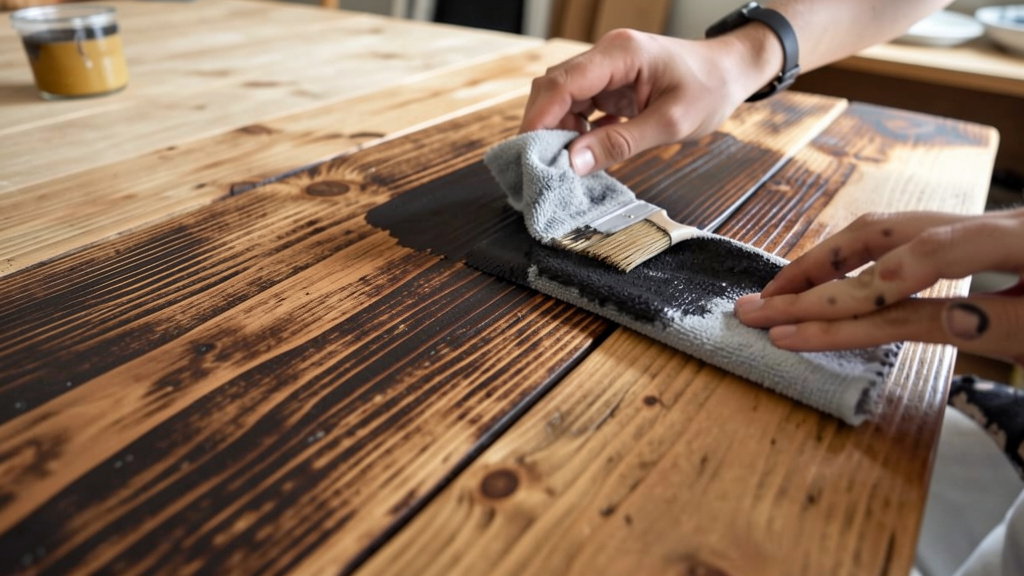
Restore Your Wood Surfaces with Precision—Learn the Exact Methods to Repair, Match, and Protect Without Starting Over
That faint scratch on your heirloom dining table. The white ring left by a sweating glass on your coffee table. The dark stain from a spilled beverage on your hardwood floor. These moments trigger a familiar concern: Is this permanent? Do I need to refinish the entire piece? Wood finish damage exists on a vast spectrum—from barely visible surface abrasions to deep-set stains that challenge restoration efforts. This comprehensive guide transforms uncertainty into actionable knowledge. We’ll walk you through diagnosing every type of scratch, stain, and blemish on finished wood surfaces, then provide meticulously detailed, step-by-step repair techniques tailored to the specific damage level, wood type, and existing finish. Preserve the character of cherished pieces, extend the functional life of your furnishings, and gain practical skills to address future incidents with informed confidence. No more hiding damage under rugs or coasters—reclaim the beauty of your wood using methods aligned with conservation principles and adaptable to home workshop capabilities.
Introduction: Why Most Wood Repair Attempts Fail (And How to Succeed)
Wood remains dynamically responsive long after milling. It expands, contracts, and carries the visual history of its environment through subtle marks and patina. A finish—whether polyurethane, lacquer, oil, or wax—functions as a protective barrier engineered to shield this organic material from moisture, UV exposure, abrasion, and chemical interaction. When that barrier is compromised, the common impulse is to address the visible symptom without assessing the underlying structure of the damage. This approach frequently leads to unintended consequences. Applying dark stain to a light scratch on a medium-toned surface often creates greater contrast. Aggressive sanding to remove a water ring typically removes surrounding finish, creating a visible depression. Using steel wool on modern catalyzed finishes may embed particles that later oxidize.
Successful wood finish repair rests on three foundational pillars: Accurate Diagnosis, Minimal Intervention, and Finish Compatibility. This guide synthesizes diagnostic frameworks and repair protocols observed across professional conservation practice, adapted for accessibility using widely available tools and materials. The methodology prioritizes preserving original material whenever feasible—a principle consistently emphasized in conservation literature, which notes that “the least interventive treatment is often the most appropriate.” Begin not with tools, but with observation. Before any physical action, learn to read the damage objectively. Is the injury confined to the clear topcoat? Has it penetrated into the stained layer? Does it follow the grain or cut across it? Is the surrounding finish intact? These questions determine your entire repair pathway. Rushing assessment commonly leads to wasted effort or irreversible alteration. Take time. Clear the area. Examine the flaw under multiple light sources—natural daylight and a bright LED lamp held at a low angle to reveal texture and depth. This initial observation phase is not delay; it is the most critical step toward achieving visual harmony. The techniques that follow progress logically from least to most invasive, empowering you to select the precise intervention your specific situation requires. There is no universal “magic fix” for all wood damage—but there is a systematic, adaptable path to resolution for nearly every scenario encountered in domestic settings.
The 5-Level Damage Assessment Framework: Your Diagnostic Roadmap to the Right Repair
Effective repair begins with precise classification. Just as medical treatment depends on accurate diagnosis, wood restoration requires clear categorization of damage depth and scope. Through analysis of common repair scenarios, damage consistently aligns with five distinct categories based on penetration depth, material affected, and required intervention strategy. This framework replaces subjective descriptions like “kind of deep” with objective, actionable criteria. Keep this assessment guide accessible. Before selecting any product or technique, filter your damage through these levels. The investment in accurate diagnosis prevents unnecessary effort, material waste, and potential escalation of damage. Each level includes specific visual cues, tactile verification steps, and diagnostic questions. Mastery of this assessment process resolves half the repair challenge before a single tool is touched.
Level 1: Surface Scratches (Affecting Only the Topcoat)
The “Fingernail Test” is Negative: Your nail glides smoothly over the scratch without catching.
These are the most frequent and least invasive flaws. They reside entirely within the clear protective layer (polyurethane, lacquer, varnish, etc.) with no breach into the stained or natural wood beneath. Visually, they often appear as fine, hairline white or gray lines most visible under raking light. Viewed straight on, they may seem to vanish. Crucially, the wood color beneath remains uniform with no discoloration, depression, or textural change within the scratch. Common causes include light abrasion from dusty cloths, sliding lightweight objects (remotes, books), or routine foot traffic on floors. Repair requires no sanding, no staining, and no refinishing. The objective is optical correction—polishing or temporarily filling the microscopic valley to restore light-reflective continuity. Aggressive treatment here creates unnecessary trauma to surrounding finish. Success is measured by the scratch becoming unobtrusive under normal viewing conditions. Patience and appropriately calibrated compounds are essential; excessive rubbing generates heat that may soften sensitive finishes like shellac.
Level 2: Light Scratches (Into the Stain Layer but Not the Wood Fiber)
The “Fingernail Test” is Slightly Positive: Your nail catches very lightly, but there is no visible depression in the wood grain.
Damage has penetrated through the clear topcoat into the stained layer, but wood fibers remain intact. The scratch appears as a distinct line contrasting with surrounding color—often lighter on dark finishes (stain removed) or darker if grime has collected. Running a fingertip perpendicularly across the scratch reveals a subtle catch, yet gentle pressure shows no actual dip in the wood surface. Common causes include dragging ceramic mugs without coasters, keys sliding across desks, or moderate pet activity. Critical diagnostic step: Clean thoroughly with a soft cloth dampened with mineral spirits (test in hidden area first). If the scratch fades significantly after cleaning, it was likely surface debris in a Level 1 scratch. If the color discrepancy persists after cleaning, Level 2 damage is confirmed—the stain layer has been physically abraded. Repair focuses on reintroducing translucent color to match the surrounding area without disturbing intact wood fibers or adjacent finish. Sanding remains contraindicated, as it removes additional stain and widens the affected zone. Success depends on understanding color undertones and using repair mediums that mimic the existing finish’s transparency and depth.
Level 3: Moderate Damage (Into the Wood Fiber, No Structural Compromise)
The “Fingernail Test” is Clearly Positive: Your nail catches distinctly, and you can feel a shallow depression following the wood grain.
The scratch or gouge has physically removed wood fibers, creating a tangible groove detectable by touch. The depression typically follows the wood grain direction (indicating a scratch rather than a chip). The area may appear lighter (stain removed) or darker (trapped debris/moisture). Common causes include dropped sharp objects, furniture dragged with metal legs, or deeper pet scratches. Visually, the scratch has dimension and casts a subtle shadow. Cleaning with mineral spirits clarifies but does not eliminate the defect. Crucially, the surrounding finish usually remains intact right up to the groove’s edge. If finish is chipped or peeled around the scratch, Level 4 damage is likely present. At Level 3, localized wood structure is compromised, but the piece’s overall integrity is unaffected. Repair requires a multi-step process: cleaning the cavity, filling the void with a compatible material, matching wood color and grain pattern, and seamlessly reintegrating the repair into the existing finish. This is where wood fillers, epoxy putties, or specialized repair sticks become relevant. Key pitfalls include using fillers prone to shrinkage, selecting colors that ignore the existing finish’s amber tone, or failing to replicate wood grain texture. Rushing the filling step or aggressive sanding around the repair creates a “halo” effect—a smooth patch surrounded by textured original finish. Patience during curing and meticulous feathering of edges are essential for visual integration.
Level 4: Deep Gouges, Chips, and Penetrating Stains (Significant Material Loss or Deep Contamination)
Visible cavity, chip, or stain that penetrates deeply; surrounding finish is often cracked, lifted, or compromised.
This level represents significant surface trauma. Examples include: deep gouges from dropped tools removing visible wood slivers; chips where finish and wood have broken away; dark stains from red wine, ink, or pet urine that persist after surface cleaning; or water damage causing finish cracking and wood discoloration. The “fingernail test” is emphatically positive—you easily catch your nail, and the depression is visually obvious. Tap lightly around the area; a hollow sound or visible finish cracking radiating from the impact point suggests subsurface compromise. For stains, if discoloration remains vivid after multiple cleaning attempts and appears to deepen when dampened, penetration beyond the surface is confirmed. Repairing Level 4 damage requires accepting that perfect invisibility may not be achievable without full refinishing—but a highly discreet repair is attainable. The process involves: stabilizing loose finish, carefully excavating damaged or contaminated material, filling the cavity with structural material (epoxy or Dutchman patch), rebuilding color layer-by-layer to mimic depth, and reconstructing finish sheen. Psychological readiness matters here—many abandon attempts at this level, believing replacement is the only option. However, methodical execution can transform dramatic damage into a subtle feature that integrates respectfully. Safety note: When working on finishes applied before the late 1970s, assume potential lead content. Use appropriate PPE (NIOSH-approved respirator, nitrile gloves) and containment if sanding or scraping is necessary. Work in a well-ventilated area.
Level 5: Catastrophic Damage (Large Areas, Structural Compromise, or Severe Finish Failure)
Extensive damage affecting a large portion of the surface; finish is peeling, bubbling, or severely degraded; wood is warped, cracked, or structurally unsound.
This category includes widespread water damage causing cupping or dark staining across cabinet doors; fire or smoke damage altering wood chemistry; severe pet damage over large areas; finish that has turned sticky, cracked extensively, or peeled in sections due to age or chemical exposure; or physical impact causing splintering. At this level, localized repair is neither feasible nor advisable. The damage is too extensive, surrounding material is too compromised, or structural integrity is at risk. Attempting spot repairs here addresses symptoms while ignoring underlying failure. The only responsible paths are: 1) Full refinishing of the entire component (door, tabletop, cabinet face) to achieve visual uniformity, or 2) Professional restoration consultation, especially for antiques, valuable furniture, or structurally critical elements. This guide focuses on Levels 1–4, where targeted intervention yields excellent results. However, recognizing Level 5 damage is a critical skill—it prevents wasted effort, potential safety hazards, and preserves value. If Level 5 damage is diagnosed, pause. Document with photos. Research the piece’s age and construction. For items of sentimental or monetary significance, seek evaluation from certified restorers. For utilitarian items (like a heavily damaged workshop bench), assess whether repair effort aligns with functional needs versus replacement. Knowing when not to proceed reflects mature craftsmanship judgment.
The Fundamental Principle: Always repair the least amount of area necessary to achieve visual harmony—aggressive interventions often create more noticeable disruption than the original flaw. The goal is not microscopic perfection, but seamless integration under normal living conditions.
Level 1 Repair Deep Dive: Polishing Away Surface Scratches
Surface scratches function as optical disruptions. They fracture the smooth plane that reflects light uniformly, scattering light to create visible lines. The objective is not to “remove” the scratch (too shallow for safe sanding) but to refract light through the micro-valley or temporarily fill it to restore optical continuity. This requires compounds with precisely calibrated abrasives—too coarse creates new scratches; too fine yields no result. First, dispel common myths: baking soda-based toothpaste has inconsistent particle size and may leave haze; car wax is formulated for automotive clear coats (thicker and harder than wood finishes) and often contains silicones that complicate future refinishing. Purpose-built solutions deliver reliable results.
Method A: Professional Polish Path (Ideal for Hard Finishes: Polyurethane, Conversion Varnish, Catalyzed Lacquer)
This approach uses dedicated wood polishes containing ultra-fine abrasives (typically aluminum oxide or cerium oxide at 0.5–3 micron size) suspended in lubricating oil or wax. Products labeled “scratch remover” (e.g., Weiman Wood Furniture Polish & Restorer) exemplify this category. Why it works: Micro-abrasives gently round the scratch’s microscopic edges, reducing light scatter, while the oil/wax component temporarily fills the valley. This is polishing, not sanding.
* Step-by-Step Execution:
1. Clean Thoroughly: Wipe the area with a soft, lint-free microfiber cloth slightly dampened with distilled water or a 50/50 mix of distilled water and denatured alcohol (test hidden area first). Remove all dust and residues. Allow to dry completely (15–20 minutes).
2. Apply Sparingly: Place a pea-sized amount of polish onto a clean, soft, white cotton cloth (an old cotton t-shirt works well). Never apply polish directly to wood—control is critical.
3. Polish with Precision: Using light to medium pressure, rub along the wood grain over the scratch in small, overlapping circles (approx. 2-inch diameter). Focus motion primarily on the scratch, feathering outward. Hand application provides essential tactile feedback; avoid power buffers.
4. Assess Frequently: After 30–60 seconds, stop. Wipe clean with a dry cloth section. Examine under good light. If improved, continue polishing the immediate area for another 30 seconds. If unchanged, proceed to Step 5. Over-polishing risks creating a shiny spot that contrasts with surrounding sheen.
5. Final Buff: Once minimized, use a fresh, dry microfiber cloth to buff the entire repaired section vigorously with the grain until residue-free and sheen matches surroundings. This eliminates haze.
* Common Mistakes to Avoid: Colored cloths (dye transfer risk), excessive pressure (heat generation), polishing against grain (cross-hatch scratches), skipping final buff (residue attracts dust), reusing the same cloth section (re-deposits debris).
* Practical Example: Fine white scratches on an espresso-finished table from placemat movement were treated with targeted polishing followed by vigorous buffing. Under normal room lighting, the majority of scratches became unnoticeable; residual lines were only visible under direct raking light—a functional outcome for daily use.
* When This Method Fails: If the scratch remains starkly visible after 2–3 minutes of proper polishing, it likely exceeds Level 1 (Level 2). Stop. Proceed to Level 2 techniques. Forcing Level 1 methods on deeper damage risks creating a polished “halo.”
Method B: Wax Fill Technique (Ideal for Softer Finishes: Shellac, Lacquer, Oil Finishes, or Antiques)
Hard polishes may be too aggressive for delicate vintage finishes. Here, wax leverages optical properties to fill the micro-valley. Paste wax (e.g., Johnson Paste Wax, Briwax, Minwax Paste Finishing Wax) contains fine carnauba or beeswax particles that settle into abrasions. Why it works: Wax has a refractive index closer to wood finish than air, reducing light-scattering contrast within the scratch. It provides a reversible, low-risk optical correction.
* Step-by-Step Execution:
1. Clean Meticulously: Use a soft brush (e.g., clean makeup brush) to remove dust from the scratch. Wipe area with cloth dampened with mineral spirits (test first); allow to dry 10 minutes.
2. Apply Minimally: Dip a toothpick or cotton swab tip into paste wax. Apply a microscopic amount directly into the scratch line. Avoid smearing wax onto surrounding area initially.
3. Allow Penetration: Let wax sit 5–10 minutes. Capillary action draws it deep into the micro-valley.
4. Buff Aggressively: Take a clean, soft cotton cloth. Using firm pressure, buff along the grain over the scratch area. Friction melts wax slightly, forcing it deeper and polishing the surface. Continue until wax is clear and the area feels smooth. The scratch should fade significantly.
5. Final Integration: Lightly buff a slightly larger area (2–3 inches around the scratch) to ensure seamless sheen transition. Excess surface wax appears cloudy.
* Nuance & Exception: For light woods (maple, birch) with white scratches, use clear paste wax. For darker woods, neutral (clear) wax is preferred over tinted waxes at Level 1, as tinted variants risk visible lines if over-applied. Tinted waxes belong in Level 2 repairs. This method’s reversibility (mineral spirits removal) makes it ideal for valuable antiques where minimal intervention is paramount.
* Budget Alternative: A high-quality, 100% beeswax lip balm (no color/flavor) can address tiny scratches on non-critical items. Apply with toothpick, buff thoroughly. Not recommended for valuable pieces due to potential petroleum content attracting long-term dirt.
Method C: Heat & Oil Rescue (For “White” Heat Marks or Water Rings Confined to Finish)
Some apparent scratches are actually micro-fractures in the finish from trapped moisture or heat, appearing as cloudy white rings or spots (Level 1 if surface-only). This requires gentle heat to re-liquefy the finish and release moisture, followed by oil replenishment.
* Step-by-Step Execution:
1. Confirm Diagnosis: Is the mark only white/cloudy with no depression? Does it feel smooth? If yes, proceed. If dark or depressed, it is Level 3+ damage.
2. Prepare: Place a clean, dry, white cotton cloth over the mark. Never apply heat directly to wood finish.
3. Apply Gentle Heat: Set an iron to its lowest “synthetic” or “wool” setting (NO STEAM). Press gently onto the cloth over the mark for 5–10 seconds. Lift, check. Repeat. Heat softens the finish, allowing trapped moisture to evaporate through the cloth. Cloudiness often fades incrementally.
4. Oil Replenishment: Once cloudiness is reduced, the area may appear dry. Apply a tiny drop of mineral oil or lemon oil onto a cloth and rub only on the treated spot, then buff thoroughly. This replaces oils driven off by heat.
5. Patience is Key: This may take 5–15 minutes of intermittent heating. Stop if the mark darkens (indicating deeper moisture penetration—Level 3 damage).
* Critical Warning: This method is ONLY suitable for surface-level white marks on heat-responsive finishes (lacquer, shellac). DO NOT USE on polyurethane, conversion varnish, or catalyzed finishes—they won’t re-liquefy, and excessive heat causes permanent damage. When uncertain, skip this method. Test on an inconspicuous area first. If the mark persists after 2 minutes of gentle heating, it likely indicates deeper damage; stop and reassess level.
After any Level 1 repair, allow 48 hours before placing hot/cold items directly on the spot. Regular dusting with a soft microfiber cloth prevents new scratches. Remember: Level 1 repairs are maintenance, not restoration. They preserve existing finish integrity. Mastering these techniques builds confidence for deeper challenges. If a scratch remains visible after diligently applying the correct Level 1 method, you have likely identified Level 2 damage. Proceed with purpose.
Level 2 Repair Deep Dive: Reintroducing Color to Light Scratches
Level 2 damage presents a color-matching challenge. The scratch is visible not due to depth (minimal tactile catch), but because the stained layer has been abraded, revealing contrasting material beneath. The surrounding wood retains full color depth. Your task is to apply translucent color that matches the existing finished surface, not raw wood. A walnut table isn’t simply “walnut brown”; it likely combines stain undertones sealed under an amber-tinted finish that deepens the perceived color. Ignoring this layered reality guarantees mismatched repairs.
The Color Matching Protocol: Beyond “Close Enough”
Invest 10–15 minutes in precise color analysis before applying any product. This prevents frustration and wasted materials.
1. Isolate the Color: Place a small white paper square beside the scratch. This eliminates visual context, revealing the true color of the scratch and adjacent finish.
2. Identify Undertones: View under three light sources: daylight (ideal), warm incandescent (2700K), and cool LED (4000K+). Does the wood lean yellow (amber), red (cherry), gray (weathered), or neutral brown? Most commercial stains have dominant undertones (e.g., “golden oak” = yellow; “provincial” = red).
3. Assess Transparency: Is the existing finish transparent (clear grain visibility), semi-transparent (softened grain), or opaque (minimal grain)? Your repair medium must match this transparency. Opaque markers on transparent finishes appear crayon-like.
4. Test on Scrap (Non-Negotiable): Find an inconspicuous area on the same piece (inside drawer, underside of leaf). Clean it. Apply your chosen product. Allow full dry time. View under the same lighting as the damage. Adjust product or technique before treating the visible scratch. This single step prevents most repair failures.
Method A: Precision Touch-Up Markers & Pens (Ideal for Straight Scratches on Uniform Colors)
These offer pinpoint accuracy for linear damage. Quality options include Mohawk Burn-In Markers, Old English Touch-Up Markers, or artist-grade markers with wood-tone refills (e.g., Copic). Why they work: Formulated with translucent pigments in evaporative solvents, they mimic stain penetration and dry to a matte finish compatible with topcoating if needed.
* Step-by-Step Execution:
1. Clean & Dry: Ensure scratch is dust- and oil-free (mineral spirits wipe; dry thoroughly).
2. Activate Marker: Shake vigorously. Test flow on scrap paper.
3. Apply with Grain: Hold marker like a pen. Starting just before the scratch begins, draw slowly and steadily along the scratch length, following wood grain. Light pressure suffices—capillary action draws ink into the channel. One pass is usually adequate. Over-application creates dark blobs.
4. Blend Edges Immediately: While ink is damp (within 10–15 seconds), use a dry, soft artist’s brush (size 0 or 1) or cotton swab twisted to a fine point. Gently stroke across the ends of the scratch line to feather color into surrounding wood. This eliminates hard start/stop points.
5. Dry & Assess: Allow 5–10 minutes to dry. View under normal light. If too light, repeat Step 3 with one additional light pass. If too dark, do not wipe—it smears ink. Wait 24 hours for full cure, then lightly polish the area with Level 1 Method A to gently abrade excess surface ink. Patience is essential.
* Pro Tip for Grain Matching: On woods with prominent grain (oak, ash), after applying base color, use a darker shade marker (e.g., “dark walnut” over “medium walnut”) to lightly dot along the scratch where natural grain lines occur. Then blend with the dry brush. This adds dimension.
* Common Pitfall: Choosing a marker “too dark to be safe.” Darker is not better. It’s easier to build color with light layers than to remove excess dark ink. Always select the lightest shade close to your match and build gradually.
* Practical Example: A scratch on a medium oak desk revealed lighter wood. Testing showed the existing finish had a warm yellow undertone. “Golden oak” was too orange; “light oak” too gray. Solution: Apply “light oak” marker first, then immediately blend edges with a barely-damp brush dipped in a tiny amount of “golden oak” ink. Layering mimicked the finish’s complexity.
Method B: Stain Pencils & Blend Sticks (Ideal for Curved Scratches, Knots, or Varied Grain)
Solid sticks (e.g., Mohawk Blendal Stick, Old English Stain Pens) contain compressed stain wax. They offer superior control for irregular scratches. Why they work: The solid form allows pressure-controlled application directly into the scratch. The wax component provides slight filling and adheres well to vertical surfaces.
* Step-by-Step Execution:
1. Sharpen the Stick: Use a dedicated pencil sharpener to expose fresh stain.
2. Warm the Tip (Optional): Hold sharpened tip near (not in) warm hairdryer airflow for 10 seconds. Softens wax for smoother application.
3. Apply with Light Pressure: Gently rub stick tip along the scratch, following grain. The scratch channel catches the stain wax. Use minimal pressure—color the scratch, not surroundings.
4. Blend with Solvent: Dip cotton swab tip in mineral spirits (for oil-based sticks) or denatured alcohol (for shellac-based sticks—check label). Gently roll the damp swab over the applied stain to dissolve and spread color, feathering edges into surrounding wood. Work quickly before solvent evaporates.
5. Buff to Sheen: Once dry (5–10 mins), buff lightly with a soft cloth to match surrounding sheen. Wax may leave slight sheen; buffing integrates it.
* Nuance for Complex Woods: On cherry or mahogany with reddish tones, a single stick may not suffice. Apply base layer with “medium cherry” stick, then use a dry brush to lightly stipple “dark mahogany” stick only along the scratch path where darker grain lines exist. Blend with solvent swab.
* Budget Alternative: A soft graphite pencil (2B or 4B) can temporarily disguise very light scratches on dark woods (ebony, espresso finishes) by depositing graphite into the scratch. It is not permanent (wipes with moisture) and only works optically on dark backgrounds—a quick fix for immediate needs. Never use on light woods—graphite is difficult to remove cleanly.
Method C: Custom-Mixed Stain Slurry (Ideal for Perfect Color Matching on Valuable Pieces)
When commercial products don’t match, create your own repair medium using leftover stain or blended common stains. Why it works: You control pigment concentration and transparency precisely.
* Step-by-Step Execution:
1. Gather Materials: Small glass jar, cotton swabs, toothpicks, mineral spirits, chosen stain(s) (oil-based is most workable), soft artist’s brush (size 00).
2. Create the Slurry: Pour 1 teaspoon of stain into jar. Add 3–4 drops of mineral spirits. Stir with toothpick until smooth. Consistency should resemble thin cream—fluid enough to flow into the scratch, thick enough not to run. Test on scrap wood.
3. Apply Microscopically: Dip very tip of toothpick into slurry. Touch tip only to the scratch line. Capillary action draws slurry in. For longer scratches, “dot” slurry along the line every 1/4 inch, then use a dry toothpick to gently connect dots within the scratch channel.
4. Immediate Blending: Within 30 seconds, take a cotton swab barely dampened with mineral spirits. Roll it gently across the scratch to soften edges. Follow immediately with a dry cotton swab to absorb excess and set the color.
5. Layer for Depth: If first layer is too light after drying (15 mins), repeat Steps 3–4 with a slightly darker slurry (less mineral spirits or a drop of darker stain). Building color in thin layers mimics original stain penetration.
* Critical Safety & Cleanup: Work in a well-ventilated area. Store rags soaked with oil-based products in a sealed metal container—spontaneous combustion is a documented risk. Dispose of properly. Clean tools immediately with mineral spirits.
* Advanced Technique – Grain Painting: For scratches crossing prominent grain lines (e.g., oak), after applying base slurry, use a dry brush technique with darker stain slurry: dip brush tip in slurry, wipe almost all off on paper towel, then lightly drag across the scratch (perpendicular to grain) to deposit tiny dots of darker color where natural wood pores would be. This replicates texture visually.
After any Level 2 repair, the area may appear slightly matte compared to surrounding finish, especially if original has satin/gloss sheen. This is normal. Do not apply additional finish (polyurethane, etc.) over the repair spot—that creates a visible “blob” of differing sheen. Instead, once fully dry (24 hours for oil-based products), use Level 1 Method A (polish) very lightly over the repaired area to gently raise sheen and integrate visually. The goal is harmony, not chemical replication. If the repair remains noticeable after blending and sheen adjustment, the damage likely exceeds Level 2 (Level 3). Pause. Reassess using the 5-Level Framework. Forcing Level 2 methods on deeper damage creates a colored line sitting on top of a physical groove—a worse outcome than the original scratch. Recognizing this transition reflects growing expertise. Proceed to Level 3 techniques with confidence.
Level 3 Repair Deep Dive: Filling the Void in Moderate Damage
Level 3 damage requires physical reconstruction. A tangible groove exists—a void that must be filled before color and finish integration. This shifts repair from optical correction to material science. Core principles are compatibility and minimal shrinkage. The filler must bond securely to wood, accept stain similarly to surrounding material, sand smoothly, and resist significant shrinkage during cure. Shrinkage is the primary cause of visible repair failure; filler pulling away from scratch edges creates a light-catching “moat.” Wood movement must also be considered. Wood expands and contracts across the grain with humidity changes. In wide boards, rigid fillers in large scratches may crack over time as wood moves around them. Flexibility and proper adhesion are critical. Let’s evaluate filler options beyond generic “wood putty.”
Filler Selection Matrix: Matching Material to Damage Profile
Choosing correctly is foundational. Consider these factors before purchasing:
* Scratch Dimensions: Hairline groove vs. visible gouge?
* Wood Type: Hardwood (oak, maple) vs. Softwood (pine, cedar)? Dense grain vs. open pore?
* Existing Finish: Will the repair area be top-coated? (Most Level 3 repairs on finished pieces won’t be, so filler must accept stain well).
* Color Strategy: Will you stain the filler, or rely on pre-tinted options?
* Cure Time & Workability: Need speed or precision time?
| Filler Type | Best For | Pros | Cons | Critical Application Tip |
|---|---|---|---|---|
| Epoxy Putty (e.g., Loctite Wood Epoxy, Abatron WoodEpox) | Deep gouges, chips, high-wear areas needing strength | Zero shrinkage, exceptional bond strength, sands smoothly, accepts stain well, waterproof | Longer cure time (5–30 min work time), requires mixing two parts, higher cost | Knead putty thoroughly until uniform color (no streaks). Use a plastic putty knife dampened with soapy water for smooth application. |
| Water-Based Wood Filler (e.g., Minwax High-Performance Wood Filler) | Medium scratches on hardwoods, fast-cure needs | Low odor, water cleanup, sands easily, minimal shrinkage, pre-tinted options | May raise grain slightly on raw wood (less issue on finished surfaces), stain acceptance varies | Apply slightly proud (above surface). Cure fully per label (often 30–60 mins) before sanding. Sand with grain using fine grit (220+). |
| Solvent-Based Wood Filler (e.g., Famowood Lacquer-Based Filler) | Fine scratches on dense hardwoods (maple, cherry), professional results | Sands to glass-smooth finish, minimal shrinkage, excellent stain acceptance, fast drying | Strong fumes (use outdoors/ventilation), flammable, solvent may affect surrounding finish | Apply with plastic knife. Wipe excess immediately with cloth dampened with lacquer thinner before it skins over. |
| Wax-Based Repair Sticks (e.g., Mohawk Burn-In Stick) | Very fine scratches needing minimal fill, quick vertical fixes | Instant application, no cure time, reversible, good for vertical surfaces | Not structural, heat-sensitive, limited durability for high-wear areas, narrow color range | Warm stick tip slightly with hairdryer. Press firmly into scratch. Scrape excess across grain with credit card edge before wax hardens. |
| Sawdust + Glue Slurry (DIY) | Small scratches during raw wood projects, exact color matching | Perfect color match (uses project’s sawdust), very low cost, traditional method | Weak bond on finished surfaces, significant shrinkage, poor durability for existing finished pieces | Not recommended for Level 3 repairs on finished furniture. Only suitable during initial construction/refinishing on raw wood. |
Method A: Epoxy Putty for Deep, Defined Gouges (The Gold Standard for Durability)
Ideal for scratches deeper than 1/32 inch on high-wear surfaces (table edges, chair legs, floorboards). Epoxy creates repairs often stronger than original wood.
* Step-by-Step Execution:
1. Prepare the Cavity: Clean meticulously. Use a soft brush, then a toothpick wrapped in cloth dampened with mineral spirits to remove all debris from the groove. Critical: Lightly score the sides of the scratch with a sharp utility knife blade (create tiny cross-hatch marks). This provides “tooth” for epoxy adhesion, preventing future pop-out. Wipe clean. Ensure dry.
2. Mix Thoroughly: Cut equal portions of resin and hardener putty (follow product ratio—usually 1:1). Knead vigorously between fingers for 60–90 seconds until color is perfectly uniform with no streaks. Incomplete mixing causes soft, sticky failure. Work efficiently; epoxy has limited “pot life.”
3. Apply with Precision: Roll mixed putty into a thin “worm.” Press firmly into the scratch, overfilling slightly (1/16 inch proud). Use a plastic putty knife or old credit card edge to scrape excess across the grain (perpendicular to scratch), leaving a smooth, slightly raised bead within the scratch channel. Avoid smearing onto surrounding finished surface. If contact occurs, wipe immediately with cloth dampened with isopropyl alcohol (test finish compatibility first!).
4. Cure Patiently: Allow to cure undisturbed per manufacturer instructions (typically 1–2 hours handling strength, 24 hours full strength). Do not rush sanding. Curing generates slight heat—normal.
5. Sand to Perfection: Start with 220-grit sandpaper wrapped around a flat sanding block (small scrap wood piece). Sand only along the scratch length, with the grain. The block prevents creating a dip. Sand until epoxy is perfectly flush with surrounding wood. Check frequently by running a fingernail across the repair—no catch should be felt. Progress to 320-grit for smoother surface ready for staining.
6. Stain the Repair: Sanded epoxy is porous. Apply matched stain (per Level 2 protocol) only to the repair area using a cotton swab. Let sit 1–2 minutes (less than on raw wood—epoxy absorbs slower), then wipe excess with the grain using a clean cloth. Allow to dry. Assess color. Epoxy often takes stain slightly lighter than wood; a second light coat may be needed. Do not stain surrounding finished area.
* Practical Example: A deep gouge on a walnut table leg was cleaned, scored, and filled with epoxy tinted slightly darker than the wood (epoxy lightens as it cures). After sanding flush, two thin coats of custom-mixed stain slurry were applied to the repair only. Final blending with a dry brush and light polish rendered the repair unnoticeable at normal viewing distance.
* Common Mistake: Over-sanding surrounding finish while feathering epoxy edges. The sanding block is essential—it confines pressure only to the repair area. Freehand sanding almost guarantees a visible depression.
Method B: Water-Based Filler for Medium Scratches on Hardwoods (Speed and Simplicity)
Ideal for scratches 1/64 to 1/32 inch deep on dense woods like oak, maple, or cherry with clean, defined grooves. Balances ease, speed, and results.
* Step-by-Step Execution:
1. Clean & Dry: Same meticulous cleaning as Method A. Ensure area is bone dry—water-based filler requires a dry substrate.
2. Apply Generously: Using tube nozzle or plastic knife, force filler deep into the scratch, overfilling slightly. Work quickly; water-based fillers skin over in minutes.
3. Smooth Immediately: Within 60 seconds of application, use a damp (not wet) finger or cloth dampened with water to smooth the filler surface along the scratch. Creates seamless transition. Wipe away excess filler from surrounding finish before it dries.
4. Cure Fully: Allow to dry completely per label (usually 30–60 minutes). It transitions from wet-looking to matte. Do not sand prematurely. Test by pressing fingernail into an inconspicuous edge—if it dents, wait longer.
5. Sand Flush: Use 220-grit sandpaper on a sanding block. Sand with the grain until perfectly flush. Water-based fillers sand cleanly. Progress to 320-grit.
6. Stain & Blend: Apply stain only to the sanded repair area. Water-based fillers often accept stain well but may require slightly longer dwell time than epoxy. Blend edges with a dry brush dipped in mineral spirits after staining to soften the transition line. Allow 24 hours to dry.
* Nuance for Open-Grain Woods (Oak, Ash): After sanding the filler flush, the repair area may look unnaturally smooth compared to surrounding wood’s visible pores. Solution: Before staining, use a sharp awl or utility knife tip to gently stipple tiny dots along the repair line, mimicking the wood’s pore pattern. Then stain. This adds crucial texture.
* Budget Consideration: Minwax High-Performance Wood Filler offers pre-tinted options (Natural, Golden Oak, Walnut, etc.). While convenient, pre-tinted fillers rarely match perfectly. Using the Natural (untinted) version and applying custom-matched stain over it typically yields superior blending.
Method C: The Grain Painting Technique for Seamless Integration (Advanced Blending)
Filling and staining achieves 90% integration. The final 10%—true visual disappearance—comes through grain painting. This technique replicates the unique wood grain pattern over the repair area.
* Step-by-Step Execution (Post-Fill & Stain):
1. Prepare Tools: Two soft artist’s brushes (sizes 0 and 2), two small containers with stain slurry (one matching base wood color, one 20% darker for grain lines), cotton swabs, mineral spirits.
2. Base Layer Check: Ensure filled and stained repair is dry and base color is close. Adjust with another thin stain layer if needed before proceeding.
3. Paint the Grain: Dip size 0 brush very lightly into darker stain slurry. Wipe almost all excess on paper towel—the brush should be nearly dry. Holding brush perpendicular to wood grain, use the very tip to make short, broken, irregular strokes along the repair length, mimicking natural grain lines. Focus where original grain would cross the scratch. Less is more—build gradually.
4. Softening Edges: Immediately after painting grain lines, take a dry size 2 brush and lightly drag it across the painted lines (perpendicular to grain) to soften and blur them, preventing a “drawn” appearance. Alternatively, use a cotton swab barely dampened with mineral spirits to gently blur edges.
5. Highlighting (Optional): For woods with prominent figure (curly maple, birdseye), use base-color slurry on size 0 brush to add tiny, subtle highlights where light would naturally catch the grain.
6. Final Assessment: Step back. View under normal room lighting. The repair should not draw the eye. If grain lines are too dark, wait 24 hours, then lightly sand only the repair area with 400-grit paper and re-blend. Patience and a light hand are essential.
* Why This Works: The human eye detects breaks in pattern. A perfectly smooth, uniformly colored repair on wood with visible grain stands out due to missing texture. Grain painting restores visual pattern continuity, tricking the eye into perceiving uninterrupted wood. This technique is documented in conservation literature for high-value repairs.
* Practice First: Obtain a scrap piece of similar wood (or use an inconspicuous area like a cabinet door interior). Practice filling a scratch and painting grain lines. Mastery develops with repetition. Do not attempt on prized furniture without practice.
After the repair is fully cured (48 hours for epoxies, 24 hours for water-based), protect it. The filled area lacks the full protective topcoat of surrounding finish. For low-wear areas (desk surface away from edges), a light application of paste wax over the repair (and slightly larger area) provides protection and sheen matching. For high-wear areas (table edge, floorboard), understand the repair may show wear faster than original finish. This is acceptable—the alternative was a visible gouge. The repair can be refreshed later using Level 1 or 2 techniques. Celebrate the success: structural integrity and visual harmony have been restored using minimal intervention. If the repair remains noticeably different after grain painting and blending, reassess whether damage exceeded initial diagnosis (Level 4) or surrounding finish requires attention. Proceed to Level 4 techniques with confidence built through mastering Levels 1–3.
Level 4 Repair Deep Dive: Rebuilding Deep Gouges, Chips, and Penetrating Stains
Level 4 damage represents significant surface compromise. We are reconstructing lost material, neutralizing deep contamination, and rebuilding layers of color and finish to mimic the original. Accept that “invisible” may not be achievable, but “highly discreet” is attainable. The psychological shift is crucial: move from seeking perfection to achieving visual harmony. A well-executed Level 4 repair becomes a subtle testament to care, not a glaring flaw. This level demands respect for materials and patience with process. Rushing guarantees failure. We address two distinct scenarios: Physical Loss (Gouges/Chips) and Deep Stains, as their pathways differ significantly.
Rebuilding Physical Loss: Gouges, Chips, and Missing Sections
When wood fibers are removed or broken away, creating a cavity with visible edges, repair must restore form and function. Surrounding finish is often cracked or lifted at the damage perimeter—a critical detail. Attempting to fill over loose finish guarantees future failure. Stabilization precedes reconstruction.
Phase 1: Stabilization and Cavity Preparation (Non-Negotiable Foundation)
* Secure Loose Finish: Examine damage edges under magnification (jeweler’s loupe or phone macro lens). If finish is cracked or peeling, do not pull it off. Inject a tiny amount of thin cyanoacrylate (CA) glue (super glue) or conservation-grade adhesive (like Jade 403 PVA) under the lifted edge using a fine-tip applicator or pin. Press gently with a toothpick until set (CA sets in seconds; PVA takes minutes). Re-bonds finish to wood, creating a stable “lip” for filler adhesion. Wipe excess immediately with acetone (CA) or water (PVA) on cotton swab. Test solvents on hidden area first.
* Clean and Profile the Cavity: Remove all debris with soft brush and toothpick. For deep gouges, use a sharp chisel or utility knife to lightly clean cavity edges, creating a slight undercut (wider at bottom than top). This “keyway” mechanically locks filler in place. Remove only damaged material. For chips where a fragment is recovered, clean both cavity and fragment meticulously. If the fragment fits precisely, it may be re-glued (see Dutchman technique below).
* Seal Raw Wood (Critical Step): Exposed raw wood in the cavity absorbs stain and filler differently than surrounding finished wood, causing a dark “halo.” Seal it before filling. Apply a microscopic amount of dewaxed shellac (e.g., Zinsser SealCoat) or sand sealer to raw wood surfaces only using a toothpick. Allow to dry 15 minutes. Creates a barrier for uniform stain absorption later. Avoid getting sealer on surrounding finished surface.
Method A: The Dutchman Patch (For Chips Where the Original Piece is Recovered)
The most elegant repair for a missing chip—reinserting the original wood fragment. Preserves exact wood grain, color, and age patina.
* Step-by-Step Execution:
1. Dry Fit: Clean chip fragment and cavity. Test-fit without glue. Fragment should sit slightly proud (1/32 inch above surface). If too tight, carefully pare edges with sharp knife. If too loose, proceed to epoxy fill.
2. Apply Adhesive: Use conservation-grade PVA glue (e.g., Titebond Liquid Hide Glue) for reversibility and wood compatibility. Apply a thin, even layer to both cavity walls and fragment mating surfaces. Avoid excess.
3. Insert and Clamp: Place fragment precisely. Apply minimal clamping pressure—just enough to close the joint. Use masking tape as a “clamp” for small chips: place tape over fragment, press firmly, let adhesive tack hold it. For larger chips, use a small clamp with wood pads to prevent marring. Wipe excess glue immediately with damp cloth.
4. Cure and Level: Allow full cure per glue instructions (usually 24 hours). Remove clamps/tape. Fragment will be proud. Using a sharp chisel held flat against the surface, carefully pare fragment down flush with surrounding wood. Finish with fine sandpaper (220-grit) on a sanding block until perfectly smooth. Do not sand surrounding finish.
5. Reintegrate: The glued seam will be visible. Apply a tiny amount of matching stain along the seam line with a toothpick. Allow to dry. Then, use the Grain Painting Technique (Level 3) to replicate wood grain across the seam, visually breaking up the line. Finish with light polish to blend sheen.
* Why It’s Superior: No color matching needed for the wood itself. Repair is structurally sound and visually authentic. This method aligns with minimal intervention philosophy favored in conservation practice.
* Practical Example: A corner chip knocked off a mid-century oak dresser was recovered. After cleaning, sealing raw edges with shellac, and re-gluing with hide glue, the fragment was pared flush. A single stroke of dark walnut stain along the seam and subtle grain painting made the repair nearly undetectable, preserving the dresser’s vintage character far more authentically than filler would have.
Method B: Epoxy Reconstruction for Complex Loss (Deep Gouges, Missing Sections)
When original wood is unavailable or damage is irregular, epoxy excels at rebuilding form. For large areas, tinting the epoxy before application reduces later staining effort.
* Step-by-Step Execution:
1. Tint the Epoxy (Pro Technique): Mix epoxy putty or liquid epoxy per instructions. Before curing, add universal tinting colorants (e.g., Mixol, Japan Colors) or powdered pigments to match the raw wood color (not finished color). Start minimally—a toothpick tip of pigment per pea-sized epoxy. Knead/mix thoroughly. Test cure on scrap. Goal: epoxy cures to a shade slightly lighter than surrounding raw wood (it will darken with stain). Avoid liquid stain for tinting—it can inhibit epoxy cure.
2. Build in Layers (For Deep Cavities): For gouges deeper than 1/8 inch, fill in 1/8-inch layers. Apply first layer, let cure to “tacky” stage (follow product guide), then apply next layer. Prevents excessive heat buildup (which can crack epoxy) and ensures full cure throughout. Sculpt each layer toward final shape.
3. Sculpt the Profile: As final layer cures to firm but carvable state (like hard cheese), use fine files, sandpaper on shaped sticks, or dental tools to sculpt epoxy to match surrounding wood contour before full hardening. Far easier than sanding solid epoxy later. Aim for slightly proud.
4. Final Sanding and Sealing: Once fully cured (24+ hours), sand meticulously flush using a sanding block and progressing grits (180 → 220 → 320). Seal entire sanded epoxy area with dewaxed shellac to ensure uniform stain absorption. Allow to dry.
5. Layered Staining and Grain Painting: Artistry shines here. Apply base stain. Allow to dry. Apply darker stain only along intended grain lines using a fine brush. Blend. Add lighter stain for highlights. Build depth gradually. Use Grain Painting Technique extensively. This multi-layer approach mimics how light interacts with real wood grain, creating dimension a single stain coat cannot achieve.
* Critical Nuance for Curved Surfaces: On rounded table legs or chair spindles, build a temporary dam around the cavity using painter’s tape and modeling clay to hold liquid epoxy during cure. Remove dam carefully after initial set.
* Safety First: Wear nitrile gloves and eye protection. Work in a ventilated area. Epoxy fumes and uncured resin require caution with repeated exposure.
Neutralizing and Repairing Deep Penetrating Stains
Stains like red wine, ink, pet urine, or water damage that have soaked deep into wood fibers present a chemical challenge. Surface cleaning won’t reach contamination. Bleaching is often necessary but requires respect. Never bleach an entire piece to fix a small stain—it creates a visible light spot. Targeted treatment is essential.
The Stain Type Diagnostic: Choosing the Right Neutralizer
* Water-Based Stains (Wine, Juice, Coffee, Pet Urine): Often contain tannins. First attempt: Oxalic Acid Crystals (Bar Keepers Friend powder—not liquid cream). Why it works: Oxalic acid neutralizes tannin-based discoloration (common in water rings and urine stains) with minimal wood lightening. Gentler than chlorine bleach.
* Dye-Based Stains (Ink, Food Coloring, Berries): Require stronger action. Two-Part Wood Bleach (sodium hydroxide + hydrogen peroxide) is most effective. Why it works: Breaks down dye molecules chemically. Warning: Significantly lightens wood color in treated area and requires careful neutralization.
* Pigment-Based Stains (Mud, Dirt): Often respond to deep cleaning before bleaching. Try a paste of baking soda and water with a soft toothbrush, followed by mineral spirits. If embedded, light sanding may be needed (proceeding to Level 3 repair).
* Iron Stains (Nails, Steel Wool residue causing black spots): Oxalic acid is highly effective. The acid reacts with iron oxide, dissolving the stain.
Method: Targeted Oxalic Acid Treatment for Water Rings and Urine Stains
* Step-by-Step Execution:
1. Strip Finish Over Stain (Essential): Bleaching cannot penetrate finish. Using fine abrasive pad (0000 steel wool only if finish is shellac/lacquer—test first!) or very fine sandpaper (400-grit) only on the stained area and a 1/2-inch border, carefully remove finish down to bare wood. Feather edges meticulously. Clean thoroughly. This step converts the repair to a raw wood scenario within the damaged zone.
2. Prepare Solution: Dissolve oxalic acid crystals in warm distilled water per package directions (typically 1–2 tablespoons per cup). Use glass or plastic container. Wear gloves and eye protection.
3. Apply Targetedly: Using a small artist’s brush, apply solution only to the stained area and immediate stripped zone. Avoid pooling. Wood may darken temporarily upon application—normal.
4. Activate with Heat (Optional): For stubborn stains, after application, gently warm the area with a hairdryer on low for 2–3 minutes. Accelerates the chemical reaction.
5. Rinse Thoroughly: Once stain lightens (15–60 minutes; reapply if needed), rinse copiously with clean distilled water using a damp cloth. Residual acid interferes with finishing. Repeat rinsing 3–4 times.
6. Neutralize and Dry: Wipe with cloth dampened with a 50/50 mix of water and household ammonia (neutralizes acid). Rinse again with clean water. Pat dry. Allow to air dry completely for 24 hours. Wood should be uniform and light.
7. Rebuild the Finish: This is now a Level 3 repair scenario on raw wood. Apply wood conditioner (if softwood), stain to match the original surrounding finish (test on scrap!), then apply 2–3 thin coats of finish (polyurethane, lacquer) only to the repaired area, feathering edges of each coat onto surrounding original finish. Sand lightly between coats with 400-grit. Final coat should match sheen (satin, gloss). Blend edges with fine steel wool (0000) and paste wax.
* Critical Warning for Two-Part Bleach: If oxalic acid fails and two-part wood bleach is necessary: Apply Part A (sodium hydroxide), wait specified time, apply Part B (peroxide). It will foam vigorously. Rinse extremely thoroughly with vinegar-water solution (1 part vinegar to 4 parts water) to neutralize alkali, then with clean water. Dry 48 hours. The bleached area will be very light; staining requires careful matching. This method carries higher risk of visible light spots. Reserve for severe stains on moderate-value items. For antiques or high-value pieces, consult a professional conservator.
The Psychological Aspect of Level 4 Repair
Feeling daunted is normal. Take breaks. Work in good light. Document progress with photos—comparing “before” to “current” builds confidence. Remember the goal: harmony, not invisibility. A repair that is 90% blended represents massive improvement over original damage. Celebrate incremental progress. If, after meticulous effort, the repair remains prominent, consider artistic integration—intentionally highlighting the repair with a contrasting material (like gold-infused epoxy inspired by kintsugi) to celebrate the object’s history. This transforms flaw into feature. However, for most functional furniture, the techniques above, applied patiently, yield remarkably discreet results. Upon completion, the repaired area may require slightly more vigilant protection (use coasters!), but it will be structurally sound and visually integrated. You have practiced conservation principles, material science, and artistry. This mastery prepares you for future wood care challenges. If damage assessment reveals structural compromise (Level 5), you now possess the discernment to recognize it and seek appropriate help—another mark of skilled stewardship.
Special Damage Scenarios: Targeted Solutions for Common Headaches
Beyond linear scratch progression, wood surfaces face unique challenges requiring hybrid approaches. Mastering these builds versatile problem-solving skills for unexpected incidents. We address frequent “panic moments” with precise, actionable protocols.
Water Rings and Cloudy Spots: Beyond the Iron Trick
Diagnosis dictates the path. Critical distinction: Is the ring pure white and cloudy (moisture trapped under the finish)? Or is it a dark ring (moisture penetrated into the wood)? Repair strategies differ fundamentally.
- Surface-Level White Ring (Level 1 Damage): Finish is intact but micro-fractured, trapping moisture vapor. Repair: Use the Heat & Oil Method from Level 1 (low-heat iron over cloth). If ineffective, apply a tiny amount of mayonnaise or petroleum jelly to the ring, cover with plastic wrap, and leave for 1–2 hours. Oils penetrate micro-fractures, displacing moisture. Wipe clean, then polish. Why it works: Oil has a higher refractive index than air, reducing light scatter in micro-fractures. Caution: Only suitable for shellac, lacquer, or oil finishes. Avoid on polyurethane—oil may soften it. Test first.
- Dark Water Ring (Level 3/4 Damage): Moisture penetrated the finish, swollen wood fibers, and left a dark stain. Finish may be cracked. Repair: Requires finish removal over the ring. Carefully sand only the ring area and a 1/2-inch border down to bare wood using 220-grit on a sanding block. Feather edges meticulously. Apply oxalic acid solution (as detailed in Level 4 stain repair) to neutralize the dark stain. Rinse, dry 24 hours. Stain to match. Apply 2–3 thin finish coats, feathering edges. Blend sheen with polish. Critical: Surface-only fixes won’t reach stained wood fibers. Patience in sanding and feathering prevents a visible “patch.”
Heat Marks and Burn Scars: From Scorch to Char
Heat damage ranges from faint discoloration to actual charring. Assessment determines intervention level.
- Light Scorch (Yellow/Brown Discoloration, No Depression): Often Level 2 damage—heat altered finish chemistry or slightly burned top wood fibers. Repair: First, try Level 1 polish. If persistent, make a paste of baking soda and water. Apply with soft cloth, rubbing gently with the grain. Mild abrasives may lift surface discoloration. Rinse, dry, polish. For tolerant finishes (test first!), a cloth dampened with non-gel toothpaste can work similarly. Stop immediately if the mark darkens—heat has penetrated deeper.
- Moderate Burn (Visible Depression, Darkened Wood): Level 3 damage. Wood fibers are carbonized. Repair: Using a sharp utility knife, carefully scrape away charred wood fibers within the depression only, down to clean, sound wood. Do not widen the area. Clean cavity. Fill with epoxy putty tinted slightly darker than the wood (charred areas are dark). Sand flush. Stain and grain paint meticulously. The slight depression after scraping is normal; filler rebuilds it.
- Deep Burn/Char (Structural Damage): Level 4/5. If burn compromises structural integrity (e.g., chair leg), full refinishing or professional repair is warranted. For surface burns on thick wood, excavate charred material carefully, then rebuild with epoxy as in Level 4. Safety Note: Sanding charred wood creates fine particulate—wear a NIOSH-approved respirator.
Pet Accidents: Urine Stains and Claw Damage
Pet damage combines biological contamination (urine) with physical trauma (scratches). Urine is acidic and contains uric acid crystals that bond deeply with wood, causing stubborn stains and odor.
- Urine Stain Protocol (Level 4):
- Blot Immediately: For fresh accidents, blot upward with paper towels—do not rub. Apply baking soda paste to absorb moisture and neutralize acid. Vacuum after drying.
- Enzyme Cleaner First: Before wood repair, saturate the area with a pet-specific enzyme cleaner (e.g., Nature’s Miracle). These biologically break down uric acid crystals. Follow product instructions—often requires soaking and 10+ minute dwell time. Blot dry. Repeat if odor persists. This step is critical; skipping it means stain/odor will return.
- Assess Damage: After enzyme treatment and drying, assess. If stain remains dark, proceed with oxalic acid treatment (Level 4) after stripping finish over the area. If wood is swollen or damaged, repair as Level 3/4 gouge after stain neutralization.
- Odor Elimination: For persistent odor in raw wood after prep, apply a solution of white vinegar and water (1:1) to the area, let sit 10 minutes, then rinse with water. Vinegar neutralizes alkaline residues. Ensure wood is completely dry before staining/finishing. For severe cases, a light mist of 3% hydrogen peroxide may help (test for colorfastness first!), but use sparingly as it can bleach wood.
- Claw Damage Strategy: Front paws cause deeper scratches (often Level 2/3); hind paws cause surface scratches (Level 1). Repair per damage level. Prevention is key: Place sisal scratching posts near furniture, use nail caps (Soft Paws), apply deterrent sprays (citrus-scented) to vulnerable areas, and maintain regular pet nail trimming to reduce scratch depth.
Ink and Dye Stains: Precision Extraction
Ballpoint pen, marker, or berry stains require solvent precision. Always test solvents on an inconspicuous area first.
- Alcohol-Based Ink (Most Pens, Markers): Dampen a cotton swab with isopropyl alcohol (90%+). Dab only on the stain—do not rub vigorously. Ink should transfer to the swab. Rotate swab to clean area frequently. Stop when no more ink transfers. Wipe with water-dampened swab. If stain persists, it has penetrated deeper—proceed to oxalic acid or light sanding (Level 3 repair).
- Permanent Marker: Requires stronger solvent. Try acetone (pure nail polish remover, no oils) on a swab. Dab carefully. Acetone can melt many finishes (lacquer, shellac)—use with extreme caution and minimal contact. If finish softens, stop immediately. For acetone-resistant finishes (polyurethane), light sanding may be the only option.
- Berry or Food Dye: Start with hydrogen peroxide (3%) on a swab. Dab. Peroxide can bleach wood slightly, so use sparingly. If ineffective, proceed to oxalic acid treatment after finish removal over the stain area.
Sun Fading and UV Damage: The Gradual Thief
Unlike acute damage, UV fading causes slow, uneven lightening of finish and wood, often creating stark contrasts where rugs or furniture blocked sunlight. Spot repair is generally impractical because darkening the faded area to match protected wood without refinishing the entire surface is unachievable. However, mitigation and appearance improvement are possible.
- Prevention is Primary: Install UV-blocking window film, keep curtains/blinds closed during peak sun hours (10 AM–4 PM), and rotate rugs and furniture periodically to ensure even exposure. These habits significantly slow future fading.
- Temporary Visual Improvement: For minor fading on tables, apply a tinted paste wax (e.g., Briwax in a shade slightly darker than the faded wood). Buff thoroughly. This adds subtle color depth and enhances visual richness. Note: This is not permanent and requires reapplication every 6–12 months. It won’t achieve perfect matching but reduces contrast noticeably under normal lighting.
- Long-Term Solution: For significant fading with high contrast, the only reliable path to uniform appearance is full refinishing of the entire surface. Consult a professional refinisher for evaluation. In the interim, strategic placement of area rugs, tablecloths, or decorative objects can minimize visual disruption until refinishing is feasible. Remember: consistent prevention is always more effective and economical than correction for UV damage. Seasonal awareness matters—intensity of UV exposure varies by geographic location, time of year, and window orientation; adjust protective measures accordingly.
Your Questions, Answered
Q: Can I repair scratches on engineered hardwood flooring using these methods?
A: Yes, with caution. Engineered flooring has a thin wear layer (typically 2–4mm). For Level 1–2 scratches, use Methods A or B from Level 1/2 sections. Avoid sanding on Level 3+ damage unless you confirm sufficient wear layer thickness—aggressive sanding can penetrate to the plywood core. For deep gouges on flooring, epoxy fill (Level 3 Method A) is often the safest structural repair. Always test methods in an inconspicuous area first. When in doubt, consult the flooring manufacturer’s repair guidelines.
Q: How do I determine if my existing finish is oil-based or water-based?
A: Perform the mineral spirits test: Dampen a cotton swab with mineral spirits. Rub gently on an inconspicuous area (e.g., inside cabinet). If the finish softens, becomes tacky, or transfers to the swab, it is likely oil-based (polyurethane, varnish) or shellac. If no change occurs after 30 seconds, it is likely water-based polyurethane or catalyzed finish. When uncertain, default to water-based repair products for compatibility and lower risk.
Q: Will these techniques work on wood veneer?
A: Proceed with extreme caution. Veneer is often less than 1/16 inch thick. Level 1 repairs (polishing, wax fill) are generally safe. For Level 2 scratches, use touch-up markers with minimal pressure. Avoid sanding, filling, or any technique requiring material removal on veneer—risk of sanding through is high. For deeper damage on veneer, professional consultation is strongly recommended. Conservation literature consistently advises minimal intervention on veneered surfaces due to fragility.
Q: Are household items like vinegar, olive oil, or mayonnaise reliable for wood repair?
A: Their effectiveness is limited and context-specific. Mayonnaise/petroleum jelly can temporarily reduce surface-level white water rings (Level 1) by displacing moisture in micro-fractures, but they leave oily residues that attract dust and are not permanent solutions. Vinegar is useful for neutralizing alkaline residues after oxalic acid treatment (Level 4) but should not be used directly on finished wood as a cleaner—it can damage finishes over time. Olive oil penetrates wood but never fully cures, becoming rancid and sticky. For reliable, long-lasting repairs, purpose-formulated wood care products are recommended.
Q: How long should I wait before using the repaired area normally?
A: Cure times vary by product and method:
– Level 1 polish/wax: 1–2 hours for handling; 24 hours for full sheen integration.
– Level 2 markers/stain pencils: 24 hours before light use; 72 hours for full cure.
– Level 3/4 epoxy fills: 24 hours for light handling; 7 days for full structural strength and stain/finish application.
– Water-based fillers: 1–2 hours handling; 24 hours before staining.
– Oxalic acid treatments: 24 hours drying time before staining.
When in doubt, extend wait times. Humidity and temperature affect cure—cooler or more humid conditions require longer waits. Patience prevents repair failure.
Q: What if my repair is still visible after following all steps?
A: First, reassess the damage level using the 5-Level Framework—misdiagnosis is the most common cause of persistent visibility. If damage was deeper than initially assessed (e.g., treated as Level 2 but was Level 3), restart with the appropriate level’s protocol. If color matching was imperfect, use the Grain Painting Technique (Level 3) to add visual texture that distracts the eye. For high-traffic areas where perfection isn’t critical, accept “good enough” harmony. If the repair remains prominent after multiple attempts, it may be a candidate for artistic integration (e.g., intentional inlay) or professional evaluation.
Q: Are there repairs I should never attempt myself?
A: Yes. Avoid DIY attempts on:
– Antiques of significant age or value (pre-1940s without professional guidance)
– Structural elements (chair legs, table aprons with cracks)
– Items with suspected lead-based finishes (pre-1978) without proper safety training and equipment
– Large areas of finish failure (Level 5 damage)
– Veneer with deep damage
When sentimental or monetary value is high, or safety is a concern, consult a certified furniture conservator or restorer. Organizations like the American Institute for Conservation provide directories of qualified professionals.
Q: How can I prevent future scratches on wood furniture?
A: Prevention combines habits and protection:
– Use felt pads under all decorative objects and furniture legs
– Place coasters under all beverages; use trivets for hot items
– Keep pet nails trimmed; provide designated scratching posts
– Dust regularly with a soft microfiber cloth (avoid feather dusters that scratch)
– Apply a protective paste wax every 6–12 months to high-use surfaces
– Maintain indoor humidity between 35–55% to minimize wood movement and finish stress
– Rotate rugs and furniture periodically to ensure even UV exposure and wear
Q: Can I repair scratches on painted wood surfaces?
A: Painted surfaces require different techniques. For minor scratches in paint: clean area, apply matching paint with a fine brush or touch-up pen, let dry, then lightly buff. For deep scratches exposing wood: sand area smooth, apply wood filler if needed, prime, then repaint the entire component (drawer front, door) for uniform sheen and color. Spot-painting on finished wood rarely blends well due to sheen differences. Paint repair is generally less forgiving than stain/finish repair on bare wood.
Q: What’s the practical difference between a scratch and a gouge?
A: A scratch is a linear mark that follows the wood grain direction, typically caused by dragging objects. It may be shallow (Level 1–2) or deep (Level 3), but it does not remove significant material width-wise. A gouge is a depression or cavity that removes wood fibers across the grain, often caused by impact (dropped object). Gouges have visible width and depth, frequently requiring filling (Level 3–4). The “fingernail test” helps distinguish: scratches may catch slightly; gouges create a distinct, catchable depression.
Q: Do I need to refinish the entire piece after a successful spot repair?
A: No, not if the repair is executed correctly. The goal of spot repair is localized intervention that blends visually without disturbing surrounding finish. Refinishing the entire piece is only necessary if:
– Multiple repairs are needed across the surface
– The surrounding finish is degraded, yellowed, or inconsistent
– Color matching proves impossible despite multiple attempts
– The piece has significant overall wear beyond isolated damage
Well-executed spot repairs preserve the original finish’s patina and character, which is often desirable, especially on older pieces.
Q: How do I match the sheen (gloss, satin, matte) of the existing finish after repair?
A: Sheen matching is critical for invisibility. First, identify the existing sheen:
– Gloss: Mirror-like reflection
– Semi-Gloss/Satin: Soft shine, reflects light diffusely
– Matte/Flat: Minimal to no shine
After staining/filling the repair:
1. For minor sheen mismatches: Use Level 1 polish techniques to gently raise or reduce sheen locally.
2. For repaired areas needing topcoat: Apply one thin coat of finish matching the original sheen only to the repair area, feathering edges onto surrounding finish with a soft brush. Use the same product type if known (e.g., satin polyurethane).
3.