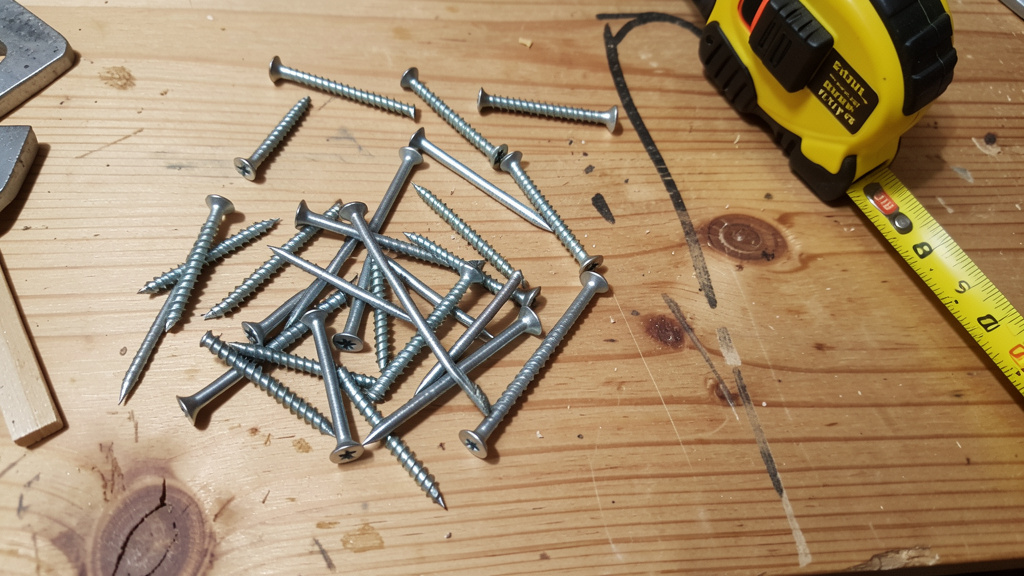
Make Confident Fastening Choices for Wood, Drywall, Concrete, and Beyond—With Clear Decision Paths, Adaptive Solutions, and Real-World Installation Guidance
Every builder, woodworker, or DIYer has faced the quiet uncertainty of selecting the right fastener. Will this screw hold the shelf securely? Will this anchor survive years on a bathroom wall? Will these nails withstand seasonal movement? This guide transforms that uncertainty into informed confidence. We focus not on memorizing catalogs, but on understanding the why behind fastener behavior—material interactions, load dynamics, environmental factors, and practical constraints. Grounded in established engineering principles and building standards (including IRC, IBC, and ASTM references where applicable), this resource offers adaptable frameworks, contextual warnings, and actionable steps tailored to real-world conditions. Whether you’re securing a picture frame, assembling cabinetry, or mounting hardware to concrete, you’ll gain a reliable mental model for making sound fastening decisions today and in future projects.
Introduction
Beneath every successful project lies a network of intentional connections. Screws, nails, and anchors silently transfer forces, accommodate material movement, and maintain structural integrity over time. Yet fastener selection is frequently treated as an afterthought—leading to wobbly shelves, popped drywall, corroded hardware, or compromised safety. These outcomes rarely stem from negligence, but from fragmented knowledge: knowing types without grasping context.
True reliability emerges when we shift focus from isolated products to interconnected principles. This guide synthesizes material science fundamentals with workshop-tested practices. We explore not only which fastener suits a scenario, but why it works, when alternatives are wiser, and how installation technique influences longevity. Recommendations align with widely recognized building standards while remaining accessible to homeowners, craftspeople, and tradespeople. By emphasizing adaptable reasoning over rigid rules, this resource builds lasting competence—helping you navigate novel situations long after this page is closed.
The FASTEN Framework: A Step-by-Step Decision Path
Before selecting any fastener, walk through these six sequential considerations. Apply them in order; skipping steps risks overlooking critical constraints. This framework adapts to your specific project conditions—material, tools, environment, and goals—without promising universal “best” answers.
Function: Clarify the Forces at Play
Identify how load acts on the joint. Misalignment here is a common root of failure.
-
Shear Load: Force pushes materials parallel to the fastener (e.g., shelf brackets supporting downward weight). Screws and nails with adequate shaft diameter resist well.
Practical check: Place your hand where weight applies. Does force try to slide components past each other?
Adaptive tip: For vibrating machinery, add thread-locking adhesive or lock washers. Avoid toggle-style anchors—they pivot under shear. -
Tensile (Pull-Out) Load: Force pulls the fastener straight out (e.g., a hook holding a heavy plant in drywall). Anchors designed to expand behind the surface excel here.
Practical check: Imagine pulling the mounted item directly away. How much resistance is needed?
Critical nuance: In wood, fasteners driven across the grain typically resist pull-out better than those driven with the grain. -
Withdrawal Load: Cyclic or lateral extraction forces (e.g., wind on roof shingles, foot traffic on deck boards). Requires aggressive grip features.
Real example: Roofing nails feature large heads and barbed shanks specifically to resist wind uplift. Smooth-shank nails in subflooring may gradually loosen from vibration. -
Static vs. Dynamic Load:
- Static: Constant force (bookshelf weight). Most fasteners handle this adequately.
- Dynamic: Changing force (deck movement, machinery vibration, seismic activity). Prioritize fatigue-resistant options like hardened steel screws over brittle alternatives.
Context note: Building codes often specify fastener types for dynamic loads in seismic or high-wind zones. When in doubt, consult local requirements.
Framework tip: Sketch your joint. Draw arrows showing force direction. Label each “Shear,” “Tensile,” or “Dynamic.” This 60-second step prevents common mismatches.
Assembly: Assess Physical Constraints
Your project’s geometry dictates feasible fastener dimensions and installation methods.
- Material Thickness & Layering:
Guideline: Fastener should penetrate the base material by 1–1.5 times its thickness. For two ¾-inch boards, a 1¾-inch screw provides ~1 inch of grip in the lower board.
Constraint adaptation: - Too long? Add washers under the head to reduce effective length.
- Too short? Sister a backing block behind the joint for deeper engagement.
-
Tight space? Choose low-profile heads (flat-head screws) or right-angle drill attachments.
-
Edge Distance & Spacing:
Maintain ≥1 inch from board edges for most wood fasteners; increase to 1.5 inches for hardwoods or thin stock. Fasteners too close to edges create leverage points that split material.
When unavoidable: Pre-drill pilot holes and use blunt-point nails or fine-thread screws. -
Disassembly Needs:
Screws allow future adjustment; nails and most anchors are permanent. For semi-permanent joints (e.g., cabinet assembly), consider cam locks or knock-down hardware. In heirloom restoration, brass screws offer corrosion resistance and easier future removal than steel.
Substrate: Match Fastener to Base Material
The receiving material is the most decisive factor. A perfect fastener for oak fails in concrete.
- Wood Types:
- Softwoods (Pine, Cedar): Forgiving. Coarse-thread screws grip well. Pre-drill near edges.
- Hardwoods (Oak, Maple): Dense. Always pre-drill pilot holes. Fine-thread screws engage cleanly; avoid ring-shank nails—they may shatter brittle wood.
-
Engineered Wood (Plywood, MDF, Particleboard):
- Plywood: Wide-thread screws (e.g., decking screws) grip thin veneers. Avoid nails near edges to prevent delamination.
- MDF/Particleboard: Brittle. Use coarse-thread screws with pilot holes. Maximize thread engagement—longer screws distribute load better. Never reuse holes.
Seasonal note: In wide boards (≥6 inches), avoid rigid fastening across grain. Use figure-8 fasteners or elongated slots to accommodate expansion/contraction.
-
Drywall & Plaster:
- Standard Drywall: Hollow cavity requires anchors for loads >5 lbs. Over-tightening cracks the paper face—stop when snug.
-
Plaster (Older Homes): Brittle lime/gypsum over wood lath. Plastic anchors may crumble the surface; toggle bolts are often safer—but verify lath condition first in an inconspicuous spot.
Reliable workaround: For heavy items between studs, install a horizontal backing board screwed into adjacent studs, then mount your item to the board with wood screws. -
Concrete, Masonry & Stone:
- Poured Concrete: Use wedge anchors, sleeve anchors, or concrete screws.
- CMU (Cinder Block): Hollow cores require anchors that expand within cavities (toggles) or hit solid web sections (locate with stud finder).
- Brick: Drill into brick—not mortar joints, which crumble. Use plastic sleeve anchors for light loads; wedge anchors for heavy.
-
Natural Stone: Extremely brittle. Requires diamond-tipped bits and epoxy anchors. Consult a specialist for critical loads.
Temporal factor: Concrete should cure ≥21 days (ideally 28+) before anchoring. “Green” concrete lacks full strength; anchors may loosen as it shrinks. -
Metal Substrates:
- Thin Gauge (Metal studs, ducts): Fine-thread self-tapping screws (Type A). Pre-punch holes to prevent deformation.
-
Thick Steel: Pre-drill and use machine screws with nuts/washers. Never rely on self-tapping screws for structural steel.
Critical mismatch: Wood screws strip instantly in metal studs. Use screws specifically designed for metal. -
Plastics, Composites & Specialty Materials:
- PVC Trim: Expands with heat. Pre-drill holes ⅛-inch oversized. Use stainless trim-head screws.
- Composite Decking: Follow manufacturer specifications. Standard deck screws often cause “mushrooming.”
- Acrylic/Plexiglass: Drill slowly with sharp bit. Use pan-head screws with rubber washers. Overtightening causes stress cracks.
Adaptive insight: For fiberglass or carbon fiber, stainless fasteners with nylon washers prevent galvanic corrosion and distribute clamping force.
Tooling: Align with Your Equipment
Your tools shape feasible installation methods. Forcing mismatches causes stripped heads, bent nails, or injury.
- Drills & Drivers:
- Impact Drivers: Ideal for lag screws, concrete screws, or dense hardwoods. Use impact-rated bits (hardened differently than standard bits).
- Clutch Settings: Critical for consistent depth. Test on scrap first.
-
Drive Types: Torx (star) or square (Robertson) bits transfer torque efficiently with minimal cam-out. Phillips bits slip more easily—replace at first sign of wear.
-
Hammers & Nailers:
- Framing Hammer (20–28 oz): For heavy nails. Straight claw for prying.
- Finish Hammer (13–16 oz): For trim. Curved claw for delicate removal.
-
Nail Guns: Match gauge to task (15–16g for trim, 18g for delicate work). Use sequential-trip triggers for safety and precision. Always wear ANSI Z87.1 safety glasses.
-
Specialty Tools:
Hammer drills are essential for concrete/masonry. Rotary hammers handle larger holes efficiently. Rent specialty tools for one-off projects—many hardware stores offer half-day rentals.
Environment: Plan for Long-Term Exposure
Where the fastener lives determines its longevity.
- Moisture & Humidity:
- Indoor Dry: Zinc-coated steel suffices.
- Damp Areas (Bathrooms, Basements): Hot-dipped galvanized or stainless steel 304.
- Outdoor/Exterior: Hot-dipped galvanized (ASTM A153) or stainless steel 316 (marine grade).
-
Pressure-Treated Wood: Contains copper-based preservatives that accelerate corrosion of standard steel. Use fasteners explicitly rated “for ACQ” (hot-dipped galvanized per ASTM A153 Class D, stainless 304/316, or silicon bronze).
Code alignment: IRC R319.3 requires corrosion-resistant fasteners for preservative-treated wood. Verify local amendments. -
Temperature Extremes:
Plastic anchors become brittle below freezing—choose metal toggles. High heat (attics, engine areas) melts nylon; use stainless steel. Thermal cycling demands slotted holes or flexible washers (e.g., neoprene) in metal roofing. -
Chemical Exposure:
Pool areas (chlorine) require 316 stainless steel. Coastal zones demand 316 stainless for salt resistance. When dissimilar metals contact (e.g., steel screw in aluminum bracket), separate with non-conductive washers (nylon, rubber) to prevent galvanic corrosion. -
UV Exposure:
Degrades plastic anchors over time. For permanent outdoor use behind trim or siding, prefer all-metal systems.
Nuance: Refine with Project-Specific Factors
Final adjustments separate adequate from resilient results.
-
Aesthetics:
Countersink flat-head screws for flush finishes; use wood plugs for invisibility. Trim-head screws minimize visible footprint on cabinetry. Match screw color to project (black oxide for industrial, brass for traditional). -
Code Compliance:
Deck ledger boards require lag screws or bolts per IRC R507.2.3—nails are prohibited. Shear walls specify nail type, length, and spacing for seismic resistance. Fire-rated assemblies (e.g., garage walls) require specific screw types and spacing. Always verify with your local building department, as amendments vary. -
Vibration Resistance:
Thread-locking adhesives (blue for medium strength), lock washers, or screws with anti-backout ribs help in workshops or machinery mounts. -
Weight Distribution:
Never rely on a single fastener for heavy items. Distribute load across multiple points spaced wider than the mounting bracket. Include item weight plus contents (books, tools) in estimates. When uncertain, add a safety margin.
Guiding Insight: Fastening reliability comes from selecting the most appropriate fastener for the specific interplay of Function, Assembly, Substrate, Tooling, Environment, and Nuance—not merely the strongest option. Compatibility outweighs raw strength.
Screws: Precision, Control, and Removability
Screws excel where clamping force, high holding power, or future adjustment matters. Their threads create mechanical adhesion along the shaft, pulling materials tightly together.
Anatomy Matters: Head, Drive, Thread, Point
- Head Types:
- Flat (Countersunk): Tapers to sit flush. Essential for woodworking where smooth surfaces matter. Requires countersinking.
- Round/Pan: Sits above surface. Used where flush isn’t needed (electrical boxes, machinery guards).
- Truss: Extra-wide, low-profile head. Prevents pull-through in soft materials like particleboard.
-
Bugle: Curved profile self-countersinks in drywall without tearing paper. Standard for drywall screws.
Why it matters: Using a round-head screw where flush is needed creates snag hazards and weakens joints by preventing full material contact. -
Drive Types:
Torx (star) and square (Robertson) drives transfer torque efficiently with minimal slippage—ideal for impact drivers. Phillips drives cam out more easily; replace bits at first sign of wear. For antique restoration where authenticity matters, slotted drives remain relevant. -
Thread Design:
- Coarse Thread: Fewer threads per inch. Aggressive bite in softwoods, plastic, particleboard.
- Fine Thread: More threads per inch. Better grip in hardwoods, metal, composites. Resists vibration loosening.
-
Threadless Shank: Smooth upper section on wood screws allows top material to pull tightly against base while threads grip only the base—critical for gap-free woodworking joints.
Practical test: Drive coarse and fine-thread screws into scrap oak. Notice how coarse threads strip more easily in dense material. -
Point Types:
Sharp points for general use; drill-point (Tek) screws eliminate pre-drilling in thin metal; blunt points reduce splitting in hardwoods or end grain. Lightly tapping a standard screw point with a hammer creates a makeshift blunt point.
Materials & Coatings: Choosing for Longevity
-
Carbon Steel (Coated):
Base material for most screws. Zinc plating (clear/blue) suits indoor dry areas only. Hot-dipped galvanized (HDG) offers thick, durable coating for outdoor use and pressure-treated wood. Verify packaging states “Hot-Dipped Galvanized” or “ASTM A153”—electro-galvanized coatings are thinner and less durable. -
Stainless Steel:
- Grade 304: Resists mild corrosion (indoor damp areas, non-coastal exteriors).
-
Grade 316: Adds molybdenum for superior resistance to chlorides (pool areas, coastal regions).
Compatibility note: Stainless avoids galvanic corrosion with copper or aluminum. However, never use stainless screws directly with aluminum flashing without a barrier—corrosion can still occur. -
Brass & Silicon Bronze:
Brass is decorative and corrosion-resistant but significantly softer than steel—avoid for structural loads. Silicon bronze (gold-colored) offers excellent saltwater resistance and prevents black tannin stains in cedar/redwood. Ideal for boat building or heritage projects where cost justifies performance.
Common Screw Types & When to Use Them
- Wood Screws: Coarse threads, threadless shank. Temper for flexibility (won’t snap like drywall screws). Pre-drill in hardwoods, near edges, or end grain. Never substitute drywall screws—they’re brittle and fail under shear.
- Deck Screws: Self-countersinking heads, corrosion-resistant coatings. For wood decks: HDG or stainless. For composites: only manufacturer-recommended screws. IRC requires screws (not nails) for deck board attachment.
- Drywall Screws: Type W (coarse) for wood studs; Type S (fine) for metal studs. Not for structural use. Drive until head dimples paper—do not break the paper face.
- Lag Screws: Heavy-duty hex-head screws for structural connections (deck ledgers, beam posts). Pre-drill pilot holes (70% of screw diameter) and clearance holes. Use washers to distribute load. Follow IRC spacing and size requirements.
- Concrete Screws (Tapcons®): Harden steel with high-low threads. Require exact-size carbide-drilled holes, meticulously cleaned. Minimum 1-inch embedment for light duty; 1.75+ inches for heavy. Not recommended for overhead or high-vibration applications.
Professional Installation Practices
- Pilot Holes: Always pre-drill for hardwoods, end grain, near edges, or long screws. Hole size should match the screw’s root diameter (minor diameter). Too small = splitting; too large = stripped threads.
- Countersinking & Plugging: For invisible joints: drill pilot, countersink, drive screw flush, insert glued tapered wood plug, sand smooth. Orient plug grain to match surrounding wood.
- Lubrication: Rub threads with beeswax or paraffin before driving into dense hardwoods or composites. Reduces friction and prevents snapping. Avoid oil-based lubricants near glue joints.
- Stripped Head Recovery:
- Minor strip: Place rubber band over head; insert bit through it for grip.
- Moderate strip: Use a screw extractor (left-hand thread bit).
- Severe strip: Drill out head carefully, extract shaft with pliers, retap hole or use larger screw.
Nails: Speed, Shear Strength, and Energy Absorption
Nails remain vital for framing, sheathing, roofing, and situations where speed, shear strength, or slight flexibility under load are advantageous. Their ability to absorb energy through micro-bending offers resilience in dynamic conditions.
Shank Types & Grip Mechanics
- Smooth Shank: Standard. Lowest withdrawal resistance. Suitable for temporary work or light sheathing where speed is prioritized.
- Ring Shank: Concentric rings act like barbs, significantly increasing withdrawal resistance. Ideal for subflooring, underlayment, or areas prone to vibration. Harder to drive; may require more force.
- Spiral (Helix) Shank: Continuous twist engages wood like a screw but installs faster. Highest withdrawal resistance among nails. Common in pole barns or permanent fencing.
- Cement-Coated: Thin resin layer melts from friction heat during driving, bonding to wood pores. Offers moderate grip improvement. Coating degrades if nails sit in humid conditions before use—buy fresh for critical projects.
Understanding Nail Sizes
Nail length uses the “penny” (d) system. Key references:
– 8d = 2.5 inches (light framing, sheathing)
– 10d = 3 inches (standard wall framing)
– 16d = 3.5 inches (heavy framing, rim joists)
Rule of thumb: Nail should penetrate the second member by at least 1.5 times its thickness. For a 2×4 stud (1.5″ thick) attached to a plate, 16d nails provide adequate grip. Always verify against project requirements and local codes.
Strategic Advantages of Nails
- Structural Framing & Shear Walls: Wood moves slightly with humidity and temperature. Nails flex microscopically under load, absorbing energy without causing brittle failure in wood fibers. Building codes often specify nails for shear walls in seismic zones due to this ductility.
Critical distinction: Deck framing may use nails per engineering design, but IRC R507.3.2 requires screws (not nails) for deck boards due to vibration from foot traffic. - High-Speed Applications: Roofing nailers drive nails rapidly; screwing shingles would drastically increase labor. Similarly, framing nailers secure sheathing efficiently on large projects.
- Materials Prone to Splitting: Blunt-point nails crush fibers rather than wedging them apart. Lightly tap the point with a hammer before driving in dense hardwoods where pre-drilling every nail isn’t practical.
Driving Techniques for Success
- Starting Safely: Hold nail near head with thumb and forefinger; tap lightly until it stands alone. For small nails, use needle-nose pliers to keep fingers clear.
- Driving Motion: Keep hammer face perpendicular to nail head. Use a smooth, full swing—not hesitant taps—to prevent bending. Follow through after impact.
- Preventing Splitting:
- Blunt the point slightly.
- Angle nails 10–15° (toenailing) for mechanical lock in framing.
- Maintain minimum 1-inch edge distance (1.5 inches for hardwoods).
- Pre-drill pilot holes in hardwoods, end grain, or near edges.
- Nail Guns: Adjust depth dial so heads sit flush. Test on scrap first. Use sequential-trip triggers for control. Disconnect air supply when loading or clearing jams. Wear safety glasses—nails can ricochet.
Common Nail Issues & Solutions
- Nail Popping in Drywall: Caused by wood framing shrinkage creating gaps. Prevention: Use drywall screws instead of nails—they resist popping better. Repair: Remove popped nail; drive screw 2 inches above/below; fill with joint compound.
- Corrosion in Treated Wood: Using non-galvanized nails in ACQ-treated wood leads to rapid rust. Prevention: Use hot-dipped galvanized (ASTM A153) or stainless nails explicitly rated “for ACQ.”
- Bent Nails: Usually from poor hammer technique or incorrect hammer weight. Extract with claw hammer or cat’s paw; fill hole with glue and toothpick; re-drive 1 inch away. Practice on scrap wood first.
Anchors: Securing to Hollow or Solid Bases
Anchors enable fastening where substrates lack inherent holding power—drywall cavities, concrete, tile, or hollow-core doors. They work by expanding behind surfaces, bonding mechanically, or transferring load to stronger substrates.
Drywall Anchor Types
- Plastic Expansion Anchors: Screw threads expand the sleeve against drywall paper. Suitable for light items (<15 lbs). Drill exact-size hole; tap anchor flush; drive screw until snug—over-tightening cracks the paper.
- Toggle Bolts: Wings fold to insert, then spring open behind drywall to distribute load. Best for medium to heavy items (20–75+ lbs). Use the largest toggle that fits the mounting hole. SNAPTOGGLE® variants open without screw tightening for easier installation.
- Molly Bolts: Metal sleeve expands along its length as screw tightens. Holds medium loads (25–75 lbs). Can often be removed and reinserted without losing grip—unlike toggles. Requires precise hole size.
- Self-Drilling Anchors (e.g., E-Z Ancor®): Combine bit, anchor, and screw. Convenient for quick installs of curtain rods or light shelves. Use a drill with low clutch setting to avoid over-driving.
Masonry Anchor Types
- Wedge Anchors: Expansion clip wedges against concrete as bolt tightens. Very high holding power. Critical steps: Drill with hammer drill + carbide bit; clean hole thoroughly with wire brush and air blower (dust is a leading cause of failure); embed per manufacturer depth (typically 1.5–2+ inches). Required for many structural connections per code.
- Sleeve Anchors: Sleeve expands along embedment length. More forgiving than wedge anchors; better for vibration-prone areas (HVAC mounts). Can sometimes be removed and reused.
- Chemical Anchors (Epoxy Systems): Resin bonds threaded rod to concrete. Highest capacity; works in cracked concrete. Used for critical structural connections, seismic retrofitting, or overhead applications. Requires meticulous hole preparation and curing per specs. Hire a professional for structural uses.
Specialty Scenarios
- Hollow-Core Doors: Use small toggles designed for thin material (⅞”–1¼” thick). Never hang heavy items (>5 lbs)—the thin skin crushes easily. Over-the-door hooks are safer for towel bars.
- Tile Surfaces: Masking tape reduces bit slippage. Drill slowly with carbide bit. Anchor must grip the substrate behind the tile (drywall, backer board, or concrete).
- Ceiling Mounts: Drywall alone cannot support overhead loads (ceiling fans, pendant lights). Always anchor to a ceiling joist. If no joist is accessible, install blocking between joists first. For lightweight items only (smoke detectors), use heavy-duty toggles rated explicitly for tension loads.
Anchor Installation Protocol
- Locate Solid Substrate First: Use a quality stud finder. Confirm with magnet (metal studs) or small test hole. Golden rule: If mounting to a stud, skip anchors and use appropriate wood/metal screws directly.
- Mark and Drill Precisely:
- Drywall: Drill hole matching anchor diameter.
- Concrete: Drill straight hole to specified depth (wrap tape on bit as depth guide).
- Clean Meticulously (Concrete): Brush vigorously; blow out dust; repeat. Dust creates a cushion preventing proper expansion.
- Insert Anchor Correctly: Tap plastic anchors flush. For toggles, fold wings, insert, tighten until wings contact backside—stop—then position item and finalize tightening.
- Attach Item Gently: Hand-tighten first for alignment. Final tighten until snug—do not overtighten, especially in drywall.
Troubleshooting Anchor Failures
- Anchor Spins Loose (Drywall): Hole enlarged during install or over-tightening. Repair: Remove anchor; fill hole with setting-type compound + toothpicks dipped in glue; cure 24 hours; reinstall larger anchor type (e.g., switch plastic to molly bolt). Prevention: Use anchors rated for at least double the estimated load.
- Drywall Cracks Around Anchor: Overload, overtightening, or weak substrate. Repair: Cut out damaged section; install backing board screwed into adjacent studs; patch drywall; mount item to backing board. This is the most reliable solution for heavy items between studs.
- Concrete Anchor Pulls Out: Hole not cleaned, insufficient embedment, or dynamic load. Repair: Clean hole thoroughly; install longer anchor with deeper embedment; for critical fixes, use chemical anchor system.
- Toggle Bolt Won’t Tighten: Wings stuck against drywall back or bracket. Loosen screw slightly; jiggle item to free wings; retighten slowly. Ensure mounting hole in item is large enough for folded wings.
Material-Specific Quick Reference
| Scenario | Recommended Fastener(s) | Key Considerations |
|---|---|---|
| Softwood Framing | 16d ring-shank or cement-coated nails | Pre-drill near edges. Follow code-specified spacing for shear walls. |
| Hardwood Joinery | Fine-thread wood screws + pilot holes | Always pre-drill. Blunt nail points if nailing. |
| MDF/Particleboard | Coarse-thread screws + pilot holes | Maximize thread engagement. Confirmat screws ideal. Never reuse holes. |
| Drywall (<15 lbs) | Plastic anchor or self-drilling anchor | Verify drywall thickness. Stop tightening when snug. |
| Drywall (>20 lbs) | Toggle bolts OR backing board + wood screws | Backing board screwed into studs is most reliable for heavy/safety-critical items. |
| Concrete (Light) | Concrete screws (min. 1.25″ embed) | Carbide bit exact size; hole meticulously cleaned; not for overhead loads. |
| Concrete (Heavy) | Wedge anchors or chemical anchors | Engineering specs often required. Professional installation recommended. |
| Metal Studs | Fine-thread Type S drywall screws | Do not overtighten—strips threads easily. Pre-punch holes for thin metal. |
| PVC Trim | Stainless trim-head screws | Pre-drill oversized holes (⅛” larger) for thermal expansion. |
| Composite Decking | Manufacturer-specific screws only | Standard deck screws cause “mushrooming.” Follow board guidelines precisely. |
Seasonal Adaptation: In regions with significant humidity swings, allow for wood movement in wide boards. In freezing temperatures, avoid plastic anchors—they become brittle. In coastal areas, prioritize 316 stainless steel.
Troubleshooting Common Fastening Challenges
Screw Strips During Driving
- Likely causes: Worn bit, incorrect bit size, excessive speed/torque, hard material without pilot hole.
- Prevention: Use Torx or square drive bits; replace worn bits; set drill clutch appropriately; pre-drill in dense materials.
- Recovery: Stop immediately. Apply firm downward pressure. Try rubber band over head for grip. For severe stripping, use screw extractor or drill out head carefully.
Nail Pops in Drywall or Decking
- Drywall cause: Framing shrinkage creating gaps. Repair: Remove nail; drive screw 2″ above/below; patch. Prevention: Use screws for new drywall installations.
- Decking cause: Vibration loosening nails. Repair: Remove nail; pre-drill; install corrosion-resistant deck screw. Prevention: IRC requires screws for deck boards—use screws with anti-backout features.
- Insight: Widespread popping may indicate underlying moisture issues. Check for leaks or humidity problems.
Anchor Pulls Out of Drywall
- Cause: Overload, overtightening, weak substrate, or single-anchor dependency.
- Repair: For minor damage, fill hole thoroughly and use a larger anchor type. For cracked areas, install backing board between studs—this is the only reliable solution for heavy items.
- Prevention: Distribute load across multiple anchors spaced wider than the item. For items >15 lbs between studs, always use a backing board. Include item weight plus contents in estimates.
Rust Stains Around Fasteners
- Cause: Incompatible fastener in pressure-treated wood; failing coating; galvanic corrosion between dissimilar metals.
- Remediation: Remove fastener. Clean stain with oxalic acid solution (test first). Replace with compatible fastener: hot-dipped galvanized or stainless for treated wood; stainless with nylon washers for aluminum contact. Seal area after repair.
- Prevention: Verify packaging states “for ACQ” for treated wood. Use non-conductive barriers (nylon washers) when joining dissimilar metals. For cedar/redwood, silicon bronze prevents black tannin stains.
Wood Splits During Fastening
- Cause: No pilot hole in hardwood/end grain; fastener too large; nailing too close to edge; very dry wood.
- Immediate action: Stop driving. Clamp split tightly. If caught early, it may heal as wood fibers compress.
- Prevention: Always pre-drill in hardwoods, end grain, or near edges. Maintain minimum edge distance (1″ standard, 1.5″ for hardwoods). Lightly dampen very dry wood (non-structural only) before driving. Blunt nail points slightly.
Your Questions, Answered
Q: Can I use drywall screws for woodworking projects like shelves or cabinets?
A: Not recommended. Drywall screws are made of hardened, brittle steel designed for holding drywall to studs—not for shear loads or woodworking joints. They snap easily under stress. Use proper wood screws, which are tempered for flexibility and have a threadless shank to pull materials tightly together.
Q: How do I know if my concrete is cured enough to install anchors?
A: Concrete should cure a minimum of 21 days, though 28 days is ideal for full strength development. Anchors installed too early may loosen as the concrete continues to cure and shrink. If the project timeline is tight, consult the concrete supplier or a structural professional for guidance specific to your mix and conditions.
Q: Why do my deck screws keep snapping when I drive them?
A: Common causes include: using non-impact-rated bits in an impact driver, driving too fast without pre-drilling in hardwoods, or using low-quality/brittle screws. Solutions: Use impact-rated Torx bits, pre-drill pilot holes in dense woods, select quality deck screws with appropriate coatings, and apply steady downward pressure while driving at moderate speed.
Q: Is it safe to hang a heavy mirror on drywall using only anchors?
A: For heavy or safety-critical items (mirrors, shelves above beds), anchoring directly to wall studs with appropriate wood screws is always the safest approach. If studs don’t align, install a horizontal backing board screwed securely into adjacent studs, then mount the mirror to the board. Relying solely on drywall anchors for heavy items carries risk, especially in older homes with brittle drywall.
Q: What’s the difference between hot-dipped galvanized and regular galvanized fasteners?
A: “Regular” galvanized often refers to electro-galvanized—a thin zinc coating applied electrically, suitable only for dry indoor use. Hot-dipped galvanized (HDG) involves dipping fasteners in molten zinc, creating a thicker, more durable, uneven coating that withstands decades of outdoor exposure and is required for contact with pressure-treated wood per building codes. Look for “ASTM A153” on packaging for verified HDG.
Q: Can I reuse a hole in wood after removing a screw?
A: In solid wood, you can often reuse a hole by inserting a wood toothpick or matchstick dipped in wood glue, letting it cure, then driving a new screw. In engineered wood (MDF, particleboard), the material crumbles easily—reusing holes is unreliable. For critical joints, relocate the fastener or reinforce with a backing block.
Q: Why do building codes sometimes require nails instead of screws in framing?
A: Nails offer slight flexibility (ductility) under extreme loads like earthquakes or high winds, allowing the wood frame to absorb energy without catastrophic failure. Screws are more rigid and can cause brittle fracture in wood fibers under dynamic stress. Always follow local code requirements and engineered specifications for structural elements.
Q: How do I prevent screws from staining cedar or redwood?
A: Standard steel fasteners react with tannins in cedar and redwood, causing unsightly black stains. Use silicon bronze or stainless steel (304 or 316) fasteners. Silicon bronze is particularly effective at preventing stains and offers excellent corrosion resistance, though it is more expensive.
Q: What should I do if I hit a pipe or wire while drilling?
A: Stop immediately. Turn off power/water at the source. Assess damage carefully. If a wire is nicked, consult a licensed electrician—do not attempt to repair electrical wiring yourself. For future prevention, use a high-quality stud finder with AC wire detection, and drill small pilot holes first in uncertain areas. When possible, plan installations away from known utility paths.
Q: Are self-drilling anchors reliable for everyday use?
A: Self-drilling anchors (like E-Z Ancor®) offer convenience for light to medium loads (curtain rods, small shelves) when installed correctly. Use a drill with a low clutch setting to avoid over-driving. For heavy items, critical safety applications, or older/damaged drywall, traditional toggle bolts or backing boards provide more reliable holding power. Always verify the anchor’s stated weight capacity and double it for safety margin.
Conclusion and Your Next Step
Mastering fastening isn’t about memorizing every product—it’s about developing a reliable decision process. The FASTEN Framework (Function, Assembly, Substrate, Tooling, Environment, Nuance) gives you a repeatable path to confident choices across countless projects. Remember these core takeaways:
1. Match the fastener to the forces and materials, not just the hole size.
2. Installation technique matters as much as selection—pilot holes, proper tightening, and hole preparation prevent most failures.
3. When safety or structural integrity is involved, prioritize code compliance and professional guidance over convenience.
The 24-Hour Rule
Before your next project, spend 20 minutes in your workshop:
1. Organize your fastener collection by type and material.
2. Label bins clearly (e.g., “Stainless Deck Screws,” “16d Galvanized Nails”).
3. Check your drill bits—replace any that show wear.
This small investment prevents frustration and errors when you’re mid-project.
The Bigger Picture
Thoughtful fastening contributes to project longevity, safety, and satisfaction. Each connection you make thoughtfully strengthens not just the object, but your growing competence as a maker. Share your knowledge with others—mentor a newcomer, explain your choices to a curious neighbor. Building skill and community, one secure connection at a time.
Explore Related Guidance:
Understanding Wood Movement | Essential Workshop Tool Maintenance | Building Code Basics for DIYers | Moisture Management in Home Projects | Sustainable Material Selection Guide | Safety Protocols for Home Workshops | Reading Construction Drawings for Beginners