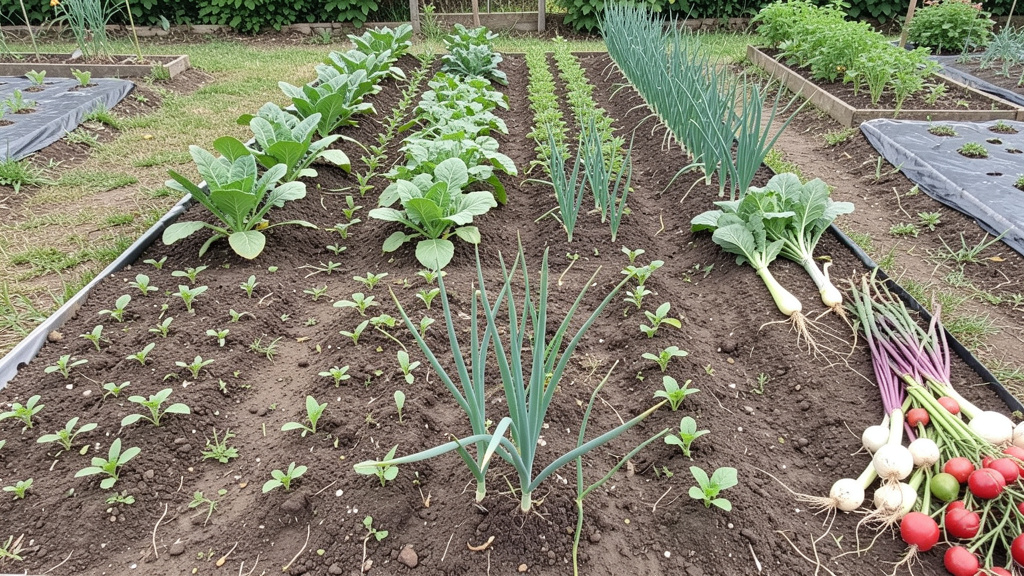
Transform your garden from sporadic producer to a rhythm of reliable abundance with a thoughtful, adaptable framework designed for real-world conditions and every skill level.
Imagine stepping into your garden on a crisp October morning, snipping crisp kale for breakfast, harvesting the last sun-warmed cherry tomatoes for lunch, and pulling tender carrots for dinner—all from the same 4×8 foot bed that yielded radishes in April and beans in July. This isn’t gardening fantasy. It’s the tangible reality of succession planting: a deliberate, rhythmic partnership with nature’s cycles that turns seasonal limitations into consistent opportunity. Forget fragmented tips and overwhelming charts. This guide offers a complete, customizable system informed by agricultural extension resources and grower experiences to help keep your soil productive and your harvests steady throughout the growing season.
Introduction: Why “Plant Once, Harvest Once” Limits Your Garden’s Potential
Walk through most home gardens in late July, and you’ll notice a quiet shift. Rows of spent lettuce bolted into flower. Empty spaces where spring peas once climbed. A single tomato plant heavy with fruit while surrounding soil gathers weeds. This “feast-or-famine” pattern isn’t failure—it’s the natural outcome of treating your garden as a series of isolated planting events rather than a continuous living system. Succession planting gently reshapes this pattern. At its core, it’s the intentional practice of scheduling multiple crops—either the same vegetable at staggered intervals or complementary vegetables in sequence—within the same garden space across a single growing season.
This approach honors centuries of Indigenous agricultural wisdom (such as the Three Sisters method of the Haudenosaunee) and aligns with modern agroecological principles. Research from agricultural extensions suggests that thoughtfully managed succession planting can significantly increase food production per square foot while supporting soil health through diverse root systems and reduced bare soil exposure. Crucially, it’s not about working harder. It’s about working with time, space, and biology. Whether you tend a suburban raised bed, a balcony container array, or a larger plot, this system adapts to your constraints. You’ll move beyond vague advice like “plant every two weeks” toward a personalized rhythm calibrated to your local conditions, soil readiness, crop timelines, and household needs. This practice cultivates resilience, reduces waste, and deepens your connection to the living pulse of your garden.
The Continuous Cycle Framework: Six Interlocking Steps to Steady Harvests
Forget rigid calendars that ignore your microclimate. The Continuous Cycle Framework transforms succession planting into an intuitive, repeatable process. This system works because it mirrors natural ecosystems: endings create space for new beginnings. Each step builds logically on the last, creating feedback loops that refine your garden’s productivity season after season.
Step 1: Map Your Garden’s True Growing Timeline (Beyond Frost Dates)
Most gardeners begin—and encounter friction—here. They reference generic “last frost date” charts online, plant accordingly, and wonder why spinach bolts early or fall broccoli struggles to size up. Your garden’s actual productive window depends on nuanced local factors no national map can capture.
Why this step matters: Soil temperature, microclimates, and seasonal light shifts influence what grows when—not calendar dates alone. Planting cold-sensitive beans in soil still below 60°F (15°C) may delay germination. Waiting until the “average last frost” to sow carrots overlooks that many varieties thrive in cooler soil weeks earlier.
How to build your personalized timeline:
1. Document your microclimate: Over one full season, keep simple notes:
– First/last frost observations (use a thermometer; frost occurs near 32°F/0°C)
– Soil temperature at 2-inch depth around 8 AM (critical for seed germination; an inexpensive soil thermometer helps)
– Sun exposure shifts: Track how shadows from structures or trees move across beds monthly
– Wind patterns: Note areas that dry quickly or show wind stress
Example: A gardener in Zone 6b noticed their south-facing brick-wall bed warmed noticeably earlier than open-yard beds. They now start peas there in early March while waiting until late March elsewhere.
-
Define season segments using soil temps, not months:
| Segment | Soil Temp Range | Key Crops | Critical Actions |
|—|—|—|—|
| Early Cool | 40–55°F (4–13°C) | Spinach, radish, peas, claytonia | Use soil thermometer; cold frames may extend this window |
| Late Cool | 55–65°F (13–18°C) | Lettuce, beets, broccoli, kale | Monitor for bolting as temps rise |
| Warm | 65–85°F (18–29°C) | Tomatoes, beans, squash, corn | Focus on moisture retention; provide afternoon shade for seedlings |
| Transition | 60–75°F (15–24°C) | Cucumbers, carrots, Swiss chard | Bridge summer heat toward fall cool-down |
| Fall Cool | 50–65°F (10–18°C) | Arugula, mizuna, daikon, garlic | Sow before summer heat breaks; use shade cloth initially for seedlings |
| Overwinter | Below 40°F (4°C) | Garlic, fava beans, corn salad | Plant in late fall; crops establish roots, harvest begins next spring | -
Adjust “days to maturity” thoughtfully: Seed packets list ideal conditions. Adapt for your context:
- Typically add 7–10 days if planting in partial shade
- Typically add 5–7 days for container plantings (soil heats/cools faster)
- May subtract 3–5 days for raised beds in full sun (warmer soil)
Real-world note: A gardener planted a “60-day” carrot variety on June 1 expecting August harvest. Cooler clay soil and dense spacing extended maturity. Harvest arrived in early September. The following year, they sowed earlier and thinned seedlings promptly for better results.
Common considerations:
– 🌱 Relying solely on USDA Zone Map (it reflects winter hardiness, not growing season length)
– 🌱 Overlooking late-summer heatwaves that may stall cool-season fall crops
– 🌱 Forgetting daylight hours: Crops like spinach generally need 10+ hours of light to develop well; very late fall sowings may remain small until spring
The Fundamental Principle: Your garden’s calendar is written in soil temperature and daylight—not on a paper calendar. Read the land, not the date.
Step 2: Categorize Crops by Growth Habit, Season Preference, and Succession Potential
Strategic succession begins with understanding each crop’s biological rhythm. Group vegetables into four functional categories—not by family or color, but by how they occupy time and space.
Category A: Relay Racers (Fast Turnaround Crops)
Mature in 21–50 days. Ideal for filling gaps or starting seasons.
– Examples: Radishes (28 days), spinach (35 days), arugula (30 days), baby lettuce (25 days), green onions (45 days)
– Strategy: Sow every 10–14 days for continuous supply. After harvesting spring peas (Category C), sow radishes directly in that space.
– Nuance: “Cut-and-come-again” varieties (like ‘Salad Bowl’ lettuce) extend harvest. Harvest outer leaves only; plants often regrow 2–3 times before bolting.
Category B: Staggered Stars (Moderate Duration Crops)
Mature in 50–75 days. Benefit from multiple plantings spaced 2–3 weeks apart to avoid gluts.
– Examples: Bush beans (55 days), beets (60 days), zucchini (50 days), carrots (70 days), cilantro (50 days)
– Strategy: Plant first batch when soil reaches target temperature. Sow second batch 14 days later. Third batch if season allows. Creates rolling harvest.
– Note: Pole beans often produce continuously for 8–10 weeks once established. One planting may suffice—staggering isn’t always needed.
Category C: Anchor Crops (Long Duration/Spatial Dominators)
Mature in 75+ days or occupy space all season. Require thoughtful placement.
– Examples: Tomatoes (75+ days), peppers (70+ days), corn (75 days), winter squash (100 days), asparagus (perennial)
– Strategy: Plant these first in your timeline. Then design relay crops around them:
– Understory planting: Sow quick radishes between young tomato plants. Harvest radishes before tomatoes canopy closes.
– Edge planting: Grow bush beans along the north edge of a squash bed. Beans finish before squash vines expand.
– Space tip: Use vertical space! Train cucumbers up a trellis behind early lettuce. Harvest lettuce, then cucumbers utilize the vertical plane.
Category D: Seasonal Swappers (Cool-Warm-Cool Transition Crops)
Crops chosen specifically to bridge seasonal gaps. Started before current crop finishes for seamless transition.
– Examples:
– Spring → Summer: Sow carrots between rows of maturing spinach. Spinach harvested late May; carrots take over space.
– Summer → Fall: Start broccoli transplants in pots mid-July. When bush beans finish early August, transplant broccoli into that bed.
– Why it works: Prevents weed establishment and soil exposure. The new crop is already growing when space opens.
Crop Compatibility Guide for Smooth Transitions
| Current Crop Finishing | Ideal Next Crop (Same Bed) | Why It Works | Typical Days Between |
|—|—|—|—|
| Peas (late spring) | Bush beans or carrots | Peas contribute nitrogen; beans/carrots utilize residual nutrients | 0–3 days (direct sow) |
| Lettuce (early summer) | Cucumbers or basil | Lettuce shade cools soil; basil may deter cucumber pests | 1–2 days |
| Radishes (anytime) | Spinach or beets | Radishes loosen soil; quick harvest creates instant space | Same day |
| Bush beans (mid-summer) | Kale or broccoli | Beans enrich soil; brassicas thrive in amended beds | 3–5 days (transplant seedlings) |
| Zucchini (late summer) | Garlic or fava beans | Heavy feeders deplete soil; garlic/favas support soil recovery over winter | 5–7 days (bed prep) |
Thoughtful considerations:
– 🌱 Planting two heavy feeders (like corn then squash) back-to-back without soil amendment
– 🌱 Allelopathy awareness: Black walnut trees release compounds that may inhibit tomatoes, potatoes, or peppers nearby
– 🌱 Root depth rotation: Follow deep-rooted crops (carrots) with shallow-rooted ones (lettuce) to access different soil layers
Step 3: Design Your Planting Sequences Using Three Core Methods
Combine your timeline (Step 1) and crop categories (Step 2) using these adaptable sequencing methods. Most gardeners use only one—mastering all three unlocks true flexibility.
Method 1: Relay Planting (The Space Handoff)
Definition: Planting a new crop immediately after harvesting the previous one from the exact same spot.
Ideal for: Small gardens, raised beds, containers where space is limited.
Step-by-step:
1. When harvesting (e.g., spring spinach), cut plants at soil level—do not pull roots. Decaying roots support soil life.
2. Lightly scratch top ½–1 inch of soil with a hand fork. Remove large debris.
3. Water bed gently. Wait 1–2 hours for moisture to settle.
4. Sow seeds of next crop (e.g., bush beans) directly into damp soil.
5. Apply ½ inch of finished compost as mulch to suppress weeds and retain moisture.
Example sequence for a 4×4 raised bed:
– Early March: Spinach + radishes (interplanted)
– Late May: Harvest spinach/radishes → sow bush beans
– Early July: Harvest beans → transplant broccoli seedlings started indoors
– Early September: Harvest broccoli side shoots → sow overwintering garlic
Why it works: Minimizes bare soil. Maintains soil activity. Reduces weed pressure.
Method 2: Staggered Intervals (The Rolling Harvest)
Definition: Sowing the same crop in small batches at regular intervals to extend harvest.
Ideal for: Crops prone to gluts (zucchini!), family favorites, or crops with short prime-eating windows.
Estimating your interval:
Interval ≈ (Days to Maturity ÷ 4) + Buffer Days
Buffer Days = 3–5 days in cool weather; 7–10 days in hot weather (heat may slow growth)
Example for carrots (70 days to maturity):
– Cool spring planting: (70 ÷ 4) + 5 ≈ 22 days between sowings
– Hot summer planting: (70 ÷ 4) + 10 ≈ 28 days between sowings
Sample scheduling guide:
| Sowing Date | Target Harvest Window | Notes |
|—|—|—|
| April 1 | Early-mid June | Early variety (‘Nelson’); use row cover if chilly |
| April 22 | Late June–early July | Main crop (‘Mokum’); thin carefully |
| May 20 | Late July–early August | Heat-tolerant (‘Romance’); mulch well |
| June 17 | Mid-late August | Fall crop; provide light shade for seedlings |
| July 15 | Late September–October | Overwintering (‘Autumn King’); mulch after hard frost |
Key nuance: For leafy greens, stagger more frequently in summer heat (every 7 days) as bolting accelerates. In cool spring/fall, intervals may stretch to 10–14 days.
Method 3: Intercropping (The Spatial Symphony)
Definition: Growing two or more crops simultaneously in the same space by leveraging complementary growth habits.
Ideal for: Maximizing yield in limited space, supporting beneficial insects, creating microclimates.
Three reliable intercropping patterns:
1. Tall + Short: Corn (tall) + lettuce (short). Corn provides afternoon shade for heat-sensitive lettuce.
2. Fast + Slow: Radishes (fast) + carrots (slow). Radishes mark rows, loosen soil slightly, and harvest before carrots need space.
3. Above + Below: Tomatoes (deeper roots) + basil (shallower roots). Minimal root competition; basil may deter certain pests.
Adapted “Three Sisters Plus” for smaller spaces:
– Plant 4 corn seeds in a square foot (center of bed)
– When corn reaches knee-high, sow 2 pole bean seeds at base of each stalk
– Simultaneously, sow 1 squash seed at bed corner
– Optional: Tuck 2–3 nasturtium seeds along bed edge—they may attract aphids away from beans
Timing insight: Plant beans too early—they may overwhelm young corn. Too late—corn stalks become difficult for beans to climb. The “knee-high” stage is a practical visual cue.
Addressing sequence challenges:
– Challenge: Gap appears after harvest; weeds establish.
Response: Keep “quick-relay” seeds handy (radish, arugula, mesclun mix). Pre-label small containers for each bed’s next crop.
– Challenge: Next crop seedlings struggle in residual shade.
Response: Start seedlings in pots 3–4 weeks before space opens. Transplant promptly after harvest.
– Challenge: Soil appears depleted after heavy feeder.
Response: After harvesting tomatoes or peppers, consider a fast cover crop like buckwheat (matures in ~35 days). Chop and drop before flowering to return organic matter.
Step 4: Build Your Master Planting Calendar (The Living Document)
A static calendar rarely survives contact with real weather. Your Master Calendar is a dynamic tool updated weekly. Here’s how to construct it without overwhelm.
Phase 1: Foundation Layer (Do Once Per Year)
Create a simple table:
Bed/Container | Crop Sequence | Estimated Sow Date | Harvest Window | Notes/Triggers
Example for “Bed A – Sunny South Corner”:
| Crop | Sow Date | Harvest | Trigger for Next Step |
|—|—|—|—|
| Spinach ‘Space’ | Mar 10 | Apr 20–May 15 | When spinach sends up flower stalks, prepare for beans |
| Bush Beans ‘Provider’ | May 15 | Jun 25–Aug 5 | When bean production slows (leaves yellowing), prep for kale |
| Kale ‘Lacinato’ | Aug 1 | Sep 15–Nov 20 | After hard frost (28°F), add row cover for extended harvest |
Phase 2: Weekly Action Layer (Update Every Sunday)
Keep a small notebook or digital note titled “Garden This Week.” Each Sunday, note:
1. What was harvested this week?
2. What’s ready to harvest next 7 days?
3. What space will open soon?
4. What’s my ONE action? (e.g., “Sow bean seeds in cup today for transplant May 25”)
Why this works: Prevents decision fatigue. You’re executing one clear step, not replanning the whole season.
Phase 3: Season-End Review (For Continuous Learning)
In late fall or winter, revisit your calendar. Add columns:
Actual Sow Date | Actual Harvest | What Worked | What to Adjust
Example insight: “Sowed carrots May 1—soil was warm but dry. Seedlings struggled. Next year: sow April 20 with light shade cloth and consistent moisture.” This turns experience into personalized guidance.
Tool options:
– Analog: Wall calendar with colored pencils (blue=cool crops, red=warm crops). Tape seed packets beside dates.
– Digital: Simple spreadsheet with color-coding. Set phone reminders 2–3 days before key dates.
– Hybrid: Photograph your hand-drawn calendar. Set as phone wallpaper during active planting seasons.
Thoughtful considerations:
– 🌱 Over-scheduling: Leave 1–2 “flex beds” unplanned for spontaneous opportunities
– 🌱 Personal practices: Some gardeners align planting with moon phases (e.g., root crops during waning moon); follow what resonates with your approach
– 🌱 Pollinator support: Include flowering herbs (dill, cilantro, borage) to bloom sequentially—supports bees that aid fruiting crops
Step 5: Execute with Care—Soil Prep, Planting, and Gentle Management
A thoughtful plan meets its test in execution. This step covers the tactile details that support seedling success.
Soil Refresh Between Crops (Takes 10–15 Minutes):
1. Harvest cleanly: Cut plants at soil line. Leave roots to decompose (adds organic matter, preserves soil structure).
2. Surface refresh: Remove large debris. Lightly rake top ½ inch of soil.
3. Nutrient support: Sprinkle ¼ inch of finished compost or worm castings. Avoid raw manure between crops—it may harm young seedlings.
4. Moisture prep: Water gently until soil is damp 1–2 inches down. Wait 1–2 hours before sowing.
Why minimal disturbance? Tilling can disrupt beneficial fungal networks (mycorrhizae) and bring dormant weed seeds to the surface. No-dig approaches often support healthier soil life over time.
Seed Sowing Guidance for Challenging Conditions:
– Warm weather sowing (above 80°F/27°C):
– Sow seeds in evening when soil cools
– Cover seed furrow with vermiculite (stays cooler, retains moisture better than soil)
– Place board over row; remove when seedlings emerge (prevents soil crusting)
– Tip: For lettuce/carrots in heat, pre-sprout seeds on damp paper towel in refrigerator for 2–3 days before sowing
– Cool weather sowing (below 50°F/10°C):
– Use black plastic mulch 5–7 days before sowing to gently warm soil
– Sow in double rows for mutual warmth/protection
– Cover with floating row cover after sowing
– Containers: Mix 1 part perlite into potting soil for improved drainage. Water containers thoroughly twice on planting day (first watering settles soil; second ensures full saturation).
Transplanting Seedlings Gently:
1. Harden off gradually: 5–7 days before transplant, move seedlings outdoors to a shaded, protected spot. Start with 1–2 hours Day 1, gradually increasing exposure.
2. Water seedlings 30–60 minutes before transplanting (reduces root disturbance)
3. Dig hole slightly wider than root ball, same depth
4. Place seedling, backfill gently, press soil lightly (eliminates air pockets)
5. Water with plain water or diluted seaweed extract (some gardeners find this supports transplant recovery)
Timing tip: Transplant on a cloudy day, late afternoon, or when rain is forecast. Avoid midday sun and windy conditions.
Gentle Management During Growth:
– Thinning: Do it early! Crowded seedlings compete. For carrots/beets, thin to final spacing when 2 true leaves appear. Snip extras with scissors—don’t pull (disturbs neighbors). Eat thinnings in salads!
– Weed awareness: Spend 5 minutes daily walking your garden. Remove weeds when small—they use minimal resources at this stage.
– Moisture check: Stick finger 1 inch into soil. If dry, water deeply at the base (not leaves). Morning watering allows foliage to dry.
– Pest observation: Check undersides of leaves weekly. Hand-pick cabbage worms. Spray aphids with a strong water jet.
Common considerations:
– 🌱 Overwatering newly sown seeds (can encourage rot)—keep soil consistently moist, not soggy
– 🌱 Planting seeds too deep (general guideline: plant 2x seed’s width deep)
– 🌱 Seed viability: Test older seeds by placing 10 on a damp paper towel in a sealed bag. Count sprouts after 7 days. Low germination? Consider fresh seeds.
Step 6: Observe, Adapt, and Rotate—Closing the Loop
Succession planting thrives on responsiveness. This step builds resilience against weather shifts, pests, and life’s unpredictability.
The Weekly Garden Scan (5 Minutes Max):
Stand at your garden’s edge. Ask gently:
1. What’s thriving? (Note conditions: “Kale loves this partially shaded spot”)
2. What’s struggling? (Observe: yellow leaves may indicate overwatering or nutrient needs)
3. What space will open soon? (Check calendar: “Pea bed clears in 5 days—beans ready?”)
4. What’s one small action? (“Thin carrot seedlings tomorrow morning”)
Tip: Keep a small weatherproof notepad in your garden. Jot observations immediately. Memory fades quickly.
Adapting to Weather Shifts:
– Unexpected heatwave:
– Erect temporary shade (old white sheet on hoops) over vulnerable seedlings
– Water deeply at soil level early in the morning
– Delay sowing heat-sensitive crops (lettuce, spinach) by 7–10 days if possible
– Unseasonable cold snap:
– Cover tender plants with buckets, cardboard boxes, or row cover
– Water soil thoroughly before freeze (moist soil holds heat slightly better)
– Harvest nearly ripe fruit (tomatoes, peppers) to ripen indoors if needed
– Heavy rain forecast:
– Harvest leafy greens before rain (reduces mud splatter and disease risk)
– Mulch bare soil to minimize erosion
– Avoid walking on wet soil (compacts structure)
Crop Rotation Within Succession (Supporting Soil Health):
Even in small gardens, varying plant families in the same spot over years helps disrupt pest and disease cycles. Track general families:
– Brassicas: Broccoli, kale, cabbage, radish
– Solanum: Tomatoes, peppers, eggplant, potatoes
– Cucurbits: Cucumbers, squash, melons
– Legumes: Beans, peas
Rotation idea for limited space: If you have one preferred tomato spot:
Year 1: Tomatoes → follow with garlic (known for antifungal properties in traditional practice)
Year 2: Plant beans in that spot (adds nitrogen) → follow with lettuce
Year 3: Return to tomatoes. The break may help disrupt soil-borne issue cycles.
End-of-Season Transition:
When final harvest concludes:
1. Cut remaining plants at soil line
2. Spread 1–2 inches of compost over bed
3. Sow a cover crop (clover for nitrogen support; rye for weed suppression) OR
4. Apply a thick layer of straw or shredded leaves as mulch
Why this matters: Protects soil life through winter. Reduces erosion. Prepares beds for easier spring planting.
Thoughtful considerations:
– 🌱 Pest patterns: If squash bugs were problematic, avoid planting cucurbits in the same spot next year—rotate families when possible
– 🌱 One planting setback doesn’t define the season. Note the circumstance (“beans planted during heatwave”), adjust next time
– 🌱 Even with active gardening, allowing beds rest under cover crop for several weeks yearly can support long-term soil vitality
Succession Planting for Specific Scenarios: Tailoring the Framework
Small Spaces & Container Gardens: Making Every Inch Count
Containers offer controlled environments. Apply succession principles with these adaptations:
Container Selection Guidance:
– Depth matters:
– Shallow crops (lettuce, radishes): 6–8 inch depth
– Medium crops (peppers, bush beans): 10–12 inch depth
– Deep crops (tomatoes, carrots): 16+ inch depth
– Material considerations:
– Terracotta: Breathable but dries quickly—suitable for drought-tolerant herbs
– Plastic/resin: Retains moisture well—helpful for leafy greens in heat
– Fabric pots: Promotes air-pruning of roots—popular for tomatoes
Sample Container Relay Sequence (18-inch Pot):
– Early Spring: ‘Red Russian’ kale (cold-tolerant)
– Late Spring: When kale bolts (May), harvest completely. Refresh top 1–2 inches of soil with compost. Plant ‘Patio Princess’ tomato seedling.
– Mid-Summer: Tuck 3 ‘Spicy Globe’ basil plants around tomato base.
– Early Fall: When tomato production slows (Sept), cut plant at soil line. Sow ‘Winter Density’ lettuce directly into pot.
– Late Fall: Harvest lettuce through light frosts. Provide insulation (bubble wrap) if temps drop significantly.
Container Succession Tips:
– Soil refresh: After each crop, remove top 1–2 inches of spent soil. Replace with fresh potting mix + handful of worm castings. Helps reduce disease carryover.
– Water awareness: Check soil moisture daily with finger. Containers dry faster than ground. Water until it flows from drainage holes.
– Vertical layering: Use tiered planters. Top: strawberries (trailing). Middle: lettuce. Bottom: radishes. Harvest radishes first, then lettuce; strawberries produce across seasons.
– Mobility advantage: Place containers on wheeled dollies. Move shade-loving crops under tree canopy in summer heat. Roll sun-lovers into full exposure.
Gardener Insight: An apartment gardener in Chicago transformed her 6×4 foot balcony:
“I used to grow one tomato plant per pot and feel disappointed by August emptiness. Now I maintain a ‘relay station’: three identical pots on a cart. Pot 1 has maturing bush beans. Pot 2 holds broccoli seedlings started indoors. Pot 3 contains harvested bean plants being refreshed with compost. When beans finish, I wheel Pot 2 into place. Zero downtime. I harvest something fresh most months—from microgreens in winter to kale in December.”
Climate Zone Adaptations: Honoring Your Local Conditions
Generic advice rarely fits all climates. Adapt the framework thoughtfully:
Cooler Climates (Zones 3–5: Shorter Seasons)
Core consideration: Work within a condensed frost-free window.
Adaptations:
– Start early: Use cold frames or low tunnels to sow peas, spinach, radishes 3–4 weeks before last frost date.
– Prioritize faster crops: Focus on Relay Racers (radishes, arugula) and Staggered Stars with shorter maturity (bush beans, zucchini).
– Fall is valuable: Sow cold-hardy crops (kale, spinach, corn salad) in mid-summer (July). They develop before frost, often sweetening with cold. Use row cover to extend harvest.
– Overwintering option: Plant garlic in October. It establishes roots before freeze, emerges early spring for summer harvest—freeing summer space.
Sample Zone 4 Bed Flow:
Mid-Mar: Cold frame spinach/radishes → Late May: Harvest → Sow bush beans → Early Jul: Harvest beans → Transplant kale started indoors → Early Sep: Harvest kale side shoots → Cover with row cover → Harvest periodically through November
Warmer Climates (Zones 8–10: Intense Heat, Mild Winters)
Core consideration: Summer heat limits cool-season crops; winter becomes prime growing season.
Adaptations:
– Shift the calendar: Primary growing season often October–April. Summer focuses on heat-tolerant crops (sweet potatoes, okra, Malabar spinach).
– Shade is supportive: Use 30% shade cloth over seedlings April–September. Plant lettuce on north side of a trellis with cucumbers for natural shade.
– Soil cooling: Mulch generously (2–3 inches straw) to keep roots cooler. Water deeply in early morning.
– Winter succession focus: Sow cool crops every 10–14 days Oct–Feb for continuous harvest.
Sample Zone 9 Bed Flow:
Early Sep: Transplant broccoli/cauliflower → Mid-Nov: Harvest → Sow snap peas → Early Feb: Harvest peas → Sow bush beans (heat-tolerant ‘Tavera’) → Late Apr: Harvest beans → Plant sweet potato slips → Early Aug: Harvest sweet potatoes → Sow Southern peas (cowpeas) as soil-building cover crop → Early Oct: Chop peas residue, sow fall brassicas
Arid Climates (Southwest Deserts: Low Humidity, Intense Sun)
Core consideration: Water conservation; temperature extremes.
Adaptations:
– Water deeply, less frequently: Encourages deeper roots. Drip irrigation or ollas (unglazed clay pots) reduce evaporation.
– Mulch generously: 3–4 inches of straw or wood chips significantly reduces moisture loss.
– Sunken beds: Dig beds slightly below grade. Creates a cooler microclimate with less wind exposure.
– Evening sowing: Sow seeds at dusk. Cooler temps + overnight moisture support germination.
Sample Zone 8b Container Flow:
Early Oct: Sow carrots, beets, lettuce in containers → Dec–Mar: Harvest continuously → Mid-Apr: Harvest final cool crops → Plant heat-lovers: sweet potatoes in large pot, basil in smaller pot → Jun–Sep: Harvest heat crops; keep containers in partial shade → Mid-Sep: Refresh soil, sow fall crops
Humid Climates (Southeast, Gulf Coast: Fungal Pressure, Heavy Rain)
Core consideration: Disease management; soil drainage.
Adaptations:
– Elevate plantings: Use raised beds (12+ inches high) for better drainage. Containers on stands.
– Increase spacing: Allow 20–25% more space between plants for airflow (may reduce mildew risk).
– Variety selection: Choose disease-resistant varieties where available (‘Mountain Magic’ tomatoes for blight resistance, ‘Dynamo’ cucumbers for powdery mildew resistance).
– Water timing: Water early in the day so foliage dries before evening humidity rises.
Sample Zone 7b Bed Flow:
Mid-Feb: Sow peas, spinach under row cover → Early Apr: Harvest → Sow bush beans + cucumbers on trellis → Early Jun: Harvest beans; cucumbers producing → Mid-Jul: When beans finish, sow Southern peas (cowpeas) between cucumbers → Late Aug: Harvest peas; chop cucumbers → Sow collards, mustard greens → Oct–Dec: Harvest greens through light frosts
Crop-Specific Succession Guides: Deep Dives on High-Value Vegetables
Lettuce: The Staggered Interval Classic
Why it benefits from staggering: Bolts (goes to seed) rapidly in heat; short prime-eating window.
Seasonal approach:
– Spring: Sow cold-tolerant varieties (‘Winter Density’, ‘Adriana’) every 10 days starting several weeks before last frost. Use shade cloth when temps consistently exceed 75°F (24°C).
– Summer: Choose heat-tolerant varieties (‘Jericho’, ‘Sierra’). Sow every 7 days under 30% shade cloth. Pre-sprout seeds in refrigerator.
– Fall: Sow every 10 days starting August 1. Varieties like ‘Rouge d’Hiver’ often develop sweeter flavor after light frost.
Harvest technique: Cut outer leaves 1 inch above soil. Plant may regrow 2–3 times. Stop harvesting when center stalk begins to elongate (bolting begins).
Key insight: Planting all seeds at once often leads to a short glut followed by a long gap. Staggering supports daily salads.
Radishes: The Beginner-Friendly Relay Racer
Why they shine: Ready in 21–28 days; quick feedback for new gardeners.
Sequencing ideas:
– Early spring: Sow ‘Cherry Belle’ every 7 days. Harvest before soil warms excessively (radishes may become pithy in heat).
– Summer gap-filler: Tuck radish seeds between slow-growing crops (carrots, parsnips). Harvest radishes in ~3 weeks; carrots continue growing undisturbed.
– Fall revival: Sow ‘French Breakfast’ in August. Crisp texture often returns in cooler weather.
Observation tip: If radishes bolt due to heat, consider leaving flowers—they attract pollinators and produce edible seed pods (“rat-tailed radish”) with a spicy crunch.
Variety note: ‘Easter Egg’ mix provides visual cue—harvest when roots reach golf-ball size.
Bush Beans: Preventing the Glut with Staggering
Why stagger? One planting often produces heavily for 2–3 weeks then declines.
Practical schedule:
– First sowing: When soil reaches 60°F (15°C)
– Second sowing: 14 days after first
– Third sowing: 14 days after second (if season allows)
Harvest note: Pick regularly once pods form. Frequent harvesting encourages continued production.
Heat consideration: In warmer zones, choose heat-tolerant varieties (‘Tavera’, ‘Contender’). Sow early spring and late summer crops; mid-summer planting may struggle if temps consistently exceed 90°F (32°C).
Soil note: Beans contribute nitrogen to soil. After final harvest, cut plants at soil line. Leave roots to decompose—supports soil for next crop (like kale or broccoli).
Carrots: Patience and Seasonal Strategy
Why succession matters: Slow germination (14–21 days); long maturity (70+ days); sensitive to heat and soil conditions.
Seasonal approach:
– Early spring: Sow ‘Nelson’ (fast, smooth) under row cover if needed. Thin carefully at 2-leaf stage.
– Late spring: Sow main crop ‘Mokum’ (sweet, cylindrical). Mulch to keep soil cool/moist.
– Mid-summer: Sow ‘Romance’ (heat-tolerant) with shade cloth protection for seedlings.
– Late summer: Sow ‘Autumn King’ (stores well) for fall/winter harvest.
Germination support: After sowing, cover row with board or cardboard. Check daily. Remove cover when tiny green sprouts appear (helps prevent soil crusting).
Thinning truth: It feels difficult, but crowded carrots often become forked or stunted. Thin to 1.5–2 inches apart. Eat thinnings—they’re delicious!
Troubleshooting & Friction Points: Navigating Real-World Garden Moments
“I Missed a Planting Window—Now What?” (A Gentle Recovery Guide)
Gardens are forgiving. Missed timing is data, not failure.
Scenario 1: Late spring—you realize peas weren’t planted
– Assessment: Soil is warm; peas may bolt quickly without producing well.
– Response: Sow fast bush beans (‘Provider’) immediately. They tolerate warmer soil. Interplant with quick radishes for early gratification.
– Forward step: Set a recurring calendar reminder: “Check soil temp for cool crops” with your local estimated date.
Scenario 2: Mid-summer—an empty bed after harvesting garlic
– Assessment: High heat; many crops struggle to establish.
– Response options:
– Productive: Sow Southern peas (cowpeas) or buckwheat cover crop. Supports soil, suppresses weeds. Chop in 4–5 weeks.
– Restorative: Solarize soil—cover bare bed with clear plastic for 3–4 weeks (heat may reduce weed seeds/pathogens).
– Quick harvest: Sow ‘Tokyo Cross’ turnips (35 days) or heat-tolerant ‘Spreeta’ spinach if conditions allow.
– Preparation: Keep a small “seasonal seed kit” (radish, arugula, buckwheat) for unplanned opportunities.
Scenario 3: Early fall—you forgot to start fall crops
– Assessment: Days are shortening; soil cooling.
– Response:
– Purchase transplants of kale, collards, or lettuce from a local nursery. Transplant immediately.
– Sow cold-tolerant crops that germinate in cool soil: claytonia (‘miner’s lettuce’), mâche, corn salad.
– Use row cover to potentially extend the growing season several weeks.
– Forward step: Mark calendar: “Start fall crop seeds indoors” for your zone. Set an annual reminder.
Mindset note: View missed windows as learning moments. Jot a brief note: “Next year: sow fall crops by Aug 1.” Progress builds quietly over seasons.
Budget-Friendly Tools & Time-Saving Practices
You don’t need expensive gear. Thoughtful simplicity supports consistency.
Essential Toolkit Under $50:
– Soil thermometer ($8): Helps avoid planting seeds in soil too cold for germination
– Hand fork ($10–15): For gentle surface soil refresh between crops
– Row cover fabric ($15/10ft roll): Extends seasons, protects seedlings
– DIY seed tape: Flour paste + seeds on toilet paper ensures spacing, reduces thinning
– Repurposed containers: Yogurt cups (seed starters), milk jugs (watering cans with holes poked in cap)
Time-Supporting Systems:
– Batch planting sessions: Dedicate 60–90 minutes every other Saturday to planting tasks. Prep soil, sow seeds, label rows.
– Seed station: Keep all supplies in one tote: seeds, labels, marker, hand fork, thermometer. No hunting mid-task.
– Daily harvest ritual: Carry a small basket during garden checks. Snip what’s ready. Prevents overgrown crops and mental clutter.
– Digital aid: Photograph seed packets. Save in a phone album “Garden Seeds.” Note sowing date in caption.
The 10-Minute Daily Garden Connection:
1. Check moisture (finger test)
2. Harvest anything ready (prevents bolting/overripening)
3. Observe for pests/weeds (address tiny issues early)
4. Review tomorrow’s one small action
Consistency nurtures the garden and the gardener. Ten minutes daily prevents weekend overwhelm.
When Succession Planting Isn’t the Primary Focus
Honesty builds trust. Succession planting has natural boundaries. Know when to adapt:
- Perennial crops: Asparagus, rhubarb, artichokes occupy space for years. Design dedicated perennial beds without forcing annual succession.
- Disease concerns: If blight affects tomatoes, avoid planting other nightshades (peppers, eggplant) in that spot immediately. Solarize soil or plant a cover crop. Rotate plant families thoughtfully.
- Soil fatigue: After several intensive succession cycles in one bed, allow rest under a cover crop for a season. Healthier soil supports better future harvests.
- Personal capacity: During busy life seasons (new baby, work demands), simplify. Plant one reliable crop (cherry tomatoes, zucchini) and enjoy it. Gardening should nurture you. Return to succession when energy allows.
The Fundamental Principle: A resilient garden mirrors a resilient gardener. Flexibility and self-compassion are as vital as soil care.
Your Questions, Answered
Q: How do I succession plant if I only have one small raised bed?
A: Focus on vertical layering and relay planting. Example for a 4×4 bed: Early spring—spinach and radishes (interplanted). When spinach bolts (late spring), harvest and sow bush beans in that space. Tuck fast radishes between young bean plants. When beans finish (mid-summer), transplant broccoli seedlings started indoors. After broccoli harvest (fall), sow garlic cloves for next year’s crop. Use a trellis on the north side for cucumbers that grow upward while ground crops cycle below.
Q: Can I succession plant in the same spot without depleting the soil?
A: Yes—with mindful soil care. After harvesting heavy feeders (tomatoes, corn), follow with lighter feeders (radishes, lettuce) or nitrogen-contributing crops (beans, peas). Always refresh soil between crops: remove top inch of spent soil, add ½ inch finished compost or worm castings. For intensive succession, consider applying diluted seaweed or fish emulsion every few weeks during growth. Rotate crop families annually where possible—even in small spaces, avoid planting brassicas (broccoli, kale) in the exact same spot two years running. Based on soil science principles, this rotation supports long-term soil vitality.
Q: My seeds never germinate in summer heat. What’s the fix?
A: Heat challenges seed germination. Try these approaches: 1) Sow seeds in late afternoon when soil cools. 2) Cover seed furrow with vermiculite (stays cooler than soil). 3) Place board or cardboard over row; remove when sprouts appear (prevents soil crusting). 4) Pre-sprout heat-sensitive seeds (lettuce, carrots) on damp paper towel in refrigerator for 2–3 days before sowing. 5) Use shade cloth (30% density) over seedlings for the first 10–14 days. Water gently with a fine mist nozzle to avoid displacing seeds.
Q: How do I keep track of what’s planted where without labels blowing away?
A: Combine physical and digital systems. Physical: Use copper wire plant markers (won’t fade) or write on plastic spoons with permanent marker. Digital: Photograph your garden layout after planting. Save in a phone album “Garden Map [Year].” Update weekly with new photos. Free apps like Gardenate or Planter offer simple garden mapping. Pro tip: Keep a small weatherproof notebook in your garden shed with a simple grid drawing of beds. Jot planting dates directly on the grid.
Q: Is succession planting possible in containers on a shady balcony?
A: Yes—with crop selection tailored to light. In partial shade (3–6 hours sun): Focus on leafy greens (lettuce, spinach, arugula), herbs (parsley, chives, mint), and root crops (radishes, beets). Use the staggered interval method: Sow a new container of lettuce every 10 days. When one container bolts, harvest completely, refresh soil, and replant. Place containers on wheeled trays to rotate toward available light. Avoid fruiting crops (tomatoes, peppers) which generally need 6+ hours of direct sun.
Q: What’s the single biggest challenge beginners face with succession planting?
A: Overplanting the first crop and leaving no space or energy for subsequent plantings. It’s tempting to fill every inch with tomatoes in May. Instead, plant only what you can manage, and reserve space for summer and fall crops. Mark empty sections on your garden map with “BEANS JULY” or “KALE AUG” labels. Start seedlings for the next crop while the current one is still producing. This mental shift—from “what’s growing now” to “what’s growing next”—is the cornerstone of successful succession.
Q: How do I succession plant with kids who want instant results?
A: Include “quick win” crops. Radishes (28 days) are perfect—they sprout quickly, harvest fast. Plant them between slower crops (carrots) as “marker crops.” When radishes are ready, kids harvest them while waiting for carrots. Create a simple “harvest calendar” with stickers: Green sticker for planting day, red sticker for estimated harvest. Involve kids in daily “garden patrol”—checking for sprouts, gentle watering. Celebrate each harvest with a special snack (radish slices with salt).
Q: Can I succession plant flowers alongside vegetables?
A: Absolutely—and it’s beneficial! Flowers support vegetable gardens by attracting pollinators and beneficial insects. Integrate thoughtfully: Sow nasturtiums along bed edges—they may lure aphids away from beans. Plant calendula between tomato plants; some gardeners observe nematode suppression. After harvesting spring peas, sow zinnias in that space for summer color and cut flowers. For fall, replace spent zinnias with violas or pansies. Choose flowers with similar water needs as neighboring vegetables to simplify care.
Q: What if my garden gets hit by a late frost after I’ve planted warm crops?
A: Prevention and gentle response both matter. Prevention: Monitor forecasts. If frost is predicted after planting tomatoes/peppers, cover plants overnight with inverted buckets, cardboard boxes, or row cover. Response: If frost damage occurs (blackened leaves), wait 3–4 days before deciding. Often, the main stem survives and sends new growth from lower nodes. Water lightly and avoid fertilizing stressed plants. For future seasons, keep a few backup seedlings indoors until your microclimate’s frost risk has passed.
Q: How do I adjust succession planting for unpredictable weather?
A: Build flexibility into your system. 1) Keep one “flex bed” unplanned for opportunistic planting. 2) Start key seedlings (broccoli, kale) indoors slightly earlier than usual—transplant when space and weather align. 3) Use protective covers (row cover, cloches) to create microclimates that buffer temperature shifts. 4) Prioritize resilient varieties suited to your conditions. 5) Maintain a simple garden journal—note how crops responded to unusual weather. This becomes your personalized climate adaptation guide over time.
Q: Is there a minimum garden size for succession planting to be worthwhile?
A: No minimum exists. Succession principles scale to any space. Even a single windowsill herb pot benefits: Harvest basil leaves regularly (encourages bushiness), and when the plant flowers, compost it and sow a new batch of seeds. For a 12-inch pot: Grow lettuce in spring, replace with heat-tolerant ‘Spicy Globe’ basil in summer, replace with ‘Winter Density’ lettuce in fall. The core mindset—maximizing productivity through timed transitions—applies whether you have 1 square foot or 1 acre. Start small, master one relay sequence, then expand.
Q: How do I know when to stop succession planting for the season?
A: Calculate backward from your average first fall frost date. Find the “days to maturity” for your chosen crop. Add 10–14 days as a “fall slowdown buffer” (cooler temps and shorter days may slow growth). Example: First frost Oct 15. Planting carrots (70 days to maturity): Oct 15 minus 70 days = Aug 6. Minus 14-day buffer = July 23 is a reasonable last sowing date. For transplants (broccoli), add 3–4 weeks for indoor seed starting. Always check seed packet guidance. When uncertain, choose cold-hardy crops (kale, spinach, claytonia) that often improve with light frost.
Conclusion and Your Next Step
You now hold a complete, adaptable system—not just fragmented tips—to nurture your garden into a rhythm of consistent nourishment, beauty, and quiet satisfaction. Succession planting is more than technique; it’s a mindset shift from scarcity to thoughtful abundance, from reaction to intention. It teaches patience as seeds sprout, resilience as weather shifts, and deep respect for the intricate rhythms of living soil. Remember the core truth woven through every step: A garden is not a series of isolated plantings but a continuous flow of life; your role is to choreograph that flow with wisdom, observation, and care.
Recap: The Three Pillars of Lasting Success
- Know Your Land’s True Rhythm: Move beyond generic dates. Observe your microclimate—soil temperatures, sun patterns, wind corridors. Your garden’s calendar is written in the language of your specific place.
- Design with Biological Awareness: Group crops by growth habit and purpose. Use relay, staggered, and intercropping methods intentionally. Let crop categories guide your sequences, not guesswork.
- Embrace Adaptive Stewardship: Observe weekly. Adjust for weather and life. Celebrate small wins. View “setbacks” as data. Your garden journal is your most valuable tool—each season builds deeper wisdom.
The 24-Hour Rule: One Tiny Action to Ignite Momentum
Within the next 24 hours, complete this single, specific task:
👉 Sketch a simple map of one garden bed or container. Label it “My First Relay Sequence.” Write one crop you will harvest soon (e.g., “spinach”) and one crop to plant immediately after (e.g., “bush beans”). Place this sketch where you’ll see it daily.
This micro-action bridges knowledge and practice. It creates forward motion without overwhelm. You don’t need to plan the whole season today—just the very next step.
The Big Picture: Your Garden as a Living Practice
Every seed sown in sequence is an act of hope. Every harvested carrot shared with a neighbor strengthens community. Every season of intentional planting deepens your connection to the earth’s cycles—a connection increasingly vital in our fast-paced world. This practice grows more than food; it cultivates presence, patience, and purpose. Your garden becomes a gentle teacher, revealing lessons about resilience, interdependence, and the quiet power of small, consistent actions. Start where you are. Use what you have. Do what you can. The soil is waiting, ready to respond to your care with quiet generosity.
Explore Our Complete Garden Abundance System:
The No-Dig Garden Method: Build Fertile Soil Without Tilling | Companion Planting Decoded: Natural Pest Support That Works | Season Extension Mastery: Harvest Longer With Simple Covers | Seed Starting Success: From Packet to Thriving Seedling | The Organic Pest Support Handbook: Identify, Prevent, and Respond Naturally | Water-Wise Gardening: Deep Roots and Smart Irrigation | The Home Composting Guide: Turn Scraps Into Nutrient-Rich Amendment