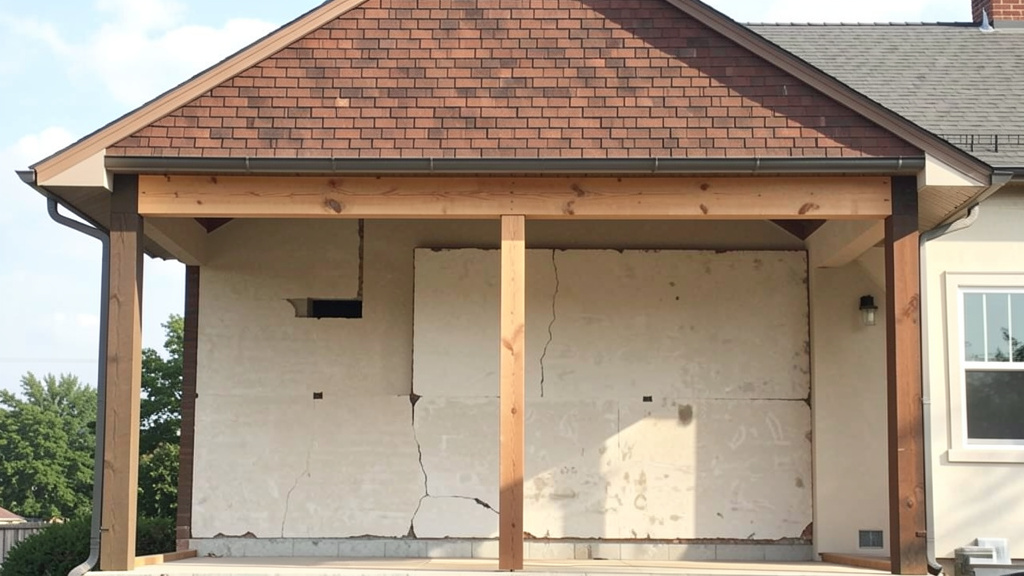
Know Before You Knock: A Step-by-Step Framework to Identify Load-Bearing Walls, Avoid Catastrophic Mistakes, and Navigate Professional Help with Confidence
Before you swing that sledgehammer or sketch that dream open-concept floor plan, pause. What appears to be a simple divider between your kitchen and living room could be the silent guardian holding up your entire second story—or it could be merely defining space with no structural responsibility. Misidentifying a bearing wall (also called a load-bearing wall) as a harmless partition is among the most dangerous, expensive, and emotionally devastating errors a homeowner can make. This meticulously researched guide walks you through every layer of understanding—from foundational physics to permit paperwork—equipping you with visual clues, critical frameworks, and actionable protocols to determine what you can safely modify and when professional intervention isn’t just recommended, but non-negotiable. Your home’s integrity, your family’s safety, and your financial security depend on getting this right.
Introduction: Where Dreams Meet Structural Reality
Picture this: A family spends months planning their kitchen-living room merger. They watch renovation videos, sketch layouts, and imagine holiday gatherings in their new open space. Confident after spotting “hollow” sounds when knocking on the wall, they begin demolition. By afternoon, hairline cracks race across the ceiling above. By evening, the upstairs hallway floor feels subtly uneven. Panic sets in. What they dismissed as a “non-essential divider” was, in fact, carrying the cumulative weight of the master bedroom, bathroom, and roof structure above. The emergency call to a structural engineer comes too late to prevent damage. Repair costs can escalate into the tens of thousands of dollars. Temporary relocation lasts weeks. Trust in their home—and their judgment—is fractured.
This scenario reflects documented patterns reported by municipal building departments and structural engineering firms worldwide. Yet the desire for fluid, connected living spaces is not only valid—it’s architecturally achievable. The critical bridge between aspiration and execution is knowledge paired with disciplined process.
Building codes globally—from the International Residential Code (IRC) in North America to the UK’s Building Regulations Part A and Australia’s National Construction Code (NCC)—exist not as bureaucratic hurdles, but as codified wisdom born from historical failures. These standards universally affirm a core principle: structural modifications require verification by qualified professionals. This guide synthesizes engineering fundamentals, code requirements, real-world case patterns, and practical homeowner protocols into a cohesive framework. It empowers you to investigate intelligently, communicate effectively with experts, and proceed with eyes wide open—never in the dark.
Critical Safety Disclaimer: This article provides educational information only. It does not constitute engineering, architectural, or legal advice. Never remove, modify, or probe any wall without explicit confirmation from a licensed structural engineer or qualified building professional. Always comply with local building codes, secure required permits, and follow all safety protocols. The authors, publishers, and affiliated entities assume no liability for actions taken based on this content. When in doubt, stop and consult a professional.
The 5-Layer Safety Framework: A Systematic Path to Certainty
Approaching wall identification as a single-step “test” invites disaster. Structural assessment is inherently layered—a progressive accumulation of evidence where each layer validates or challenges the next. Skipping layers is how catastrophic errors occur. Developed from standard engineering evaluation protocols and field-tested renovation workflows, this framework guides you from initial curiosity to informed action. Treat it as your decision-making compass. Layer 1 builds awareness. Layer 2 gathers context. Layer 3 delivers authority. Layers 4 and 5 ensure responsible execution. No layer is optional when structural integrity is at stake.
Layer 1: Visual and Physical Clues – Becoming a Structural Detective
This layer is about observation, not conclusion. Walk through your home with deliberate curiosity. Document findings with photos and notes. These clues build a case for professional evaluation—they never replace it. Approach each inspection point methodically.
Exterior Wall Alignment: The Vertical Load Path
Begin outside your home. In conventional wood-frame construction (predominant across North America) and traditional masonry builds (common in Europe and older urban centers), exterior walls are almost universally load-bearing. They support roof loads, upper-floor weights, and resist lateral forces like wind. However, critical exceptions exist:
– Modern engineered systems: Timber-frame, post-and-beam, or steel-frame homes may utilize non-structural “curtain walls” on the exterior, where internal posts carry all vertical loads. The exterior skin serves weatherproofing and aesthetics only.
– Home additions: A wall that is load-bearing in the original 1920s section may be non-structural in a 1990s sunroom addition. Trace the specific wall segment in question.
– Architectural features: Bay windows, dormers, or cantilevered sections may have localized support systems independent of the main wall structure.
Action Protocol: Stand directly beneath the roofline aligned with your interior wall of interest. Use a plumb bob (a weighted string) dropped from the attic access point, or a laser level projected downward through a small inspection hole (created only under professional guidance), to verify vertical alignment between the interior wall and an exterior wall or foundation element below. Consistent alignment across multiple floors significantly increases load-bearing probability.
Attic Investigation: Reading the Roof’s Story
The attic offers unparalleled insight into how loads travel downward. Safety First: Wear an N95 respirator, safety glasses, sturdy boots, and work with a partner. Lay plywood sheets across ceiling joists before stepping—never walk directly on drywall. Use a headlamp and proceed cautiously.
Key elements to observe:
– Ridge Support System: In stick-framed gable roofs (rafters assembled on-site), the ridge board (horizontal peak member) requires support. If a wall runs directly beneath the ridge board’s midpoint, it is almost certainly load-bearing. In contrast, prefabricated roof trusses (triangular units with webbing) often transfer all roof loads to exterior walls only. Critical nuance: Some truss designs—scissor trusses for vaulted ceilings, attic trusses with habitable space, or trusses with purlin braces—may intentionally transfer point loads to interior walls. Do not assume “trusses = no interior load-bearing walls.”
– Joist Orientation: Note the direction of ceiling joists (which are floor joists for the level above). If your wall of interest runs perpendicular (at a 90-degree angle) to these joists, it is highly likely supporting them. If it runs parallel, it may be non-load-bearing—but exercise extreme caution. Walls parallel to joists can still carry concentrated loads (e.g., supporting a beam above that spans between exterior walls) or function as shear walls for lateral stability.
– Beams and Headers: Look for large dimensional lumber (like 4x beams), laminated veneer lumber (LVL), or steel beams running horizontally. Any wall directly beneath such a member is load-bearing by design.
Documented Case Example: During an attic inspection, a homeowner noticed floor joists above the living room ran east-west. The wall separating the living room from the dining room ran north-south—perpendicular to the joists. Further investigation revealed a substantial LVL beam resting directly on top of this wall’s top plate. This visual evidence strongly indicated load-bearing status, prompting them to halt plans and contact an engineer. The engineer confirmed the wall carried a significant portion of the second-floor load. This careful observation prevented a potentially catastrophic error.
Basement and Crawl Space Clues: Following the Path to Foundation
Descend below grade. In unfinished basements or accessible crawl spaces, structural truths are often visible.
– Foundation Connection: Load-bearing walls typically extend continuously from the roof down to the foundation footing. If the wall in question appears as a full-height wall resting directly on the concrete foundation (not stopping short at the subfloor above), it is a primary load-bearing candidate. Partition walls often terminate at the bottom plate of the floor framing above, leaving a visible gap between the wall bottom and the foundation.
– Support Columns and Beams: Identify main support beams (often steel I-beams or large glued-laminated timber) running across the basement. Any wall directly above these beams is load-bearing. Similarly, walls aligned above structural columns or posts transferring load to the foundation are critical structural elements.
– Joist Direction Revisited: Confirm joist direction from below. Perpendicular alignment remains a strong indicator. Pay attention to “joist hangers”—metal brackets securing joists to a beam. Walls beneath these connection points bear significant load.
Common Pitfall Alert: Assuming all walls touching the foundation are load-bearing. While common, some foundation walls support only localized loads (like a porch roof), and interior partition walls may be anchored to the foundation slab for stability without carrying structural loads from above. Context is everything.
Wall Construction Details: Subtle Hints Within Reach
Without removing drywall (which you should never do pre-assessment), observe accessible areas:
– Top Plate Configuration: In framed walls, the top plate is the horizontal lumber connecting wall studs to the structure above. Load-bearing walls frequently feature a double top plate (two layers of 2×4 or 2×6 lumber) to distribute loads and tie wall sections together. Partition walls may have a single top plate. Crucial caveat: Seismic zones (California, Japan, New Zealand) and high-wind regions often require double top plates on all walls for lateral stability, making this clue unreliable alone. Soundproofing upgrades can also add a second plate to partitions.
– Header Size at Openings: Above doors or windows within the wall, the header (horizontal beam) in a load-bearing wall will be substantially larger—often two 2x10s, 2x12s, or an engineered LVL beam—compared to a partition wall header (which might be a single 2×4). However, verifying this requires invasive inspection. Do not cut inspection holes without professional supervision.
– Wall Thickness: While load-bearing walls are sometimes framed with 2×6 lumber (vs. 2×4 for partitions) to accommodate larger headers or insulation, this is inconsistent. Many load-bearing walls use 2x4s; some partitions use 2x6s for plumbing chases or acoustic reasons. Thickness alone is an unreliable indicator.
The Fundamental Principle: Visual clues are investigative breadcrumbs, not verdicts. They build contextual awareness and prepare you for professional consultation—but they cannot account for hidden loads, lateral force requirements, soil conditions, or prior undocumented modifications. A wall appearing “non-structural” based on clues might be critical to your home’s resistance against wind or seismic events. Professional engineering assessment is the only path to certainty.
Layer 2: Blueprint and Documentation Analysis – Decoding Your Home’s DNA
Original construction documents are invaluable—if accessible. This layer transforms guesswork into documented evidence.
Locating and Interpreting Structural Drawings
Start with these sources:
– Local Building Department: Most municipalities archive permit records. Visit or call with your property address. Request copies of original building permits and associated plans. Fees may apply.
– Previous Owners: During home purchase, sellers sometimes provide renovation records. Reach out politely if contact is possible.
– Architect/Builder: If known, contact the original design firm. They may retain digital or physical archives.
– Title Company or Mortgage Lender: Occasionally hold property records including surveys or plans.
Reading the Plans:
– Architectural Floor Plans: Show wall locations but often omit structural notation. Look for symbols: “B” or “LB” frequently denotes load-bearing; “NB” or “P” may indicate non-bearing/partition. Check the legend meticulously.
– Structural Drawings: These are gold. Explicitly label load-bearing walls, beams, columns, foundation details, and shear wall locations. Symbols like thickened lines, cross-hatching, or specific callouts (e.g., “WALL SUPPORTS ROOF TRUSSES”) provide definitive answers. Framing plans show joist and rafter directions with bearing points marked.
– Vertical Trace: Using multi-level plans, trace your wall of interest vertically. Does it align consistently across basement, main floor, and upper floors? Continuous alignment strongly suggests load-bearing function. Note any beams or columns shown directly below or above it.
Critical Limitation: Blueprints reflect the original design. Unauthorized renovations, additions, or repairs over decades may have altered the structural system. A wall marked “NB” on 1970s plans might now carry load due to a later-added second story. Treat blueprints as a powerful starting point, not an absolute endpoint.
Permit History and Renovation Records
Request a permit history search from your building department. This reveals:
– Previous wall removals or structural modifications (with associated engineering stamps).
– Addition permits that may have changed load paths.
– Violation notices related to structural work.
Real-World Insight: A homeowner discovered their “suspect” wall had been modified years prior. Permit records showed a structural engineer had designed and installed a hidden steel beam within the ceiling above the wall opening. The remaining wall segments were non-structural partitions. This documentation provided confidence to proceed with finishing work—without unnecessary engineering costs. Conversely, absence of permits for visible modifications should raise red flags requiring professional verification.
Layer 3: Professional Assessment – The Non-Negotiable Layer of Safety
No amount of DIY research substitutes for licensed expertise when structural modification is contemplated. This layer is not optional; it is the ethical and legal cornerstone of safe renovation.
Understanding Professional Roles: Engineer vs. Contractor
- Licensed Structural Engineer (P.E.): Holds a state/provincial license (denoted by “P.E.” after their name). They possess advanced education and experience in physics, material science, and code compliance. Their role: analyze loads (dead, live, environmental), calculate required beam/column sizes, design support systems, and produce stamped drawings for permits. They are legally accountable for structural safety.
- General Contractor: Executes construction based on engineered plans. A reputable contractor will refuse to remove a wall without stamped engineering drawings. They manage trades (carpenters, electricians), temporary supports, and finishing work.
- Architect: Focuses on spatial design, aesthetics, and code compliance for layout. May coordinate with an engineer but typically does not perform structural calculations unless dually licensed.
Why Engineering is Non-Negotiable:
Engineers perform calculations invisible to the eye:
– Dead Loads: Precise weight of roofing materials, framing lumber, drywall, flooring, and fixed fixtures.
– Live Loads: Anticipated weight of occupants, furniture, snow accumulation (region-dependent), and movable items. IRC specifies minimums (e.g., 40 psf for living areas), but engineers assess actual usage.
– Environmental Loads: Wind pressure coefficients based on home height, location, and exposure; seismic design categories for earthquake zones; snow load maps for regional compliance.
– Material Specifications: Selecting appropriate beam material (solid sawn lumber, LVL, steel I-beam, glulam) based on span, load, deflection limits, fire rating requirements, and connection details.
– Lateral Force Resistance: Evaluating if the wall functions as a shear wall (critical in wind/seismic zones) and designing replacement bracing if removed.
What to Expect During an Assessment:
1. Pre-Visit Preparation: Provide the engineer with photos, blueprint copies (if available), and specific questions. Share your renovation goals.
2. On-Site Inspection (1-2 hours): The engineer will examine the wall, attic, basement, foundation, and adjacent structural elements. They may use moisture meters to check for hidden damage, measure spans, and assess existing framing conditions.
3. Analysis and Reporting: Back at their office, they perform calculations. You receive a formal report including:
– Confirmation of load-bearing status.
– Detailed drawings (beam size, material, column placement, footing requirements, connection details).
– Specifications for temporary supports during construction.
– Notes for permit submission.
4. Cost Context: Fees vary significantly by region, project complexity, and firm size. This investment is trivial compared to potential repair costs, safety risks, or insurance complications from unpermitted work. Always request a written scope and fee agreement upfront.
Red Flags in Professionals:
– “I don’t need to see the attic/basement—I can tell just by looking at the wall.”
– “No engineer needed; I’ve done hundreds of these.” (Experience ≠ licensure for structural design).
– Pressure to skip permits: “We can do it quietly; no one will know.”
– Vague proposals without stamped drawings or calculation references.
– Contractors offering engineering services without displaying a valid P.E. license number.
Preparing for the Engineer Visit: Maximize Efficiency and Value
- Clear access to attic, basement, crawl spaces, and the wall area.
- Compile all documentation: blueprints, prior permits, photos of concerns.
- Prepare specific questions: “Could we create a 10-foot opening instead of full removal?” “What beam options minimize ceiling intrusion?”
- Be present during the inspection to observe and ask clarifying questions.
- Request a timeline for deliverables (report, drawings).
This preparation demonstrates seriousness, streamlines the engineer’s work, and often reduces consultation time—and cost.
Layer 4: Legal and Permitting Requirements – Navigating the Regulatory Landscape
Removing a load-bearing wall without permits is illegal in virtually all jurisdictions and creates significant future liabilities. This layer ensures your project is lawful, insurable, and saleable.
The Permit Process: A Step-by-Step Breakdown
- Application Submission: File with your local building department. Required items typically include:
- Completed application form with property details.
- Signed/stamped structural drawings from your engineer.
- Site plan showing location of work.
- Contractor license information (if using one).
- Application fees (varies widely; common range reflects administrative costs).
- Plan Review: Department staff verify compliance with current building codes (IRC, local amendments, energy codes). This may take several weeks. Requests for clarification (“RFIs”) may delay approval.
- Pre-Construction Inspection: Some jurisdictions require verification of existing conditions before work begins.
- Rough-In Inspection: Critical checkpoint. Inspector verifies:
- Proper installation of temporary supports (“strongbacks”).
- Correct beam size, material, and placement per drawings.
- Adequate column footing size and reinforcement.
- Proper connections (hangers, bolts, welds).
- Work cannot proceed to concealment (drywall) without passing this inspection.
- Final Inspection: Confirms all work matches approved plans, utilities are safely rerouted, and finishing is complete. Issues Certificate of Completion.
Consequences of Skipping Permits:
– Financial: Fines, mandatory remediation at your expense, difficulty obtaining future permits.
– Transactional: During home sale, unpermitted work must be disclosed. Buyers may demand repairs, price reductions, or walk away. Appraisers may not value the modification. Title insurance complications can arise.
– Insurance: Claims related to structural damage from unpermitted work may be denied. Some insurers void policies entirely upon discovery.
– Safety: No independent verification of work quality. Hidden errors can manifest years later as cracks, sagging, or catastrophic failure.
Regional Code Variations: Why Local Knowledge Matters
- United States: IRC is the baseline, but states/counties/cities adopt amendments. Coastal regions require hurricane straps; seismic zones mandate specific retrofit details; northern climates specify deeper footings for frost depth. Your engineer must design to local amendments.
- United Kingdom: Building Regulations Approval (Part A: Structure) is mandatory. A Building Control surveyor (local authority or approved inspector) conducts inspections. Non-compliance can lead to enforcement notices.
- Canada: National Building Code of Canada (NBCC) sets standards, but provinces enforce with variations (e.g., Ontario Building Code, BC Building Code). Frost depth, snow loads, and seismic requirements differ significantly by region.
- Australia: National Construction Code (NCC) Volume Two covers residential. State bodies manage approvals. Bushfire Attack Level (BAL) ratings may influence material choices near openings.
- European Union: Varies by country. Germany follows DIN standards; France uses DTU regulations. Always engage local professionals.
Action Step: Contact your local building department before hiring an engineer. Ask: “What specific documents are required for a load-bearing wall removal permit?” This ensures your engineer prepares compliant submissions, avoiding costly delays.
Layer 5: Contingency Planning and Risk Mitigation – Preparing for the Unexpected
Even meticulously planned projects encounter surprises. This layer builds resilience into your process.
Temporary Support Strategy: The Lifeline During Construction
Before any demolition begins on a load-bearing wall, temporary walls (“strongbacks”) must be erected on both sides to carry the load. This is not optional carpentry—it is critical engineering.
– Construction: Typically built with 2×4 or 2×6 lumber forming a “goalpost” structure: sole plate on floor, top plate against ceiling joists above, with vertical studs and diagonal bracing. Adjustable steel posts (like Acrows) are often integrated for precise height control and load monitoring.
– Placement: Must be positioned per engineering drawings—usually 1–2 feet away from the existing wall on each side. Incorrect placement can concentrate loads dangerously.
– Professional Execution: This task should be performed by experienced contractors under engineering guidance. Improper temporary supports have caused immediate collapses during renovations. Never attempt this as a DIY step.
Anticipating Common Failure Points and Hidden Challenges
- Inadequate Beam Sizing: A beam undersized by even one designation can lead to excessive deflection (“sagging”). Over time, this causes drywall cracks, sticking doors, uneven floors, and compromised structural performance. Engineers calculate deflection limits (e.g., L/360 for live loads) to prevent visible sag.
- Column Footing Failures: Columns must transfer load to stable soil or foundation. Placing a column on a weak wood floor without a properly sized concrete footing can cause “punch-through”—where the column sinks through the floor. Engineers specify footing dimensions (width, depth, rebar) based on soil bearing capacity.
- Lateral Load Compromise: Removing a wall that functioned as a shear wall (resisting wind/earthquake forces) without installing replacement bracing (plywood shear panels, steel moment frames) jeopardizes the entire structure’s stability during extreme events. Engineers assess lateral system continuity.
- Utility Rerouting Complexities: Walls often contain:
- Electrical: Main panels, subpanels, or major circuit runs. Requires licensed electrician; may need panel relocation.
- Plumbing: Drain-waste-vent (DWV) stacks are vertical pipes critical to drainage. Rerouting is complex, expensive, and requires slope calculations. Water supply lines are easier but still need professional handling.
- HVAC: Ductwork rerouting affects airflow balance; may require new registers or duct resizing.
- Data/Communications: Ethernet, coaxial cables. Plan relocation early.
- Material Surprises: Asbestos (in drywall compound, insulation pre-1980s), lead paint (pre-1978), or hidden structural damage (rot, insect infestation) may be discovered. Budget for abatement contingencies (typically 10–15% of project cost).
Realistic Budgeting Framework: Beyond the “Ballpark Quote”
| Wall Type | Typical Cost Range (USD) | Key Cost Drivers | Professional Involvement Required |
|---|---|---|---|
| Partition Wall | $500 – $3,000 | Length, finishing complexity, utility presence | Handyman or contractor; verify non-structural first |
| Load-Bearing Wall (Partial Opening) | $8,000 – $20,000 | Beam size/material, opening width, utility rerouting | Structural engineer, licensed contractor, permits |
| Load-Bearing Wall (Full Removal) | $15,000 – $40,000+ | Beam span, column placement, foundation work, finishing | Structural engineer, licensed contractor, multiple inspections |
Note: All cost ranges are approximate estimates based on aggregated industry data and homeowner reports. Actual project costs vary significantly by geographic location, home age and condition, material selections, and local market conditions. Always obtain detailed, written quotes from licensed professionals for your specific situation.
Budget Breakdown Considerations for Load-Bearing Removal:
– Engineering Assessment & Drawings: Varies by region and complexity
– Permit Fees: Administrative costs set by local jurisdiction
– Temporary Supports & Demolition: Labor and material intensity
– Beam & Column Materials: Steel beams typically cost more than engineered wood but allow longer spans
– Structural Installation Labor: Skill-intensive work requiring precision
– Utility Rerouting (Electric/Plumbing/HVAC): Complexity depends on wall contents
– Drywall, Finishing, Painting: Scope depends on opening size and aesthetic goals
– Contingency (10–15%): Essential buffer for unforeseen conditions
Cost-Saving Strategies That Don’t Compromise Safety:
– Get 3 detailed bids from licensed contractors. Ensure bids reference the same engineered drawings for accurate comparison.
– Discuss beam options with your engineer: An LVL beam may be more cost-effective than steel for moderate spans while meeting code requirements.
– Handle non-structural finishing tasks yourself (painting, trim installation) after structural work is inspected and approved.
– Schedule work during contractor off-seasons where weather permits; discuss timing implications with your contractor.
Beyond the Binary: Nuanced Scenarios and Persistent Misconceptions
Real homes defy simplistic categories. Understanding these complexities prevents dangerous oversimplification.
Scenario Deep Dive: The “Maybe” Wall in Common Home Styles
- Ranch-Style Homes: Often feature a central load-bearing wall running the home’s length, supporting roof trusses or stick-framed rafters. However, modern ranches using clear-span trusses may have no interior load-bearing walls. Clue: If attic trusses span the entire width without interior supports, the wall below is likely non-structural—but could still be a shear wall. Verification is essential.
- Two-Story Colonial Homes: Exterior walls and the central hallway wall are typically load-bearing. But second-floor walls may not align directly above first-floor walls. Instead, a hidden beam in the first-floor ceiling might support the second-floor wall. Removing the first-floor wall without knowing about this beam is perilous. Always trace loads vertically through all levels.
- Split-Level or Bi-Level Homes: Complex floor offsets create unique load paths. A wall on the “middle” level might support sections of both upper and lower floors. These require especially careful engineering analysis.
- Mid-Century Modern Homes: Often feature post-and-beam construction where interior walls are predominantly non-structural partitions. However, some designs incorporate shear walls for lateral stability. Never assume based on architectural style alone.
Partition Walls with Hidden Complexity: Don’t Be Fooled
A wall confirmed as non-load-bearing may still present significant challenges:
– Plumbing Stack Walls: Contain vertical drain pipes (often 3–4″ diameter). Rerouting requires maintaining proper slope (¼” per foot), venting, and access for future maintenance. Costs can rival structural removal. A plumber’s assessment is mandatory before demolition.
– Electrical Service Walls: May house the main electrical panel. Relocating a panel requires utility coordination, new conduit runs, and significant electrical work. Often more economical to design around it.
– HVAC Chase Walls: Contain large supply or return ducts. Rerouting affects system efficiency and may require duct resizing or new register placement. Consult an HVAC technician.
– Acoustic or Fire-Rated Partitions: In multi-unit buildings (condos, townhomes), partition walls between units often have fire-resistance ratings (e.g., 1-hour rating) requiring specific assemblies (double drywall, fire tape, insulation). Removal/modification violates building codes and HOA rules. Always check governing documents.
Debunking Persistent Myths: Truth vs. Dangerous Fiction
-
Myth: “If the wall runs parallel to the floor joists, it’s definitely safe to remove.”
Truth: While parallel alignment reduces likelihood of vertical load-bearing, exceptions abound. The wall could support a point load (e.g., a heavy stone fireplace above), function as a shear wall, or carry load from a perpendicular beam above. Engineering verification is still required. -
Myth: “Knocking on the wall tells you everything—hollow sound means partition.”
Truth: Sound is influenced by insulation type/density, stud spacing, wiring, plumbing, and drywall thickness. Both wall types can sound hollow or solid. This method has zero engineering validity and has contributed to documented failures. -
Myth: “All exterior walls are load-bearing; all interior walls are partitions.”
Truth: While exterior walls are typically load-bearing, exceptions exist in engineered systems (curtain walls). Conversely, many interior walls are critical structural elements. Age is irrelevant—both century-old and newly built homes can have interior load-bearing walls. -
Myth: “If previous owners removed a similar wall without issues, this one is safe too.”
Truth: Each wall exists within a unique structural context. Load paths differ based on room layout, roof design, and modifications. Past outcomes are not predictive of future safety. Never use anecdotal evidence as justification. -
Myth: “Stud finders or thermal cameras can identify load-bearing walls.”
Truth: These tools detect framing members or temperature differences—not structural function. A stud finder shows stud locations in both wall types. Relying on them for structural assessment is dangerously misleading.
When Removal Isn’t Feasible: Creative, Safe Alternatives
If engineering confirms a wall is load-bearing and removal is cost-prohibitive, structurally unwise, or prohibited (e.g., in heritage homes), these alternatives achieve design goals without compromising safety.
Option 1: Strategic Partial Removal – The Pass-Through Solution
Create an opening in the upper portion of the wall (typically above 60–72 inches) to establish visual connection and light flow while preserving structural integrity below.
– Engineering Requirement: Still requires a header above the opening sized for the remaining wall span. An engineer must specify header dimensions and support details.
– Design Applications:
– Kitchen pass-through with countertop extension below.
– Decorative arched opening with millwork.
– Upper-wall cutout for displaying art or plants.
– Advantages: Lower cost than full removal, preserves structural function, maintains room definition while enhancing openness.
Option 2: Design Integration – Celebrating the Wall
Transform the wall from obstacle to asset:
– Built-In Functionality: Install floor-to-ceiling bookshelves, display cabinets, or a window seat. This adds storage and character while respecting the wall’s purpose.
– Architectural Enhancement: Apply wainscoting, shiplap, or textured plaster. Use bold paint colors, wallpaper, or integrated lighting (sconces, cove lighting) to make it a focal point.
– Strategic Furnishings: Place a console table, sofa back, or room divider (like a tall bookshelf) against the wall to define zones without permanent alteration. This is fully reversible.
Option 3: Relocate the Opening – Engineering a New Path
If your goal is to shift a doorway or create a larger opening within the wall (not full removal), an engineer can design a new header system to relocate the opening safely. This preserves the wall’s overall structural role while optimizing flow. Particularly useful for improving traffic patterns without eliminating the wall entirely.
Option 4: Optical Illusions – Perceived Openness
- Mirrors: Strategically placed large mirrors reflect light and create illusion of depth.
- Consistent Finishes: Use identical flooring, trim profiles, and color schemes across rooms to visually unify spaces separated by walls.
- Sightline Management: Arrange furniture to face across the wall opening; use low-profile seating to maintain sightlines.
These alternatives honor your home’s structural logic while achieving aesthetic and functional goals. They demonstrate thoughtful design rather than forced alteration.
Your Questions, Answered: Real Concerns from Homeowners
Q: Can I remove a partition wall myself if I confirm it’s non-load-bearing?
A: Proceed with extreme caution. First, obtain written confirmation from a qualified professional (contractor, engineer) that the wall is non-structural. Then:
– Turn off electricity at the main breaker before cutting into the wall. Verify wires are dead with a voltage tester.
– Check for plumbing pipes (listen for water flow, look for shut-off valves nearby) or gas lines (distinctive yellow tape, smell).
– Use a stud finder with AC wire detection as a preliminary scan only—never rely solely on it.
– Wear safety gear: goggles, respirator, gloves.
– Be prepared for dust containment, drywall repair, texturing, and painting.
If you lack experience with demolition, utility safety, or finishing work, hiring a handyman is prudent. The greatest risk remains misidentification—never skip professional verification.
Q: How much does a structural engineer assessment typically cost, and what exactly do I get?
A: Costs vary significantly by region, project complexity, and firm size. You should receive:
– A formal letter or report stating the wall’s structural status.
– Detailed construction drawings (beam specifications, column details, connection methods, temporary support instructions).
– Calculations summary (often referenced but not fully detailed in residential reports).
– Notes specific to local code requirements.
Always request a written scope of services and fee agreement before engagement. This investment prevents exponentially higher costs from errors.
Q: What are the unmistakable warning signs that a previous wall removal was done incorrectly?
A: Monitor for these progressive indicators:
– Cracking Patterns: Diagonal cracks radiating from door/window corners; horizontal cracks along ceiling-wall joints; cracks that widen noticeably over weeks/months.
– Operational Issues: Doors or windows that suddenly stick, won’t latch, or have uneven gaps.
– Visible Deflection: Sagging ceiling or floor near the removal site; visible “dip” when placing a level on the floor.
– Gaps and Separation: Spaces opening between walls and ceilings; baseboards pulling away from floors.
– Audible Cues: Creaking, popping, or cracking sounds from the structure, especially during temperature changes or wind events.
If you observe any of these, cease use of the area if safe to do so, and contact a structural engineer immediately. Do not wait—early intervention prevents escalation.
Q: Is there any scenario where a load-bearing wall can be removed without installing a beam or support system?
A: No. Physics is non-negotiable. Vertical loads must be transferred continuously to the foundation. Removing a load-bearing element without providing an equivalent load path (beam, column, wall system) will result in structural failure—ranging from gradual sagging to sudden collapse. Methods like “flush beams” (recessed into the ceiling joist space) still utilize a beam; they simply minimize visual intrusion. There are no safe shortcuts. Any professional suggesting otherwise should be reported to licensing authorities.
Q: How long does the entire process realistically take—from initial inquiry to finished space?
A: Plan meticulously. Rushing leads to errors. Typical timeline:
– Research & Professional Selection: 1–2 weeks
– Engineer Assessment & Drawing Preparation: 1–3 weeks
– Permit Application & Approval: 2–8 weeks (highly variable by municipality)
– Contractor Scheduling: 2–6 weeks (depends on season and availability)
– Construction Phase:
– Partition wall: 1–3 days
– Load-bearing wall (partial opening): 3–7 days
– Load-bearing wall (full removal): 5–14 days
– Finishing Touches (painting, flooring): 2–5 days
Total: Allow 2–4 months for load-bearing removal projects. Communicate timelines clearly with family and contractors. Patience ensures safety and quality. Additionally, factor in regional weather patterns; scheduling structural work during stable weather seasons can prevent delays and protect the work site from moisture-related complications.
Q: Are there walls that are always load-bearing, without exception?
A: While engineering avoids absolute statements (every structure is unique), these carry extremely high probability:
– Exterior walls in conventional wood-frame, masonry, or stick-built homes.
– Walls running continuously from foundation to roof ridge in multi-story homes.
– Walls directly beneath roof ridge boards in stick-framed gable roofs.
– Walls supporting visible beams, girders, or columns in basements/attics.
However, “always” is dangerous language in structural assessment. Modern engineered systems create exceptions. Professional verification remains the only certainty. Never assume based on location alone.
Q: What if my home has no accessible attic or basement for inspection?
A: This complicates Layer 1 but does not eliminate the need for professional assessment. Engineers employ alternative methods:
– Reviewing original blueprints or historical records.
– Creating small, strategic inspection holes (¼” diameter) in inconspicuous locations (e.g., inside a closet) to insert a borescope camera.
– Analyzing architectural style, era, and regional construction practices.
– Using non-destructive testing tools (though less common for residential).
Do not proceed with demolition based on limited access. Hire an engineer experienced with your home type—they have protocols for these scenarios.
Q: Can removing a partition wall negatively impact my home’s value?
A: Yes, under specific circumstances:
– Removing a wall that housed critical utilities without proper rerouting creates future maintenance headaches buyers will discount.
– Eliminating functional space (e.g., a closet, pantry) reduces practical utility.
– Creating an awkward, oversized room that feels cavernous or lacks definition.
– Performing unpermitted work (even on partitions) raises red flags during sale.
Conversely, thoughtfully removing a partition to create a desirable open layout (e.g., kitchen-dining flow) typically increases value. Document all work, secure permits where required, and ensure high-quality finishing. When in doubt, consult a local real estate agent about market preferences.
Q: I live in a condominium or townhome. Can I remove any interior walls?
A: Proceed with extreme caution. Most condominium declarations and HOA bylaws strictly prohibit structural modifications without explicit written approval. Reasons include:
– Shared walls may be fire-rated assemblies; breaching them violates fire codes.
– Structural changes in one unit can affect the entire building’s integrity.
– Alterations may violate original engineering certifications.
Steps required:
1. Review your HOA governing documents thoroughly.
2. Submit formal modification request to HOA board with engineered drawings.
3. Obtain written approval before contacting engineers or contractors.
4. Secure all municipal permits.
Unauthorized wall removal in multi-unit buildings can trigger fines, mandatory restoration costs, and legal liability. When in doubt, assume “no” until proven otherwise through official channels.
Q: What exactly is a shear wall, and how does it differ from a standard load-bearing wall?
A: Understanding this distinction is critical for safety:
– Load-Bearing Wall: Primarily supports vertical (gravity) loads—weight of roof, floors, contents above.
– Shear Wall: Primarily resists lateral (horizontal) forces—wind pressure, seismic activity. It prevents the structure from racking (leaning like a parallelogram). Shear walls are often load-bearing too, but not always.
Identification Clues: Shear walls typically feature plywood or OSB sheathing (not just drywall) on at least one side, specific nailing patterns (closer spacing), metal hold-down brackets at ends, or diagonal steel bracing. They are strategically placed (often at building corners or stairwells).
Critical Warning: Removing a shear wall without engineered replacement bracing compromises the entire building’s ability to withstand storms or earthquakes. Engineers assess lateral system requirements during any wall removal evaluation. Never assume a wall is “just” load-bearing.
Q: How do I verify a structural engineer is properly licensed and qualified?
A: Due diligence protects you:
– License Verification: In the U.S., visit your state’s Professional Engineering licensing board website (search “[State] PE license lookup”). Confirm active status, discipline history, and license number matches what they provide. Look for “Structural Engineering” as a noted competency.
– Credentials: Confirm “P.E.” (Professional Engineer) designation. In some regions (e.g., California), a separate “S.E.” (Structural Engineer) license exists for complex projects.
– Experience: Ask specifically about residential renovation experience, particularly wall removals in homes of your era/style. Request references from past clients.
– Insurance: Verify they carry professional liability (errors & omissions) insurance. Request certificate of insurance.
– Conflict Check: Avoid engineers who are also contractors on your project—this creates a conflict of interest. Their role should be independent verification and design.
Reputable engineers welcome these questions. If they resist verification, walk away.
Q: Is it ever acceptable to remove a load-bearing wall in stages over several months?
A: Absolutely not. Structural modifications must be executed as a single, continuous process under engineering supervision. Temporary supports (“strongbacks”) are designed for short-term use (days, not months). Leaving a wall partially removed or relying on temporary supports long-term creates extreme risk:
– Wood supports can creep (slowly deform) under constant load.
– Environmental factors (humidity, temperature swings) affect material stability.
– Accidental impact or vibration could dislodge supports.
– Insurance would not cover damage from prolonged improper support.
The entire sequence—from installing temporary supports to final beam placement and inspection—must be completed without interruption. Schedule accordingly. Safety cannot be staged.
Conclusion and Your Next Step: Building Confidence Through Process
The Three Unbreakable Principles
- Evidence Over Assumption: Visual clues inform curiosity but never replace professional verification. Document observations, but let engineering analysis deliver the verdict.
- Process Over Impulse: Permits, engineering stamps, and inspections are not bureaucratic obstacles—they are layered safeguards protecting your safety, investment, and community. Honor the process.
- Respect Over Force: Your home is an integrated system. Walls exist for reasons—structural, functional, historical. Approach modification with humility, patience, and collaboration with qualified experts.
The 24-Hour Rule: Your Commitment to Safety
Before taking any physical action—before calling contractors, searching for tools, or making demolition plans—implement this non-negotiable pause:
1. Wait 24 full hours after completing your research.
2. During this time:
– Walk through your home and photograph walls of interest (without touching them).
– Locate your property address and contact your local building department to inquire about permit requirements.
– Search for “licensed structural engineer [your city]” and compile 3 potential contacts.
– Review this guide’s Layer 1 clues and document your observations neutrally.
This intentional pause transforms reactive impulse into proactive planning. It creates space for wisdom to override excitement. It is the single most impactful step you can take toward a safe, successful outcome.
The Bigger Picture: Renovation as Stewardship
Wall removal sits at the intersection of dreams and physics. When approached with knowledge, respect, and disciplined process, it can beautifully transform how you live in your home. But the path requires acknowledging that some walls deserve to remain—not as barriers, but as guardians of safety and integrity. True renovation mastery lies not in what you remove, but in understanding why something exists and making intentional choices aligned with your home’s structural truth. Honor the craftsmanship that built your home. Partner with qualified professionals. Proceed with eyes wide open. And when the time is right—with stamped drawings in hand, permits secured, and experts guiding the way—you can confidently create the space you envision, knowing it stands on a foundation of safety, legality, and peace of mind.
Explore Our Complete Home Renovation Safety System:
Understanding Your Home’s Skeleton: A Visual Guide to Residential Framing Systems | When to Call an Engineer: 10 Home Projects That Demand Professional Oversight | The Permitting Process Decoded: A Homeowner’s Step-by-Step Checklist | Hidden Hazards Behind Drywall: A Safe Investigation Protocol for DIYers | Open Concept Done Right: Design Strategies That Honor Structural Integrity | Post-Renovation Peace of Mind: How to Monitor Your Home After Structural Changes | The Responsible Renovator’s Pledge: Building Knowledge, Safety, and Confidence