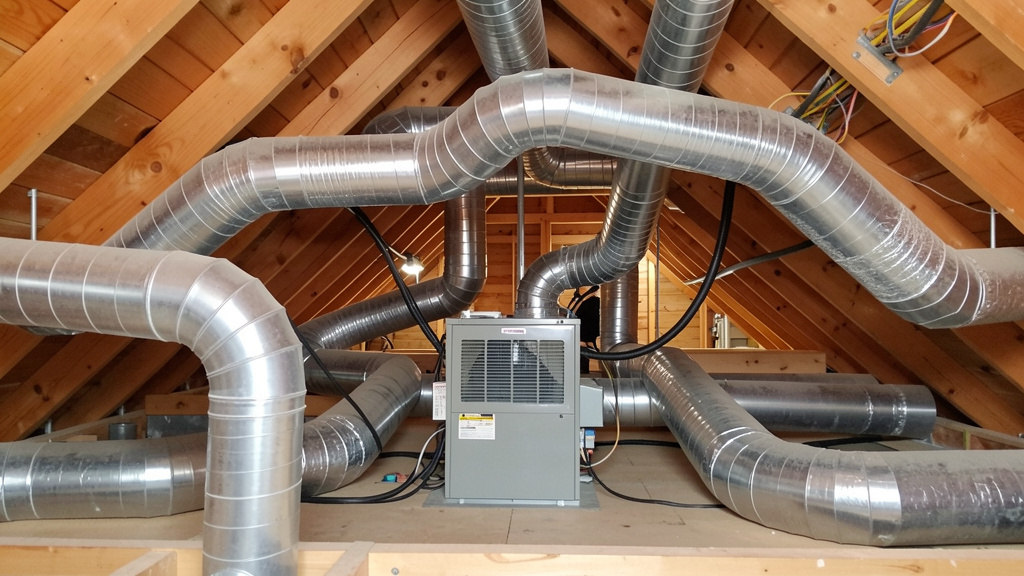
Understand the Principles That Shape Comfort—A Clear, Measured Framework to Evaluate, Discuss, and Improve Your Home’s Air Delivery System
Your home’s ductwork functions as its respiratory system—unseen yet vital to daily comfort and efficiency. When thoughtfully designed and maintained, it supports consistent temperatures, supports indoor air quality, and helps your HVAC equipment operate as intended. When compromised by leaks, imbalances, or outdated practices, it may contribute to uneven temperatures, increased energy use, or reduced air quality. This guide translates established engineering principles into accessible concepts grounded in standards like ACCA Manual J/D, ASHRAE fundamentals, and the International Mechanical Code. Whether you’re planning new construction, considering a renovation, or seeking to understand existing comfort challenges, this resource offers a structured way to engage with ductwork design—without oversimplification or unwarranted certainty.
Introduction: Why Air Pathways Matter
Consider a high-efficiency HVAC system connected to poorly sealed or unbalanced ducts. According to the U.S. Department of Energy, duct leakage in unconditioned spaces (like attics or crawlspaces) can account for meaningful energy loss in some homes—though actual impact varies widely based on climate, construction, and system age. Beyond efficiency, airflow imbalances may affect comfort: a bedroom that feels drafty in summer, a living area slow to warm in winter, or spaces where air feels stagnant. These experiences often trace back to how air moves through—and returns from—each room.
This isn’t solely a technical concern. It connects to lived moments: a child adjusting layers due to room temperature swings, a guest room avoided in peak seasons, or concerns about dust circulation. Ductwork sits at the intersection of physics, building science, and human experience. While equipment captures attention, the delivery system determines how effectively that equipment serves your space. Drawing from widely recognized industry protocols—not personal anecdotes—this guide provides a clear lens to evaluate airflow pathways. Clarity begins with a repeatable framework.
The Balanced Air Framework: Three Interconnected Layers
Reliable duct design follows a sequential, physics-informed process. We refer to this as the Balanced Air Framework—a structure aligned with protocols used by professionals adhering to ACCA, RESNET, and ENERGY STAR® design guidelines. It emphasizes measurable inputs over assumptions and treats ductwork as part of a larger home system. Mastery of these layers builds confidence when discussing options with contractors or evaluating existing conditions.
Layer 1: Foundational Inputs – Defining What the System Must Deliver
Design begins not with duct sizes, but with understanding the thermal needs of each space. Skipping this step risks mismatched airflow—too little where needed, too much where it causes discomfort.
Room-by-Room Load Assessment: Moving Beyond Square Footage
Many outdated approaches estimate system size using rules like “one ton per X square feet.” This overlooks critical variables: window area and orientation, insulation quality, ceiling height, local climate patterns, and internal heat sources (appliances, lighting, occupancy). Industry best practice uses a room-by-room heating and cooling load calculation (per ACCA Manual J or ISO 13790 internationally). This estimates the BTUs required to maintain target temperatures in each space under design conditions.
Why this matters: An oversized system may short-cycle, reducing dehumidification in humid climates and causing temperature fluctuations. An undersized system may struggle to reach setpoints during extreme weather. For instance, a south-facing room with large windows often requires more cooling airflow than a similarly sized interior room—a nuance only load calculations reveal.
How to recognize thorough work: Request the load calculation report. It should list each room’s sensible/latent cooling loads and heating loss values. Red flags include a single “total house” number without room breakdowns or reliance solely on floor area. Reputable designers use accredited software (e.g., Wrightsoft, Elite) and reference local climate data.
Important nuance: More airflow isn’t inherently better. Precision in matching airflow to calculated need supports comfort and efficiency. Over-delivery can create drafts, noise, or pressure issues.
Understanding Static Pressure: The System’s Resistance Profile
Static pressure reflects the resistance air encounters moving through filters, coils, ducts, and registers—measured in inches of water column (in. w.c.). Think of it like water pressure in a hose: too high, and the pump strains; too low, and flow is weak. Residential systems typically operate within manufacturer-specified ranges (often 0.5–0.7 in. w.c. total external static pressure, or TESP).
Why this matters: Elevated static pressure (>0.8 in. w.c. in many systems) may increase energy use, accelerate blower wear, and reduce delivered airflow. Very low pressure can indicate leaks or undersized components, potentially affecting dehumidification.
How it’s assessed: Professionals sum resistance values:
– Air filter: varies by MERV rating and design (e.g., 0.10–0.30 in. w.c.)
– Evaporator coil: per manufacturer data (e.g., 0.20–0.40 in. w.c.)
– Duct pathways: calculated based on length, fittings, and sizing
Practical insight: A system with a high-MERV filter, restrictive coil, and tightly bent ducts may exceed blower capacity. Solutions could include selecting a lower-resistance filter where air quality allows, optimizing duct layout, or verifying equipment specifications.
Analogy: Straightening kinks in a garden hose improves flow without increasing pump effort. Similarly, smoother duct pathways reduce unnecessary resistance.
Translating Loads to Airflow Targets (CFM)
Once room loads are established, required airflow is calculated in cubic feet per minute (CFM). While a common baseline is ~400 CFM per ton of cooling capacity for the entire system, room allocation varies proportionally:
(Room Load ÷ Total System Load) × Total System CFM = Target Room CFM
Example context: In a theoretical 3-ton cooling system delivering 1,200 CFM total:
– A room with 4,500 BTU cooling load: (4,500 ÷ 36,000) × 1,200 ≈ 150 CFM
– A room with 6,000 BTU load: (6,000 ÷ 36,000) × 1,200 ≈ 200 CFM
This proportional approach helps prevent common imbalances—like bedrooms receiving insufficient airflow while central areas feel over-conditioned. Actual values depend entirely on the specific load calculation for your home.
Layer 2: Component Selection – Matching Materials and Methods to Context
With airflow targets defined, physical components are selected to deliver air efficiently, quietly, and durably—accounting for real-world constraints like space, budget, and local conditions.
Duct Sizing: Balancing Velocity, Noise, and Space
Professional sizing commonly follows the Equal Friction Method (ACCA Manual D):
1. Determine available static pressure for ducts (total allowable TESP minus coil/filter resistance).
2. Calculate friction rate: (Available Static Pressure ÷ Total Effective Length) × 100.
3. Select duct sizes where air velocity remains within recommended ranges:
– Main trunks: typically under 900 FPM to limit noise
– Branch runs to rooms: often under 400–600 FPM for comfort
Why velocity matters: Air moving too quickly through branches can cause register noise or uncomfortable drafts; too slowly may not circulate air effectively.
Sizing example: For a branch requiring ~150 CFM:
– 6″ round duct: ~710 FPM (may be noisy in quiet spaces)
– 7″ round duct: ~490 FPM (acceptable for shorter runs)
– 8″ round duct: ~350 FPM (often preferred for quieter operation)
Adaptive considerations:
– Space-limited scenarios: Flat oval ducts maintain cross-sectional area where round ducts won’t fit. Avoid compressing flex duct—flattening reduces airflow capacity significantly.
– Budget awareness: Slightly oversized branch ducts often operate more quietly and efficiently than minimally sized ones. Prioritize sizing critical runs correctly; minor adjustments elsewhere may be acceptable within system constraints.
– Critical note: Never select duct size based solely on available framing space. Work with a designer to explore routing alternatives if ideal sizing conflicts with structure.
Material Selection: Purpose-Driven Choices
No single material suits all applications. Selection depends on location, function, and environmental factors:
| Application | Common Material Options | Key Considerations | Installation Notes |
|---|---|---|---|
| Main supply trunk | Sheet metal (galvanized) | Lower resistance, durable, non-porous | Seal seams with UL-181A mastic; avoid standard tape |
| Branch runs | Rigid metal or insulated flex | Flex offers maneuverability; metal preferred straight runs | Support flex every 4 ft; avoid sharp bends (>1.5x duct diameter) |
| Returns (primary) | Sheet metal trunk + branches | Minimizes resistance on critical return path | Ensure grille area matches or exceeds supply area |
| Unconditioned spaces | Insulated flex (R-6 min) | Prevents condensation & thermal loss | Seal all connections meticulously; verify local code |
| High-moisture areas | Aluminum flex (vs. vinyl) | Better resistance to moisture-related degradation | Slope slightly toward air handler if condensation possible |
Contextual details:
– Insulation requirements vary by climate zone (per IECC: R-6 minimum in warmer zones, R-8+ in colder zones). Uninsulated ducts in hot attics may lose meaningful cooling capacity before air reaches living spaces.
– Flex duct has higher resistance per foot than rigid metal. Using it for entire systems may increase static pressure. Reserve for final connections where flexibility is essential.
– Always verify material choices against local building codes, which may have specific requirements for fire resistance, insulation, or sealing.
Register and Grille Strategy: Directing Air Thoughtfully
Registers (supply) and grilles (return) influence air pattern, noise, and mixing. Selection aligns with room CFM targets and layout:
– Throw distance: Match register size to airflow. A 100 CFM room may use a 6″x10″ register (8–10 ft throw); 200 CFM may need 8″x14″ (12–15 ft). Directional vanes help guide airflow away from seating areas.
– Placement logic:
– Supply registers on exterior walls (e.g., under windows) can counteract cold downdrafts in heating seasons.
– Return grilles ideally positioned on interior walls, opposite supplies, to encourage cross-room circulation.
– Avoid placing returns immediately adjacent to supplies—this may cause short-circuiting (conditioned air returning before mixing).
– Multi-level homes: Include return pathways on each occupied level. Closed bedroom doors can block airflow; solutions include 1″ door undercuts, transfer grilles above doors, or jump ducts.
Seasonal note: In predominantly cooling climates, ceiling supplies may aid air mixing; in heating-dominant climates, floor-level supplies leverage natural convection. Adjustable registers offer flexibility.
Layer 3: Verification and Refinement – Confirming Real-World Performance
Design intent must align with installed performance. Verification transforms assumptions into documented outcomes.
Total System Airflow Check
After installation, measured airflow should align with design targets (typically ~400 CFM per ton of cooling capacity).
Professional method: Technicians measure temperature change across the coil/furnace and apply:
BTU Output ÷ (1.08 × Temp Rise) = Approx. CFM
Homeowner observation: While not a substitute for measurement, noting consistent airflow strength at registers (e.g., using a tissue test—see Conclusion) can indicate relative balance. Significant discrepancies warrant professional review.
Interpretation: Low airflow may signal filter restriction, coil dirt, duct leaks, or undersizing. High airflow might reduce dehumidification effectiveness in humid climates.
Room-by-Room Airflow Balancing
Even well-designed systems may need fine-tuning due to installation variables.
Professional process: Using a calibrated flow hood, technicians measure airflow at each register and adjust manual dampers to approach target CFM values from the load calculation.
Homeowner insight: Balance isn’t about making all registers identical. A kitchen typically requires more airflow than a closet. The goal is proportional delivery based on each room’s calculated need.
Practical check: With HVAC running, hold a lightweight tissue 6″ from each supply register. It should adhere steadily—not flutter violently (excess air) or fall limp (insufficient air). Note rooms where behavior differs noticeably; this can inform discussions with a technician.
Duct Leakage Assessment
Industry standards (e.g., BPI) suggest leakage should be minimized—ideally under 10% of system airflow when tested at 25 Pascals. Many existing systems exceed this.
Testing method: A calibrated “duct blaster” fan pressurizes the system while measuring leakage airflow.
Where leaks commonly occur:
– Takeoff connections (branches to trunk)
– Flex-to-collar joints
– Plenum seams (near air handler)
– Penetrations through walls/floors
Sealing protocol:
– Use UL-181A mastic (water-based sealant) on sheet metal seams and irregular joints.
– Use UL-181A metal-backed tape on straight seams; burnish firmly after application.
– For flex connections: secure with zip tie over wire reinforcement, then seal entire collar joint with mastic.
– Avoid standard cloth “duct tape”—it degrades with temperature cycles.
Verification: Post-sealing, a smoke pencil or incense stick held near joints (with system pressurized) can reveal remaining leaks in accessible areas. Quantitative testing requires professional equipment.
Realistic expectation: Sealing accessible leaks often yields noticeable comfort improvements and potential energy savings, though exact savings vary by home, climate, and prior condition.
The Guiding Insight: Airflow delivery is a measurable aspect of comfort. Every design choice—from load calculation to sealing details—should support the reliable, balanced movement of air to where it’s needed, when it’s needed.
Adapting Layouts to Home Architecture and Climate
No single duct layout fits all homes. Effective design responds to structure, climate patterns, and usage. Below are common scenarios with adaptable strategies—always verified against room-specific load calculations.
Single-Story Homes: Managing Perimeter Loads
Long exterior walls create higher heating/cooling demands at the perimeter versus interior zones.
Adaptive approach:
– Route main supply trunk along an interior hallway.
– Feed higher-load perimeter rooms first with appropriately sized branches.
– Place primary return grille(s) in central hallway—not bedrooms—to avoid short-circuiting.
– In hot climates: Consider supplemental returns in sunrooms or south-facing zones prone to heat buildup. Without return pathways, pressure imbalances can restrict supply airflow.
Avoid: Symmetric “spider-web” layouts that treat all rooms identically regardless of load differences.
Two-Story Homes: Addressing Natural Air Movement
Warm air rises—a phenomenon pronounced in winter (upper floors warmer) and sometimes reversed in summer cooling scenarios.
Strategy options:
– Zoned systems: Motorized dampers and separate thermostats per floor allow tailored operation. Requires careful static pressure management; closing too many dampers simultaneously may strain the blower.
– Enhanced return pathways (common retrofit):
– Install a dedicated return grille in the upstairs hallway.
– Add a return in the basement or lower level if absent.
– Ensure bedroom doors have adequate undercut (≈1″) or transfer grilles to allow air circulation back to returns. Closed doors can block return paths, reducing supply airflow to that room by 30–50%.
Existing home tip: Adding an upstairs return duct (e.g., routed through a closet) often resolves a majority of vertical imbalance complaints. Consult a professional to assess feasibility.
Basements and Crawlspaces: Prioritizing Moisture Management
These spaces present unique humidity and access challenges.
Basements:
– Only supply conditioned air to finished, insulated basements.
– Unfinished basements generally should not have supply registers—cooling unconditioned space wastes energy and risks condensation on cold duct surfaces.
Crawlspaces:
– Always insulate ducts (minimum R-6; R-8+ recommended in humid or extreme climates). Uninsulated ducts in summer humidity can sweat, promoting mold.
– Suspend insulated flex duct ≥6″ above ground on proper hangers.
– Seal all joints meticulously with mastic.
– Ensure crawlspace has a vapor barrier (≥6-mil poly) and adequate ventilation or dehumidification per local code.
Alternative path: If crawlspace conditions are persistently damp or inaccessible, rerouting ducts through conditioned interior walls may offer long-term reliability despite higher initial effort.
Open-Concept vs. Compartmentalized Layouts
- High ceilings / vaulted spaces: Heat stratifies near the ceiling. Solutions:
- Use high-wall or ceiling registers with adjustable vanes (direct downward in heating season; horizontal in cooling).
- Larger rooms may need multiple registers placed diagonally for even coverage.
- Many small, closed rooms: Prioritize return air pathways. Each closed room needs a path for air to exit: door undercuts, transfer grilles, or jump ducts. Without this, closing a door can severely restrict airflow to that space.
Climate note: In humid regions, ensuring adequate runtime for dehumidification is critical—oversized equipment that short-cycles may not remove sufficient moisture, regardless of duct design.
Sealing and Insulating: Foundational Steps for Integrity
Even excellent design underperforms if air escapes or thermal gains/losses occur en route. These steps are consistently emphasized in building science literature for good reason.
Effective Sealing Practices
- Approved materials only: UL-181A mastic (for seams, irregular joints) or UL-181A metal-backed tape (for straight seams). Standard duct tape is not designed for long-term HVAC use.
- Critical joints to seal:
- Longitudinal seams on sheet metal ducts
- Transverse connections (duct-to-duct)
- Takeoffs (branch connections to trunk)
- Plenums (supply/return boxes at air handler)
- Flex duct collars (seal entire circumference after secure fastening)
- Process: Clean surfaces first; apply mastic generously; allow proper cure time. For inaccessible existing ducts, aerosol-based sealing (e.g., Aeroseal®) is an option performed by specialists—effective for small leaks but not a substitute for visible repair of large gaps.
- Verification: Post-seal, a visual inspection with a smoke pencil in accessible areas can reveal remaining leaks. Quantitative testing requires professional equipment.
Insulation: Climate-Responsive Application
- Minimum standards: Follow current IECC or local code requirements (e.g., R-6 for ducts in attics in warmer zones; R-8+ in colder zones). In humid climates, adequate insulation prevents condensation on cold supply ducts during cooling season.
- Installation essentials:
- Seal all duct joints before insulating.
- Use unfaced fiberglass duct wrap or pre-insulated flex; avoid faced insulation (paper backing) in attics where moisture trapping is a risk.
- Overlap seams by ≥2″; secure with nylon straps (not wire, which compresses insulation).
- Seal insulation seams with UL-181B tape.
- Maintain full insulation thickness—gaps or compression significantly reduce effectiveness.
Important distinction: Return ducts pulling air from unconditioned spaces (e.g., attic returns) generally should not be insulated, as this could cause condensation. Confirm with a professional based on your specific layout.
Return Air Pathways: The Often-Overlooked Element
Returns are equally critical as supplies. Common issues and adaptations:
– Undersized grilles: Total return grille area should generally equal or exceed total supply register area. A single small return cannot serve a multi-ton system effectively. Solutions: add grilles, use larger sizes, or install multiple returns.
– Restrictive pathways: Keep return ducts as short and straight as feasible. Use rectangular ducts (e.g., 16″x8″) for main returns where height is limited—they offer greater cross-sectional area than round ducts of similar height.
– Filter location: If the filter is at a return grille, ensure the grille is oversized to minimize resistance. Central filter locations at the air handler often allow for larger, lower-resistance filters.
– Seasonal awareness: In tightly sealed modern homes, adequate return pathways also support balanced pressure, reducing the risk of backdrafting combustion appliances—a critical safety consideration verified by professionals.
Recognizing Common Symptoms and Thoughtful Responses
Duct systems evolve. Recognizing patterns helps frame productive conversations with qualified technicians.
Symptom: Upper Floors Feel Warmer in Winter / Cooler in Summer
Potential contributors:
– Inadequate return air pathway on upper level
– Duct leaks in unconditioned attic space
– Closed bedroom doors restricting airflow
– Natural stack effect (warm air rising)
Adaptive responses:
1. Verify upper-level return grille presence and size.
2. Inspect accessible attic ducts for leaks and insulation gaps; seal and reinsulate if needed.
3. Ensure bedroom doors have sufficient undercut or transfer pathways.
4. Discuss with a technician: balancing dampers, adding a dedicated return duct, or evaluating zoning options.
Note: This is rarely solved by a single fix; a systems perspective is valuable.
Symptom: Drafts, Whistling, or Uneven Noise at Registers
Potential contributors:
– Register too small for delivered airflow (high velocity)
– Duct branch undersized for required CFM
– Kinked or compressed flex duct behind walls
– Sharp bends near the register
Adaptive responses:
1. Consider a larger register size (e.g., upgrade from 6″x10″ to 8″x12″) to reduce velocity.
2. Install a manual balancing damper upstream to reduce airflow to that specific room if over-delivered.
3. If accessible, inspect the duct run behind the register for obstructions or sharp bends; replace tight flex bends with rigid elbows where possible.
4. Add a short rigid “boot extender” between the wall boot and register to smooth airflow transition.
Symptom: Dustiness or Musty Odors When System Starts
Potential contributors:
– Leaky return ducts drawing air from dusty attics/crawlspaces
– Inadequate or infrequently changed air filter
– Moisture accumulation inside ducts (from condensation) promoting microbial growth
– Dirty evaporator coil or drain pan
Adaptive responses:
1. Seal all accessible return duct joints meticulously with mastic.
2. Install a quality pleated filter (MERV 8–11 for most homes; confirm compatibility with your system) and replace per manufacturer schedule (typically every 1–3 months).
3. Schedule professional inspection of evaporator coil, drain pan, and duct interior if odors persist.
4. Address moisture sources: ensure ducts in unconditioned spaces are insulated, maintain indoor humidity 30–50% (use a hygrometer to monitor), and verify crawlspace/attic vapor barriers.
Caution: Avoid chemical duct “sanitizers.” Focus on fixing moisture sources and physical cleaning by NADCA-certified professionals if substantial contamination is confirmed.
Symptom: Higher-Than-Expected Energy Use Despite Efficient Equipment
Potential contributors:
– Significant duct leakage (>15–20% is common in older systems)
– High static pressure from restrictive components
– Poorly insulated ducts in unconditioned spaces
– System cycling issues unrelated to ducts (e.g., thermostat placement, equipment sizing)
Adaptive responses:
1. Request a duct leakage test from a BPI-certified or RESNET-aligned contractor.
2. Ask a technician to measure total external static pressure (TESP) at the air handler.
3. Inspect accessible ducts for missing/damaged insulation; add where feasible.
4. Review overall system operation—ducts are one component. A holistic home energy assessment may identify multiple opportunities.
Realistic perspective: Sealing and insulating accessible ducts often improves comfort noticeably. Energy savings vary widely by home; focus on documented performance improvements (airflow, leakage reduction) rather than precise dollar promises.
Knowing When to Engage Qualified Professionals
Ductwork involves building science, safety considerations, and code compliance. Clear boundaries protect your investment and well-being.
Observations Homeowners Can Safely Make
- Visual checks: In accessible areas (basement, attic, crawlspace with caution), note disconnected ducts, visible gaps at joints, missing insulation, or crushed flex duct. Always shut off HVAC power at the breaker before near-air-handler inspection.
- Airflow comparison: Use the tissue test (described earlier) to note relative differences room-to-room.
- Filter maintenance: Replace filters regularly with correct size and MERV rating per system guidelines.
- Door clearance: Verify ~1″ gap under interior doors for airflow return.
Purpose: These observations build awareness and provide concrete details when consulting professionals—not DIY repairs of complex systems.
Situations Requiring Certified Expertise
- Load calculations and duct design: Requires accredited software and training. Seek ACCA-certified designers, RESNET HERS Raters, or engineers experienced in HVAC design.
- Duct leakage testing and sealing verification: Requires calibrated equipment (duct blaster) and interpretation.
- Refrigerant handling, electrical work, or gas connections: Licensed HVAC technicians only.
- Major modifications: Adding returns, rerouting trunks, or integrating zoning affects entire system balance and static pressure.
- Code compliance: Local amendments to IRC/IMC vary significantly. Professionals ensure adherence to municipal requirements.
Choosing a contractor: - Ask: “Will you provide a room-by-room load calculation (Manual J) and duct design (Manual D) report?”
- Verify certifications (ACCA, NATE, BPI).
- Red flags: Refusal to share calculations, quotes based solely on square footage, recommending standard duct tape for sealing, or dismissing return air pathway importance.
- Request references for similar projects.
Remember: A qualified professional welcomes questions and explains their methodology clearly.
Your Questions, Answered
Q: Can I add a supply register to a room that feels too cold?
A: Adding a register without system evaluation may worsen imbalance by reducing airflow to other rooms. First, confirm the room’s calculated airflow need. If the existing branch duct is undersized, it may require replacement. If the system lacks capacity, solutions could include rebalancing dampers, improving insulation in the room, or evaluating a supplemental system (like a ductless mini-split). Always consult a qualified HVAC designer before modifying ductwork.
Q: Is flex duct acceptable, or should I insist on all rigid metal?
A: Modern insulated flex duct (R-6 or higher) is appropriate for branch runs where maneuverability is needed, provided it’s installed correctly: supported every 4 feet, bends gradual (≥1.5x duct diameter), not stretched beyond 105% of length, and connections sealed meticulously. Rigid metal is preferred for main trunks and long straight runs due to lower resistance. The optimal approach often combines materials based on application—not an all-or-nothing choice.
Q: How can I tell if my ducts are leaking significantly?
A: Signs include persistent room-to-room temperature differences, excessive dust near registers, or high energy bills relative to similar homes. Visible gaps in accessible ducts are obvious indicators. For confirmation, a duct leakage test performed by a certified professional using a duct blaster provides quantitative results. DIY smoke tests near joints (with system running) can reveal leaks in accessible areas but won’t quantify total leakage.
Q: Should supply registers be placed on the floor or ceiling?
A: Placement depends on climate priorities and room layout. In heating-dominant climates, floor registers leverage natural convection (warm air rises). In cooling-dominant climates, ceiling registers allow cool air to descend. For mixed climates: exterior wall placement (e.g., under windows) helps counteract temperature extremes at the building envelope. Adjustable registers offer seasonal flexibility. Avoid locations where furniture or curtains block airflow.
Q: What indoor humidity level supports duct system health?
A: Maintaining indoor relative humidity between 30% and 50% year-round helps minimize condensation risk inside ducts (especially in unconditioned spaces) and supports overall indoor air quality. Use a hygrometer to monitor. In humid climates, ensure your cooling system runs long enough to dehumidify (avoid oversized equipment) or consider a whole-house dehumidifier integrated with your HVAC system. Consult an HVAC professional for climate-specific advice.
Q: Can I insulate existing attic ducts myself?
A: Yes, with preparation and caution. First, seal all visible leaks with UL-181A mastic. Then wrap ducts with unfaced fiberglass duct wrap (R-8 minimum for most climates). Overlap seams by 2″, secure with nylon straps (not wire), and seal seams with UL-181B tape. Wear full PPE: respirator, goggles, gloves. Do not compress insulation. Critical: Do not insulate return ducts that draw air from the attic—they must remain at ambient temperature to avoid condensation. If ducts are damaged, inaccessible, or you’re unsure, hire a professional.
Q: What causes a loud “whooshing” noise when the system starts?
A: This often relates to elevated static pressure—air moving too quickly due to undersized ducts, a restrictive filter, closed dampers, or too many closed registers. First steps: ensure the filter is clean and correctly sized, and all registers are fully open. If noise persists, a technician should measure static pressure. Solutions may include duct modifications, blower speed adjustment (if equipment allows), or adding return pathways. Ignoring persistent noise may contribute to long-term equipment stress.
Q: Are round ducts more efficient than rectangular?
A: Round ducts have less surface area per volume, reducing heat transfer and friction loss—making them hydrodynamically efficient. However, rectangular ducts often fit better within standard framing (e.g., between floor joists). Practical approach: use round ducts for main trunks where space allows; use rectangular for constrained branch runs. Never flatten round ducts to fit—they lose significant airflow capacity. A professional designer selects shapes based on space, airflow needs, and resistance calculations.
Q: How often should ducts be cleaned?
A: The EPA states routine duct cleaning is unnecessary if: no visible mold growth exists inside ducts, no rodent/insect infestation with debris is present, and air filters are maintained properly. Clean only if substantial contamination is confirmed. If needed, hire NADCA-certified professionals who clean the entire system (registers, plenums, coils) using HEPA-filtered equipment. Avoid services promoting routine chemical biocides—they are generally unnecessary and may leave residues.
Q: Does duct design impact indoor air quality beyond temperature?
A: Significantly. Properly sealed supply ducts prevent unconditioned, potentially contaminated air (from attics, crawlspaces, or garages) from entering living spaces. Adequate return pathways ensure air circulates through filters. Balanced pressure reduces the risk of backdrafting combustion appliances (like water heaters or furnaces). While air purifiers address particles, duct integrity is foundational to preventing pollutant introduction. This is why sealing and return pathway design are emphasized in building science for IAQ.
Q: What’s the most commonly overlooked aspect of duct systems?
A: Return air pathways. Supplying air to a room without a clear path for it to exit creates positive pressure, potentially forcing conditioned air out through building leaks while drawing unconditioned air inward elsewhere. This affects comfort, efficiency, and pressure balance. Ensuring every conditioned room has a viable return path—via door undercuts, transfer grilles, jump ducts, or dedicated returns—is consistently emphasized in professional design guidelines as critical for system function.
Conclusion: Building Confidence Through Understanding
Ductwork design bridges engineering principles and everyday living. It’s not about memorizing formulas, but understanding how air moves through your home—and how thoughtful choices support consistent comfort, equipment longevity, and indoor environment quality. We’ve explored foundational inputs, component selection, verification practices, and adaptive strategies for common home scenarios. This knowledge empowers you to ask informed questions, recognize quality work, and collaborate effectively with qualified professionals.
Three Enduring Principles
1. Precision in planning: Room-specific load calculations replace guesswork with actionable data. Comfort is shaped by measurable airflow targets.
2. Holistic integration: Ducts interact with insulation, windows, air sealing, and equipment. Optimizing one element amplifies the value of others.
3. Verification through observation: Simple checks—like the tissue test—build awareness. Documented measurements (airflow, leakage) confirm performance.
The 24-Hour Awareness Step
Within the next day, spend ten minutes observing your system:
– With HVAC running, hold a lightweight tissue 6 inches from each supply register.
– Note: Does it adhere steadily? Does behavior differ noticeably between rooms?
– Check: Are any registers blocked by furniture, rugs, or curtains?
This isn’t a diagnosis—it’s awareness. Noticing patterns (“The tissue barely moves in the northwest bedroom”) creates a factual starting point for further inquiry or professional discussion. Small observations build meaningful understanding.
The Larger Context
Your duct system exists within your home’s broader performance ecosystem. Air sealing the building envelope reduces the load on your HVAC. Quality insulation stabilizes temperatures. Strategic window treatments moderate solar gain. When ductwork is balanced and sealed, these elements work synergistically. This systems perspective—where each improvement supports the others—is the foundation of resilient, comfortable, and efficient homes. You now hold a clear framework to evaluate that system with confidence, clarity, and realistic expectations.
Explore Related Topics in Home Comfort:
Understanding HVAC Zoning: Tailored Temperatures for Multi-Level Living | Air Filter Guide: Choosing the Right MERV Rating for Your Home | Sealing the Building Envelope: Complementing Your Duct System | Thermostat Placement: Avoiding Common Comfort Pitfalls | Humidity Management: Supporting Comfort and System Health | Ductless Mini-Splits: Targeted Comfort Solutions | Indoor Air Quality Fundamentals: Beyond the Ductwork