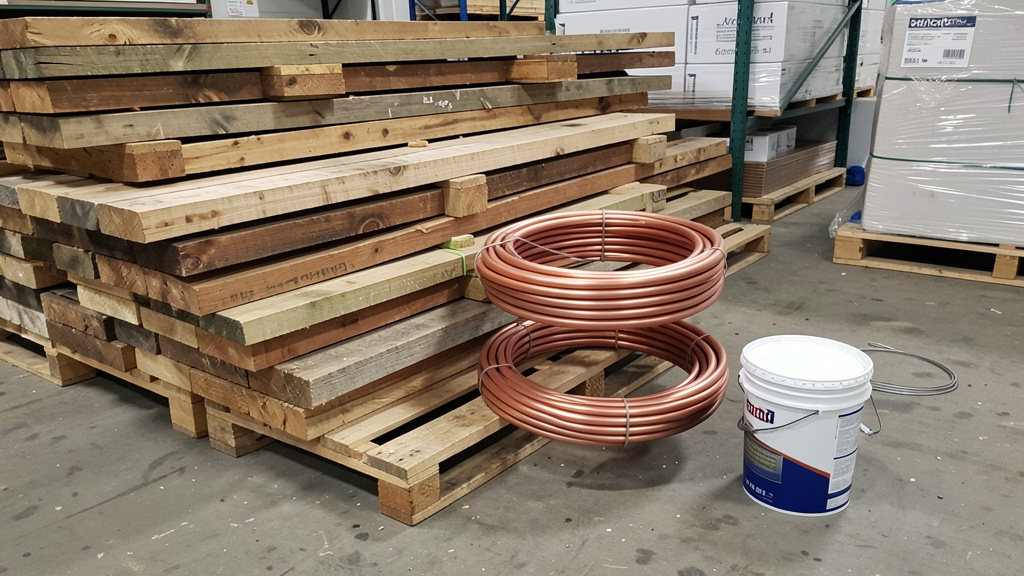
Stop Wasting Time, Money, and Momentum: A Strategic Framework to Source Materials Smarter, Save More, and Align Every Purchase With Your Project’s True Needs
You stand in the driveway after measuring your deck twice, phone in hand, scrolling through conflicting advice: “Just hit the home improvement store on the way home!” versus “Never buy lumber there—go to the yard!” versus “Check community groups first!” Your project stalls before it begins. This isn’t about indecision—it’s about information overload without a decision framework. This guide transforms sourcing chaos into confident clarity. We break down exactly where to buy every material category—from framing lumber to heirloom tomato seeds—based not on brand loyalty, but on your project’s unique scale, budget, timeline, values, and hidden constraints. No fluff, no affiliate links, no generic “top 10” lists. Just a repeatable system used by experienced builders, gardeners, and renovators to source smarter, avoid common missteps, and turn material acquisition from a headache into a strategic advantage.
Introduction
Material sourcing forms the invisible backbone of every successful home project. A beautifully designed garden falters if soil amendments arrive too late. A meticulously planned workshop build stalls over mismatched fasteners. Across countless documented home projects, a consistent pattern emerges: the difference between frustration and fulfillment rarely lies in the build itself, but in the sourcing strategy executed weeks prior. This guide synthesizes established frameworks from construction management, sustainable procurement, and behavioral economics into a practical system tailored for homeowners, DIYers, and gardening enthusiasts. We move beyond simplistic “where to buy” lists to address the deeper questions you face: When does “budget-friendly” become costly long-term? How do I verify quality without industry experience? What hidden considerations exist with “free” materials? Whether you’re planting your first raised bed, framing a shed, or refreshing a kitchen, this guide provides the context, comparisons, and concrete steps to source with intention. The goal isn’t just to find materials—it’s to build confidence that every purchase actively supports your project’s success and aligns with your personal priorities.
The Sourcing Compass Framework: Your Decision-Making Engine
Forget random searching. Successful sourcing begins with intentional alignment. The Sourcing Compass is a four-part framework that replaces guesswork with strategy. Before visiting a single store or clicking a link, spend ten minutes mapping your project here. This foundational step helps prevent many common sourcing regrets.
Step 1: Define Your Project Profile (The “What”)
Begin with clear, factual details—not assumptions. Grab a notebook or open a notes app. Answer these precisely:
- Material Type & Quantity: “Lumber” is insufficient. Specify: “Twelve 8-foot pressure-treated 2x6s for deck framing; twenty 1×6 cedar boards for railing; one cubic yard of ¾” crushed gravel.” For gardens: “Two cubic yards of screened topsoil; fifty 4-inch pots; one 50-lb bag of organic tomato fertilizer.” Ambiguity here often leads to sourcing errors.
- Critical Dimensions & Specs: Note exact requirements. Does that “2×4” need to be true dimension for a tight joint? Does your soil pH require amendment to a specific range? Does the faucet need a particular valve type (e.g., ceramic disc)? Write it down.
- Project Timeline: Be realistic. “Start building Saturday” means materials must be on-site and verified by Friday evening. Factor in typical lead times: specialty tiles may take multiple weeks; custom-cut lumber may require a day or two; soil delivery often needs scheduling several business days in advance.
- Skill Level & Tool Access: Honesty matters. If you lack a table saw, buying rough-sawn lumber requiring precise cuts adds hidden effort (time, potential waste). If you’re new to a technique, sourcing raw materials may be less practical than pre-fabricated components.
Why this step matters: A homeowner planning a simple garden path sourced “flagstone” online without specifying thickness. The delivered stones were too thin for a dry-laid path. Result: significant cost and project delay. Defining “1.5–2 inch thick irregular flagstone suitable for dry-laid installation” would have prevented this. Precision in definition serves as your first quality checkpoint.
Step 2: Map Your Core Priorities (The “Why”)
Rank these four priorities from 1 (Most Critical) to 4 (Least Critical) for this specific project. There are no universally right answers—only intentional ones.
- Budget Sensitivity: Is minimizing upfront cost the absolute driver? (e.g., a temporary workshop shelf). Or is long-term value (durability, lower maintenance) worth a higher initial investment? (e.g., deck framing).
- Time Sensitivity: Is speed paramount? (e.g., fixing a broken fence before expected rain). Or can you wait for the ideal reclaimed wood? Time pressure significantly narrows viable options.
- Quality & Precision: Does the project demand exact dimensions, specific grades, or premium aesthetics? (e.g., fine woodworking, heirloom vegetable garden). Or is “functional” truly sufficient? (e.g., compost bin).
- Values Alignment: How important are factors like: Supporting the local economy? Environmental sustainability (recycled content, low VOC)? Ethical labor practices? Supporting small businesses? This is deeply personal but must be acknowledged.
Common Pitfall to Avoid: Attempting to maximize all four priorities simultaneously. It’s rarely feasible to achieve the absolute lowest price, fastest delivery, highest quality, and perfect values alignment on every item. The Compass encourages conscious trade-offs. Example: For a child’s playhouse (Priority 1: Budget, Priority 2: Time), a large home improvement retailer makes practical sense. For a cherished family dining table (Priority 1: Quality, Priority 2: Values), a local hardwood supplier is often justified despite higher cost and longer wait.
Step 3: Match to Sourcing Channels (The “Where”)
This is where the Compass provides direction. Each channel excels under specific priority combinations. Use the table below as your initial filter. Do not skip Steps 1 and 2—applying this table without context is how mistakes happen.
| Sourcing Channel | Best For (Priority Match) | Key Strengths | Critical Limitations & When to Avoid | Pro Tip for Success |
|---|---|---|---|---|
| Major Home Improvement Retailers (e.g., Home Depot, Lowe’s, B&Q, Wickes) |
Budget + Time (1 & 2) Projects needing speed & accessible pricing |
Wide inventory (often available same day), consistent pricing, straightforward returns, online project tools, tool rental | Limited specialty items, variable material quality (inspect carefully!), less personalized service, sustainability considerations vary | Visit during weekday mornings. Staff are often less rushed. Inspect every board for warping, cracks, or defects before loading. Use cut-list services for simple projects. |
| Local Lumberyards / Independent Hardware Stores | Quality + Values (3 & 4) Projects demanding precision, expertise, local support |
Knowledgeable staff (often with hands-on experience), higher-grade/milled materials, special order capabilities, community investment | Typically higher prices (often reflecting quality/service), smaller on-hand inventory (may require ordering), limited hours | Build rapport. Introduce yourself and explain your project. Ask: “What’s the best grade of cedar you recommend for outdoor use right now?” Staff may set aside prime stock. |
| Specialty Suppliers (Tile shops, plumbing suppliers, nursery wholesalers) |
Quality + Precision (3) Projects requiring specific expertise or materials |
Unmatched depth in niche categories (e.g., dozens of tile types), expert advice, access to professional-grade materials, samples available | Very limited scope (won’t sell unrelated items), may require trade accounts or cash, can feel intimidating for beginners | Call ahead. Ask: “Do you assist DIY customers? Can I see samples of [specific item]?” Many welcome serious homeowners. Bring project photos or sketches. |
| Online Retailers (Amazon, Wayfair, specialty sites like BuildDirect, Gardener’s Supply) |
Budget + Selection (1 & 3) Hard-to-find items, comparing specs/prices, non-urgent projects |
Vast selection, competitive pricing, detailed specs/reviews, home delivery convenience | No physical inspection possible, shipping costs/delays, complex returns, quality can vary between batches | Read mid-range reviews carefully. Three-star reviews often reveal real-world nuances. Check return policy before ordering. Order samples for color/texture (tile, fabric, soil). |
| Salvage Yards / Reuse Centers (Habitat ReStore, local architectural salvage) |
Values + Budget (4 & 1) Eco-conscious projects, vintage aesthetics, unique finds |
Very low cost, unique character, significant environmental benefit (diverts waste), storytelling potential | “As-is” condition (no returns), inconsistent availability, requires time/skill to assess/restore, sizing challenges | Visit regularly. Inventory changes frequently. Bring measuring tape and phone for photos. Focus on solid-core doors, bricks, fixtures, dimensional lumber. Avoid items with water damage or structural concerns. |
| Direct from Manufacturer | Quality + Budget (for bulk) Large-scale projects (whole-house reno, major landscaping) |
Lowest per-unit cost potential, exact specifications, no middleman markup | Very high minimum orders (e.g., full bundles of lumber, pallets of brick), logistics complexity (you arrange freight), limited retail support | Coordinate with neighbors. Split a truckload of soil or lumber with someone doing a similar project. Search “[Material] manufacturer near me” + “will call” (pickup option). |
| Community Resources (Freecycle, Buy Nothing groups, local marketplace “Free” sections) |
Budget + Values (1 & 4) Non-critical items, practice materials, temporary structures |
Truly free, hyper-local, builds community connections | Significant time investment, unreliable availability, unknown quality/safety, potential hidden costs (transport, cleaning) | Be specific in requests: “Seeking untreated 2x4s, 8ft+, straight, for non-structural garden project.” Offer to help dismantle. Always inspect thoroughly for pests, rot, or hazardous materials (avoid anything with suspected lead paint or asbestos insulation). |
The Guiding Principle: The optimal sourcing channel is not inherent to the material itself, but is dynamically determined by the intersection of your Project Profile and Core Priorities. A single project will often use multiple channels strategically (e.g., framing lumber from a major retailer for speed/budget, specialty hardware from a local supplier for quality, reclaimed bricks from salvage for aesthetics/values).
Step 4: Execute with Verification Protocol (The “How”)
Decision made? Don’t stop. Implement this three-part verification before purchase or pickup:
- Pre-Purchase Checklist:
- Major Retailers/Online: Confirm current in-store stock via app/website and call the specific store location. Online: screenshot the product page, specs, and return policy.
- Local/Specialty: Call ahead: “Do you have [exact item, SKU if possible] in stock today? Can I reserve it?” Ask about current lead times for special orders.
- Salvage/Community: Request clear photos from multiple angles. Ask specific questions: “Any cracks?” “Is the motor included?” “Can I see the underside?”
- On-Site Inspection Protocol (CRITICAL for lumber, stone, plants, used items):
- Lumber: Run your hand along the entire length. Sight down the edge for crown (bow) or twist. Check ends for splits. Reject visibly warped, cracked, or moldy pieces. For pressure-treated, ensure stamps are legible (indicates treatment type/grade).
- Plants: Check root health (gently squeeze pot; roots should be firm and light-colored, not black/mushy; avoid pots where roots circle tightly). Inspect leaves for pests (undersides!), discoloration, or wilting. Avoid plants with spent flowers if seeking blooms.
- Used Items: Test functionality if possible (open/close drawers, test faucets). Check for structural integrity (wobble in furniture, cracks in ceramics). Smell for mustiness, smoke, or chemicals.
- Post-Acquisition Documentation:
- Save receipts digitally (photo in a dedicated folder). Note store location, date, associate name if helpful.
- For special orders: Get written confirmation of specs, price, and expected delivery date.
- For online: Save order confirmation and tracking info. Note the return window start date.
Illustrative Example: Maria planned raised vegetable beds. Project Profile: 4 beds (4’x8’x12″), untreated cedar, soil delivery. Priorities: Quality (3), Values (4 – organic/local), Budget (2), Time (1 – planting season approaching). Compass Match: Local lumberyard for cedar (quality/values), local nursery/garden center for soil (quality/values, avoids inconsistencies sometimes found in bagged blends). Execution: Called lumberyard; they had kiln-dried cedar in stock, staff advised on corner bracing. Called nursery; they offered bulk soil delivery (often substantially cheaper per yard than bags) with organic certification documentation. Result: Beds built with confidence, soil arrived perfectly timed, plants thrived. She avoided the common pitfall of buying generic “cedar” or soil that may not meet project needs.
Deep Dive: Sourcing by Material Category (Where to Buy What)
Now, apply the Compass to specific materials. This section details where to source common project components, including nuanced scenarios often overlooked.
Lumber & Dimensional Wood
-
Standard Framing Lumber (2x4s, 2x6s, Plywood):
- Major Retailers: Suitable for small repairs, non-structural projects, or when time is critical. Important nuance: Quality can vary by location and delivery. Inspect rigorously. “Prime” or “Select” grades cost slightly more but reduce time spent rejecting flawed boards. Avoid the very lowest grades for visible or structural work.
- Local Lumberyard: Often the strategic choice for decks, sheds, framing. They frequently carry higher grades (e.g., #1 or Better SPF), better moisture content control (less warping potential), and staff can advise on species suitability (e.g., Southern Yellow Pine vs. Spruce for ground contact). Many offer delivery for larger orders. For projects needing more than ten boards, the time saved inspecting fewer defective pieces often justifies the price difference.
- Salvage Yard: Excellent for non-structural projects: garden beds (ensure wood is untreated—look for absence of green tint/stamp), rustic shelves, decorative elements. Critical Safety Check: Avoid any wood with greenish tint (older pressure-treated lumber), oily residue, or unknown history. When in doubt, choose new. ReStore often has new, donated dimensional lumber from contractor overages—inspect carefully but often pristine.
- Online: Generally not recommended for standard dimensional lumber due to shipping costs and inability to inspect. Exception: Specialty pre-cut kits (e.g., deck kits from established brands) where precision is guaranteed and shipping is factored in.
-
Hardwood (Oak, Maple, Walnut for furniture, trim):
- Local Hardwood Supplier: Highly recommended for serious woodworking projects. Major retailers’ “hardwood” is often limited selection, lower grade, or poorly stored (increasing warp risk). A dedicated hardwood supplier offers:
- Species Depth: Dozens of domestic and exotic options.
- Grading Knowledge: Staff explain FAS (Firsts and Seconds) vs. Select vs. No.1 Common—critical for yield and appearance.
- Moisture Content Awareness: They can check MC; aim for 6-8% for indoor furniture. Retail lumber is often higher moisture content—increasing warp risk after building.
- Milling Services: Many offer planing, jointing, or custom cutting—valuable if you lack tools.
- Online Specialty Retailers (e.g., Rockler, Woodcraft, Bell Forest Products): Viable for small projects, rare species, or if no local supplier exists. Order samples for color/figure. Factor shipping heavily. Read reviews on packaging quality.
- Salvage: Treasure trove for unique slabs (live-edge tables), old-growth beams (mantels). Requires significant skill to mill and dry properly. Best for experienced woodworkers. Habitat ReStore occasionally has solid-core doors suitable for table tops.
- Local Hardwood Supplier: Highly recommended for serious woodworking projects. Major retailers’ “hardwood” is often limited selection, lower grade, or poorly stored (increasing warp risk). A dedicated hardwood supplier offers:
-
Engineered Wood (OSB, MDF, Plywood):
- Major Retailers: Perfectly adequate for sheathing, subflooring, shop projects. Check edges for delamination. For cabinetry or visible surfaces, seek higher-grade plywood (Birch, ApplePly) at lumberyards or specialty suppliers.
- Lumberyard: Better selection of exterior-grade (CDX), marine-grade, or formaldehyde-free options (important for indoor air quality in cabinets/shelving). Staff can advise on appropriate thickness and span ratings.
- Avoid Online/Salvage: Shipping cost prohibitive; salvage engineered wood carries risk of hidden moisture damage or delamination.
Hardware, Fasteners & Tools
-
Common Fasteners (Screws, Nails, Bolts):
- Major Retailers: Convenient for small quantities. Hidden Consideration: “Project packs” often contain suboptimal fasteners. Example: Deck screw packs may include sizes insufficient for structural needs. Pro Move: Learn the exact spec you need (e.g., “3-inch #10 stainless steel structural deck screws with star drive”). Then:
- For under $20: Major retailer is often fine. Buy the specific box, not the pack.
- For over $20 or specialty: Fastenal (if near a location—they often serve DIYers), McMaster-Carr (online, unparalleled specs/catalog, reliable shipping), or local hardware store. McMaster-Carr’s website is a technical resource—filter precisely by material, drive type, length, head style, corrosion resistance. Worth considering for critical projects.
- Local Hardware Store: Often carry higher-quality brands (GRK, Spax) not found at major retailers. Staff know which screw performs well in specific materials. Supporting local business yields tangible benefits.
- Major Retailers: Convenient for small quantities. Hidden Consideration: “Project packs” often contain suboptimal fasteners. Example: Deck screw packs may include sizes insufficient for structural needs. Pro Move: Learn the exact spec you need (e.g., “3-inch #10 stainless steel structural deck screws with star drive”). Then:
-
Specialty Hardware (Hinges, Drawer Slides, Cabinet Knobs):
- Specialty Supplier (Online or Local): Blum (drawer slides), Salice (hinges), Richelieu (online/catalog). Why? Consistency, durability, and technical support. Retail hinges may suffice for a shed door but fail prematurely on a heavy cabinet door. For kitchens, bathrooms, or furniture meant to last, investing in quality hardware is widely considered essential. Order samples to test smoothness and fit.
- Salvage Yard: Fantastic for vintage knobs, pulls, hinges with character. Clean thoroughly. Check functionality. Match screw hole patterns carefully.
-
Tools (Purchase vs. Rent):
- Major Retailer Tool Rental: The practical choice for infrequent, high-cost tools. Need a tile saw for one bathroom? A trencher for irrigation? Rental is almost always more economical. Compare daily vs. weekly rates. Inspect tool upon pickup. Ask about damage policies.
- Buying New: Major retailers for basic homeowner-grade (drills, saws). Harbor Freight for budget-conscious DIYers on non-critical tools (their mid-tier lines offer value; exercise caution with ultra-cheap items for safety-critical tools). Local Tool Supplier or Online (specialized sites) for professional-grade (Milwaukee, DeWalt, Festool) where warranty and service matter. Consult professional review sites.
- Buying Used: Local marketplace groups, estate sales. Best for hand tools (chisels, planes, levels), vintage tools (often superior steel), or lightly used power tools. Verification Protocol: Test before paying if possible. Check for excessive play, burnt motor smell, cracked housings. Avoid tools with frayed cords or damaged safety guards. Estate sales often have well-maintained collections at good prices—arrive early.
Gardening & Landscaping Materials
-
Soil, Compost, Mulch:
- Bulk Delivery (Local Landscape Supplier/Nursery): Generally the best choice for projects over one cubic yard. Cost per yard is often substantially cheaper than bags. Specify clearly: “Screened topsoil,” “OMRI-listed organic compost,” “double-shredded hardwood mulch.” Ask if samples are available. Verify delivery truck access to your property. Have payment ready (many prefer cash). Critical: Calculate your cubic yardage! (Length x Width x Depth in feet / 27). Over-ordering wastes money; under-ordering delays project.
- Major Retailer Bags: Only practical for very small projects (one planter, tiny bed). Important Note: Bagged “garden soil” quality varies significantly. “Potting mix” is formulated for containers only. Read labels meticulously. Local nurseries often sell superior bagged blends.
- Municipal Compost/Soil Programs: Many cities offer discounted or free compost/topsoil from green waste. Quality can be excellent but variable. Contact your public works department. Often requires pickup with your own vehicle. A valuable option for budget-conscious, eco-friendly gardeners.
- Avoid Online: Shipping soil is typically cost-prohibitive and environmentally inefficient.
-
Plants (Perennials, Shrubs, Trees):
- Local Independent Nursery: Often the strategic choice for success. Plants are typically grown for your specific climate zone. Staff are knowledgeable about local growing conditions, pest issues, and microclimate tips. Plants are usually healthier and better acclimated. Supporting local expertise has community benefits. Worth considering for anything beyond common annuals. Ask: “When were these last watered?” “Is this variety proven in our area?”
- Major Retailer Garden Center: Can be acceptable for common annuals, basic herbs, or with rigorous inspection (see Verification Protocol). Consideration: Plants may be shipped from distant locations, stressed during transport, or mislabeled for your zone. Staff expertise can vary. Best for low-stakes impulse buys.
- Online Plant Retailers (e.g., Nature Hills, Fast Growing Trees, specialty nurseries): Excellent for rare varieties or specific cultivars unavailable locally. Essential Steps: 1) Verify they ship to your USDA zone. 2) Read shipping/handling reviews. 3) Understand their guarantee policy. 4) Order during the appropriate season (bare-root trees in dormant season). Plants arrive dormant or stressed—follow care instructions precisely for acclimation. Less ideal for beginners.
- Plant Swaps / Community Gardens: Wonderful for divisions of established perennials (hostas, daylilies), seeds, or cuttings. Low cost, high community value. Ensure plants appear disease-free. Great way to learn from experienced gardeners.
-
Hardscaping (Pavers, Stone, Gravel):
- Local Landscape Supply Yard: Essential for any project beyond a tiny path. They sell by the ton/pallet, offer delivery, and have vast selection (types, colors, sizes). Staff advise on base requirements, edging, and quantities. Seeing materials in large quantities helps visualize color/texture better than small samples. Call for quotes; many have DIY discounts.
- Major Retailers: Only feasible for very small projects (one bag of gravel, a few pavers). Prices per unit are significantly higher than bulk. Limited selection. Risk of inconsistent color between batches.
- Salvage Yard: Prime source for reclaimed brick, fieldstone, or bluestone. Adds unique character. Requires patience to find matching pieces. Factor in cleaning time. Habitat ReStore sometimes has new pavers or stone from cancelled projects at deep discounts.
Plumbing, Electrical & HVAC Components
⚠️ Important Safety & Legal Note: Local building codes govern these materials. Permits and inspections are often required. When uncertain, consult a licensed professional. This guide addresses sourcing considerations, not installation guidance.
-
Plumbing Fixtures (Faucets, Toilets, Showers):
- Specialty Plumbing Supplier: Often recommended over major retailers. Access to higher-quality brands, better warranty support, expert advice on valve types, water pressure requirements, and rough-in dimensions. They can often special order finishes or models. Staff understand compatibility issues. Many welcome DIYers—call first.
- Major Retailers: Convenient for standard replacements where you match the existing rough-in exactly. Consideration: “Value” lines may use lower-grade internal components. Inspect packaging for material specs. Keep receipt for potential returns.
- Online (Manufacturer Direct, reputable sites): Good for comparing styles/prices. Crucial: Verify exact model number matches your needs. Check return policy for heavy items (restocking fees may apply). Avoid obscure brands with poor customer service reviews.
-
Electrical Components (Wire, Outlets, Switches, Panels):
- Electrical Supply House: The standard source for professionals. They carry full lines of reputable brands, correct wire gauges/types, and staff are trained on code requirements. They prioritize safety and compliance. Many require a business account, but reputable houses will serve knowledgeable homeowners—be prepared to explain your project clearly and demonstrate understanding of requirements (e.g., “I need 12/2 NM-B cable for a 20-amp circuit”). This is where electricians source materials for good reason.
- Major Retailers: Acceptable for simple replacements (new outlet cover, standard switch) or very small projects if you are certain of specs. Extreme Caution: Verify packaging has required safety listings (e.g., UL) and correct specs (gauge, type, temp rating). Staff expertise is limited. Never guess on electrical components.
- Avoid Online/Salvage for Core Components: Counterfeit electrical goods pose serious safety hazards. Never buy wire, panels, or critical safety devices (GFCI/AFCI outlets) from unknown online sellers or salvage. The risk is not worth potential savings. Salvage only for purely decorative elements (vintage switch plates—used with modern, code-compliant switches behind them).
-
HVAC Parts (Filters, Thermostats):
- HVAC Supplier: Best for matching exact filter sizes (beyond standard), high-efficiency filters, or programmable/smart thermostats with advanced features. Staff can advise on MERV ratings for your system.
- Major Retailers/Online: Fine for standard filter sizes and common thermostat models. Verify compatibility before purchase (model number of your current thermostat/furnace). Online reviews are helpful for smart thermostats (ease of installation, app reliability).
Project-Specific Sourcing Playbooks
Apply the Compass dynamically. Here’s how sourcing strategy shifts for common scenarios.
Playbook: Building a Deck (Approx. 12’x16′)
- Project Profile: Structural, outdoor exposure, safety-critical. Materials: Framing lumber, decking boards, fasteners, concrete, railing.
- Priority Mapping (Typical): Quality (1 – safety/durability), Time (2 – seasonal use), Budget (3), Values (4 – possibly sustainably sourced).
- Strategic Sourcing Plan:
- Framing Lumber (PT 2x8s, 4×4 posts): Local lumberyard. Justification: Higher-grade pressure-treated lumber with appropriate retention levels (check for UC4B stamp for ground contact), staff advice on post spacing/footings, potential delivery. Avoid lower-grade options where structural integrity is paramount. Verification: Inspect each post for straightness; reject any with large knots near edges.
- Decking Boards: Depends on material choice.
- Composite (Trex, etc.): Buy from lumberyard or authorized dealer. Ensures genuine product, full warranty coverage, access to matching systems. Major retailers may carry limited selection; online risks counterfeit.
- Cedar/Redwood: Local lumberyard specializing in exterior woods. Critical for proper grading and moisture content. Avoid generic “cedar” which may be less suitable species.
- Fasteners: Critical: Stainless steel structural screws (e.g., GRK RSS, Simpson Strong-Tie) are essential for safety and durability. Buy from lumberyard, Fastenal, or online specialty (McMaster-Carr). Never substitute standard deck screws or nails for structural framing. Specify exact requirements.
- Concrete (for footings): Major retailer for bags if doing small footings yourself. For multiple footings, order ready-mix concrete delivery—lumberyard or landscape supplier can often coordinate this. Calculate needed volume carefully; delivery minimums apply.
- Railing System: If using composite railing kit, buy complete system from same source as decking for compatibility. For custom wood railing, source components from lumberyard.
- Friction Point Avoided: Buying all materials at a major retailer for convenience. Result: Discovering mid-project that fasteners are inadequate or lumber has excessive defects, causing delays, extra trips, and compromised safety. Strategic channel selection prevents this.
Playbook: Starting a Vegetable Garden (4 Raised Beds)
- Project Profile: Non-structural, soil health critical, seasonal timing sensitive. Materials: Bed frames, soil, compost, seeds/plants, irrigation.
- Priority Mapping (Typical): Values (1 – organic, local), Quality (2 – soil/plant health), Budget (3), Time (4 – flexible within season).
- Strategic Sourcing Plan:
- Bed Frames:
- Untreated Cedar: Local lumberyard (quality, longevity) or salvage yard (ReStore for solid-core doors cut down—ensure untreated). Avoid pressure-treated wood near edibles.
- Alternative: Concrete blocks from major retailer or landscape yard. Durable, no wood concerns. Stack without mortar for easy disassembly.
- Budget Option: Straw bales sourced from a local farm. Form the bed walls; bales decompose, adding nutrients. Verify source aligns with organic priorities if applicable.
- Soil & Compost: Bulk delivery from local nursery or landscape supplier. Specify “organic vegetable garden mix” or “50/50 topsoil/compost blend.” Municipal compost program if available and trusted. Avoid relying solely on major retailer bagged “garden soil” for primary fill—it may lack nutrients or structure. Use bagged compost or potting mix as supplements.
- Seeds: Local independent nursery (they stock varieties proven in your area) or reputable seed companies (Baker Creek, Seed Savers Exchange, Johnny’s Selected Seeds) known for heirloom/open-pollinated, non-GMO seeds. Avoid generic packets with unknown origins. Order early for best selection.
- Seedlings/Transplants: Local nursery for tomatoes, peppers, herbs. Staff advise on planting dates and hardening off. Farmers’ market vendors often sell robust, locally grown starts.
- Irrigation: Major retailer for basic soaker hoses or drip kits. Specialty irrigation supplier (online or local) for complex systems needing precise emitters, timers, filters. Pro Tip: Buy extra connectors and goof plugs—they will get lost or broken.
- Bed Frames:
- Friction Point Avoided: Buying inexpensive bagged soil and generic seeds. Result: Poor germination, nutrient deficiencies, compacted soil requiring remediation. Investing in quality soil foundation and proven seeds supports better yield and enjoyment.
Playbook: Kitchen Cabinet Reface (DIY)
- Project Profile: High visibility, precision-critical, requires matching existing. Materials: New doors/drawer fronts, hinges, knobs/pulls, paint/stain.
- Priority Mapping (Typical): Quality (1 – appearance/durability), Precision (2 – exact measurements), Budget (3), Time (4 – can work around kitchen use).
- Strategic Sourcing Plan:
- Cabinet Doors/Drawer Fronts:
- Best: Local cabinet shop. Provide exact measurements (height, width, hinge hole pattern, material preference). They can match existing style or create new. Higher cost but perfect fit, professional finish options. Builds relationship for future projects.
- Alternative: Online custom door retailers (e.g., Cabinet Door Depot, DIY Cabinet Doors). Upload measurements. Critical: Order one sample door first to verify fit, material, and finish quality before committing to full set. Factor shipping costs and potential damage risk.
- Avoid: Major retailer pre-made doors—they rarely match existing cabinet box dimensions or hinge patterns.
- Hinges: Specialty supplier (Rockler, Lee Valley) or cabinet shop. Must match existing hinge type (e.g., Blum 38N full-overlay) exactly for proper function. Major retailer hinges will not align correctly. Bring an old hinge to the shop for matching.
- Hardware (Knobs/Pulls): Local hardware store or specialty online (Rejuvenation). Order samples to test size/feel. Buy 10-15% extra for future replacements.
- Paint/Stain: Local paint store (Sherwin-Williams, Benjamin Moore) over major retailer. Color matching is typically superior. Staff advise on primers for laminate surfaces. Buy sample pots to test on cabinet interior first. Pro Tip: For laminate cabinets, a bonding primer like Zinsser BIN before paint is often recommended—local store staff may provide this critical detail.
- Cabinet Doors/Drawer Fronts:
- Friction Point Avoided: Ordering all doors online without a sample. Result: Doors arrive with wrong hinge boring, slight color mismatch, or shipping damage. Costly return process delays project. Sample-first strategy eliminates this risk.
Navigating Friction Points & Smart Alternatives
Even with a solid plan, hurdles arise. Here’s how to navigate common sourcing challenges thoughtfully.
The “Out of Stock” Challenge
- Online “In Stock” Discrepancy: Website shows “In Stock,” but item is gone upon arrival. Solution: Call the specific store and ask for the department manager (e.g., “May I speak to the Pro Desk manager?”). They often have real-time inventory access. Ask: “Is this physically on the shelf right now?” If confirmed, request they hold it briefly.
- Special Order Delay: Lumberyard estimates “two weeks” for specialty trim. Project timeline is tight. Solution: Ask: “Is there a comparable item in stock that achieves a similar look/function?” Often, alternatives exist. Or, adjust project sequence: complete other tasks while waiting. Communicate clearly about the delay reason.
- Online Backorder: Item ships “in 4-6 weeks.” Solution: Immediately search for the exact same SKU at other authorized retailers. Check manufacturer’s “Where to Buy” locator. Sometimes regional distributors have stock. If urgent, consider a documented temporary substitute and order the preferred item for later.
Quality Discrepancies & Returns
- “As Described” vs. Reality (Online): Tile color looks different in your light; wood grain isn’t as pictured. Solution: Always order samples where possible. For tile, stone, fabric, soil—spend a small amount on a sample. View it in your space at different times of day. This small investment prevents larger costs in returns/shipping fees. For plants, check if seller provides photos of the actual plant.
- Return Process Complexity: No receipt, opened bag, cut lumber. Solution: Know the policy before purchasing. Most major retailers have generous return windows with receipt. For cut materials or opened bags, policies vary—ask at Pro Desk before buying if returns are a concern. Keep digital receipts organized. For significant purchases, use a credit card with strong buyer protection.
- Salvage “As-Is” Reality: Bought a “vintage” faucet, discovered corrosion at home. Solution: Accept that salvage involves inherent risk. Start with small purchases. Build relationships with salvage staff—they often point out flaws. Never buy salvage for critical, hard-to-replace items (structural beams, main plumbing fixtures).
Budget Constraints: Smart Stretching Without Compromising Safety
- The “Budget Now, Cost Later” Trap: Buying the lowest-cost pressure-treated lumber that warps quickly; using interior-grade plywood for an outdoor shed. Solution: Apply the Compass Priority Mapping rigorously. For structural, safety-critical, or highly visible items, do not make Budget the top priority. Redirect savings from non-critical areas: Use salvaged bricks for a garden path border instead of buying new; choose a simpler cabinet door style to afford better hinges.
- Phased Sourcing Strategy: Cannot afford all materials at once? Plan phases. Example: Build deck frame this month (source lumber), add decking boards next month (save up). For gardens: Build one raised bed this season, add another next year. Source soil in bulk when feasible, store extra under tarp. This prevents project abandonment due to upfront cost.
- Barter & Skill Trade: Do you have a skill? Offer graphic design help to a local nursery for a soil discount. Help a neighbor with tech issues for tool access. Community groups often have “skill swap” opportunities. Builds relationships and stretches resources meaningfully.
Sustainability & Ethical Sourcing: Moving Beyond Buzzwords
- Navigating “Eco-Friendly” Claims: Product lines can be vague. Solution: Look for specific, verifiable certifications:
- Wood: FSC (Forest Stewardship Council) or SFI (Sustainable Forestry Initiative) logo. Ask suppliers: “Do you carry FSC-certified options?”
- Paint: Green Seal GS-11, MPI Green Performance. Local paint stores often excel here.
- Soil/Compost: OMRI (Organic Materials Review Institute) listing for organic certification.
- General: B Corp certification for the company indicates commitment to social/environmental standards.
- Local Sourcing Benefits: Buying from a local lumberyard or nursery supports community jobs and reduces transportation emissions. Ask: “Where was this lumber milled?” “Where does your soil originate?” Supporting transparent local businesses aligns with many values-based priorities.
- The Reuse Hierarchy: Prioritize thoughtfully: 1) Refuse (do you truly need this item?), 2) Reduce (buy only what you need—use project calculators), 3) Reuse (salvage, community groups), 4) Recycle (properly dispose of scraps—many lumberyards accept clean wood; retailers often have battery/light bulb recycling), 5) Rot (compost plant waste). Sourcing encompasses responsible lifecycle management.
Your Questions, Answered
Q: Is it really worth driving across town to a lumberyard instead of grabbing lumber at the major retailer 5 minutes away?
A: For small, non-critical projects (a quick shelf repair), the time savings of the nearby retailer likely outweighs marginal quality differences. However, for projects where structural integrity, appearance, or minimizing waste matters (decks, furniture, visible framing), the lumberyard is often worth the trip. Higher-grade lumber typically means less time rejecting flawed boards, better longevity, and expert advice that prevents mistakes. Consider the true cost: 20 minutes driving versus potential time spent at the retailer rejecting boards plus risk of project delays. For projects requiring more than ten boards, the lumberyard often saves time and improves the outcome.
Q: How can I tell if “cedar” or “redwood” sold at a major retailer is actually suitable for outdoor use?
A: First, inspect the wood. True Western Red Cedar has a distinct reddish-brown color, straight grain, and aromatic scent. Incense Cedar (sometimes sold as “cedar”) is paler, less aromatic, and less rot-resistant. Second, check for stamps indicating species (e.g., “WRC”) and grade. For ground contact, appropriate retention levels should be indicated. When in doubt, ask staff specifically: “Is this Western Red Cedar recommended for above-ground outdoor use like raised beds?” If they cannot confirm confidently, it may be a lower-grade substitute. For critical outdoor projects, the certainty from a local supplier specializing in exterior woods is often a wise investment.
Q: I found a deal on tile online, but the return policy is strict. How do I minimize the risk?
A: Implement layered verification: 1) Order a sample tile (most reputable sellers offer this). Live with it for a few days—view it in your space at different times of day next to existing elements. 2) Read mid-range reviews carefully. Look for comments on color accuracy, chipping during shipping, or inconsistent batches. 3) Calculate total landed cost: Item price + shipping + potential return costs + your time. Is the “deal” still advantageous? 4) Verify seller authorization: Contact the tile manufacturer to confirm the online seller is an authorized dealer. Unauthorized sellers may offer discontinued lines, seconds, or counterfeits with voided warranties. If any layer raises doubt, consider purchasing from a local tile shop with samples on display and flexible return policies.
Q: Are Habitat ReStore or salvage yards safe for buying used building materials, especially for structural elements?
A: Exercise extreme caution with structural materials. Never buy used structural lumber (beams, joists, studs), roof trusses, or load-bearing components from salvage. Hidden damage (cracks, insect damage, moisture rot) is impossible to fully assess and poses severe safety risks. Salvage is excellent for: non-structural lumber (for garden beds—verify untreated), bricks, pavers, fixtures (faucets, sinks—clean thoroughly), doors (solid-core for tables), windows (for greenhouses), and decorative elements. For fixtures, test functionality if possible. For lumber, inspect meticulously for straightness, cracks, and signs of treatment (green tint = avoid for gardens). When uncertain about safety or structural integrity, choose new materials. Savings are not worth the risk.
Q: How do I find a local lumberyard or specialty supplier if I’ve only ever shopped at major retailers?
A: Start with targeted searches: Google “[Your City] lumberyard,” “[Your City] hardwood supplier.” Look beyond the first page of results. Visit their websites—do they mention serving DIYers? Call them: “Hi, I’m a homeowner planning a [project]. Do you assist DIY customers, and what are your hours?” Listen to their tone. Another powerful method: Visit a local independent hardware store and ask the owner: “Where do you recommend I buy quality [lumber/soil/etc.] for a project like this?” They often have trusted supplier relationships and provide honest referrals. Building these local connections pays dividends for future projects.
Q: Is buying plants online ever a good idea for a beginner gardener?
A: For beginners, starting with local nurseries is generally recommended. The hands-on experience of selecting healthy plants and receiving zone-specific advice is invaluable. However, online can work for beginners if: 1) You choose reputable, region-specific nurseries, 2) You order during the optimal planting season for your zone, 3) You select hardy, beginner-friendly plants (e.g., hostas, daylilies), and 4) You commit to following the nursery’s planting and care instructions precisely upon arrival. Avoid ordering delicate plants or plants outside your USDA zone online initially. The local nursery’s ability to provide a healthy plant and specific care guidance reduces beginner uncertainty significantly.
Q: What’s the single biggest mistake people make when sourcing materials for their first major DIY project?
A: Underestimating the time and cognitive load of sourcing itself. Many focus entirely on the “build” phase and treat sourcing as an afterthought—making multiple trips for forgotten items, accepting subpar materials to avoid another trip, or becoming paralyzed by options. The highest-leverage step is investing 30 minutes before the project starts to complete the Sourcing Compass (Project Profile + Priority Mapping). This transforms sourcing from a reactive chore into a proactive, strategic phase. It prevents the domino effect of one poor sourcing decision causing project delays, frustration, and compromised results. Treat sourcing with the same planning respect as the build steps—it’s foundational.
Q: How do I verify the credibility of a small local supplier or online seller I’ve never heard of?
A: Conduct thoughtful due diligence: 1) Online Presence: Check Google Business Profile reviews (look for patterns), Facebook page activity, website professionalism (clear contact info, physical address, return policy). 2) Industry Affiliations: Do they list memberships? (e.g., local Chamber of Commerce, trade associations). This indicates commitment to standards. 3) Transparency: Do they readily answer specific technical questions? Do they disclose sourcing (e.g., “Our soil is blended from local compost”)? Evasive answers are a red flag. 4) Ask Politely: For larger orders, “Could you share contact information for another DIY customer who purchased [similar item] recently?” Reputable small businesses often will. Trust your instincts—if communication feels off, consider other options.
Q: Are “project calculators” on major retailer websites accurate for estimating material quantities?
A: They are a useful starting point but should not be your final authority. These calculators use generic assumptions that may not match your specific project details (e.g., joist spacing, waste factor for complex cuts). Always cross-verify: 1) Sketch your project to scale. 2) Calculate manually using basic math. 3) Add a realistic waste factor: typically 10% for simple layouts, 15-20% for complex patterns or if inexperienced. 4) Take your sketch and calculations to a knowledgeable staff member at a lumberyard or specialty store and ask them to review your estimate. Their experience spotting overlooked elements is invaluable. Relying solely on an online calculator often leads to mid-project trips or excess leftover materials.
Q: What should I do if I accidentally buy the wrong material (e.g., interior paint for an exterior project)?
A: Act promptly and calmly: 1) Check the Return Policy Immediately: Locate your receipt. Note the return window. Unopened cans have the best chance. 2) Contact the Store: Call the specific location. Explain clearly: “I purchased [product] intending for [exterior use], but realize it’s for interior only. It’s unopened. Can I exchange it for the correct exterior product?” Be polite. Many stores, especially with other purchases, will assist. 3) If Return is Denied: Assess alternatives: Can the interior paint be used inside later? Could it be donated? For critical errors (wrong structural lumber), purchasing the correct material immediately is often wiser than risking project failure—consider it a learning investment. Document the mistake to avoid repeating it.
Q: How can I build a relationship with local suppliers to get better service or advice over time?
A: Relationships grow through mutual respect and consistency: 1) Be Prepared: Have project details clear (measurements, sketches, material list). Respect their time. 2) Start Small: Don’t expect special treatment on your first small purchase. Buy a few items, be polite, ask thoughtful questions. 3) Communicate Clearly: “I’m building a shed; this is my cut list. Could you advise on the best grade of PT lumber for the frame?” Shows initiative. 4) Be a Good Customer: Pay promptly, handle materials carefully, clean up any mess. 5) Express Appreciation: A simple “Thank you for the great advice—my project turned out well” on a return visit is meaningful. 6) Refer Others: Tell friends about the great local business. Over time, staff will recognize you, offer pro tips, and may provide priority service. This network becomes a valuable long-term asset.
Q: Is it ever acceptable to use materials past their expiration date (e.g., grout, mortar, paint)?
A: Proceed with caution. Expiration dates exist for performance reasons. Paint: Unopened latex paint stored properly (above freezing) may remain usable for several years past the date. Stir thoroughly; if lumpy, stringy, or smells sour, discard. Test on scrap wood first. Oil-based paint lasts longer but check for skinning. Grout/Mortar: Do not use past expiration. These cementitious products lose bonding strength and water resistance, leading to failure. The risk outweighs the cost of new product. Adhesives/Sealants: Expired products may not cure properly. When in doubt, especially for structural, waterproofing, or safety-critical applications, use fresh materials. For non-critical craft projects, test expired items on a hidden area first. Proper storage (cool, dry place, sealed tightly) maximizes shelf life.
Conclusion and Your Next Step
Material sourcing is not a mundane errand—it is a strategic discipline that directly shapes your project’s outcome, your experience, and your connection to the work. By moving beyond reactive shopping to intentional strategy, you transform potential frustration into fulfillment. You ensure that every board, every seed, every fastener actively serves your vision. The Sourcing Compass framework—defining your Project Profile, mapping your Core Priorities, matching to optimal Channels, and executing with Verification—provides a repeatable path to confidence. Remember the guiding insight: The optimal source is defined by your project’s unique context, not by convenience or habit alone. This mindset shift is profoundly empowering.
Recap: The Three Pillars of Strategic Sourcing
- Clarity Before Action: Never source without first defining your project’s concrete specs and honestly ranking your priorities (Budget, Time, Quality, Values). This prevents many sourcing regrets.
- Channel Intelligence: Understand the inherent strengths and limitations of each sourcing channel. Match the channel to your priority—not the material alone. Embrace multi-channel sourcing for complex projects.
- Verification as Non-Negotiable: Implement pre-purchase checks, on-site inspection protocols, and post-acquisition documentation. Trust, but verify—especially with lumber, plants, used items, and online purchases. This is your quality control gate.
The 24-Hour Rule: Your Tiny, Powerful Action
Within the next 24 hours, take one concrete step to apply this guide:
* If you have an active project: Open your notes app. Spend 10 minutes completing Step 1 (Project Profile) and Step 2 (Priority Mapping) of the Sourcing Compass for one material category you haven’t sourced yet. Then, identify the one channel you will investigate first based on your priorities.
* If you’re planning a future project: Bookmark this guide. Identify one local supplier you’ve never visited (a lumberyard, nursery, salvage yard). Spend 5 minutes looking up their address, hours, and website. Add “Visit [Supplier Name] to see materials” to your project planning checklist.
* If you’re just learning: Choose one friction point you’ve experienced before (e.g., “bought wrong fasteners,” “plants struggled”). Re-read that section. Write down the one key verification step you’ll implement next time.
This tiny action bridges knowledge and practice. It builds momentum and embeds the framework into your process. Mastery is built incrementally.
The Bigger Picture: Sourcing as Intentional Stewardship
Every material purchase reflects a choice. A choice for speed over sustainability. For local expertise over anonymity. For enduring quality over disposability. By sourcing strategically, you do more than complete a project—you cultivate discernment. You support businesses aligned with your values. You reduce waste through informed choices. You honor materials by selecting the right one for the right purpose. This mindful approach transforms home projects from mere tasks into acts of creation grounded in intention. The deck you build, the garden you nurture, the space you refresh—they become testaments not just to your effort, but to your thoughtful stewardship from the very first purchase.
Explore Our Complete Project Success System:
Mastering Project Planning: From Vision to Actionable Blueprint | The DIYer’s Guide to Reading Building Plans Like a Pro | Tool Library Essentials: What to Own, What to Rent, What to Borrow | Soil Science Simplified: Building Living Earth for Thriving Gardens | The Finish Line: Pro Techniques for Flawless Painting, Staining, and Sealing | Budgeting Without Guesswork: The Real Cost Calculator for Home Projects | Safety First: A Visual Guide to Workshop and Job Site Hazards