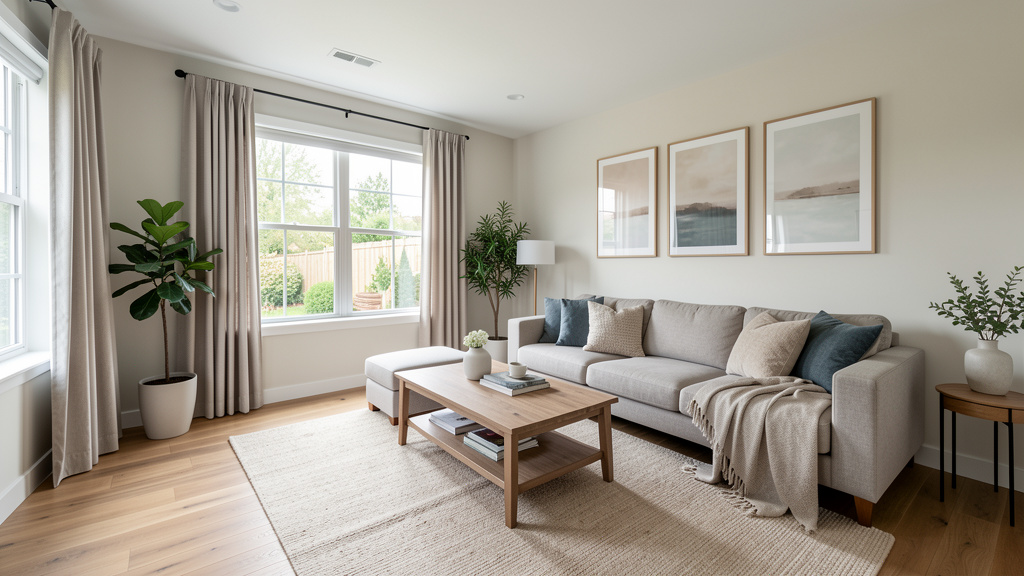
Go beyond quick fixes. Implement a proven, layered system that transforms your home into a cool, water-wise sanctuary—without sacrificing style or breaking the bank.
Living in a hot, dry climate doesn’t mean resigning yourself to uncomfortable indoor temperatures, strained resources, or landscapes that struggle under intense sun. This comprehensive guide reveals a holistic framework for adapting your home—from the roof to the roots of your landscaping—to thrive in arid conditions. Discover actionable, step-by-step strategies that work together to keep your home naturally cooler, conserve precious water, and create a sustainable oasis you’ll love coming home to. Grounded in building science principles observed across desert regions worldwide—from the American Southwest to Australia and the Mediterranean—this system addresses every layer of your property with adaptable solutions tailored for low-humidity heat. Always consult local building codes, climate specifics, and qualified professionals before implementing changes.
Introduction
The relentless sun beating down on terra-cotta roofs, the shimmering heat rising from paved surfaces, the quiet hum of climate control systems working steadily—these are familiar scenes across hot, dry regions globally. Yet homes in these areas often suffer from a critical oversight: treating symptoms instead of the system. Installing a larger cooling unit without addressing radiant heat gain is like bailing water from a leaking boat without plugging the hole. True resilience in hot, dry climates emerges not from isolated upgrades but from an integrated approach where architecture, landscape, water management, and daily habits function as a single, responsive system.
Consider the traditional adobe homes of the American Southwest or the wind-catcher towers (badgirs) of ancient Persian architecture—designs refined over centuries to harness passive cooling, thermal mass, and strategic airflow. Modern building science has illuminated why certain adaptations consistently support comfort. Energy modeling and field observations indicate that homes implementing layered climate adaptations often achieve meaningful reductions in cooling demand compared to conventional approaches. This isn’t theoretical; it’s observable in neighborhoods where thoughtful design choices create noticeably cooler interiors with less mechanical intervention. The difference lies in understanding how heat moves, where water is most effectively used, and how materials interact with intense solar radiation. This guide synthesizes established climatology insights, building diagnostics, and real-world applications into a practical, adaptable framework you can implement regardless of budget, home age, or property size. Whether you own a mid-century ranch in Phoenix, a stucco bungalow in El Paso, a villa in southern Spain, or a newer build in Perth, the strategies ahead will transform how your home responds to the desert sun.
The Oasis Framework: A Layered Approach to Climate Adaptation
Forget fragmented checklists. The Oasis Framework organizes hot-climate adaptations into three interdependent layers that work synergistically: The Shield (blocking heat before it enters), The Cool (managing heat that penetrates), and The Sustain (integrating water-smart landscapes and habits). Each layer reinforces the others. A high-performance roof (Shield) reduces strain on climate control systems (Cool), while drought-adapted landscaping (Sustain) minimizes evaporative demands and cools the immediate surroundings. Skipping one layer creates vulnerability; mastering all three builds resilience. This isn’t about perfection—it’s about progression. Start where you are, implement one element at a time, and watch cumulative benefits compound.
The Fundamental Principle: Heat follows the path of least resistance. Your job is to make that path lead away from your living space—not through it.
Layer 1: The Shield — Blocking Heat at the Source
The Shield layer focuses on your home’s exterior envelope—the first line of defense against solar radiation. In hot, dry climates, the roof and windows are primary pathways for heat gain. Prioritizing these surfaces typically delivers strong returns. Think of The Shield as your home’s “sunscreen”: invisible when applied correctly, but critically protective.
Step 1: Roof Strategy — Beyond Basic Reflectivity
Your roof absorbs intense solar radiation throughout the day. Standard dark roofing materials can reach very high surface temperatures on hot days, transferring heat into the attic and living spaces long after sunset. The solution involves a thoughtful combination of reflectivity, emissivity, and ventilation—tailored to your climate’s nuances.
Cool Roof Concepts Explained:
– Reflectivity (Solar Reflectance Index – SRI): Measures how much solar energy a surface reflects. Lighter-colored or specially formulated surfaces generally reflect more. Many regions reference benchmarks like California Title 24 for guidance—a useful reference point even outside California.
– Emissivity: How efficiently a surface releases absorbed heat. Some materials radiate heat more readily than others.
– Ventilation: Critical for all roof types. Proper airflow can significantly reduce attic temperatures compared to unvented spaces.
Material Considerations:
| Material | Best For | General SRI Range | Lifespan | Key Consideration |
|———-|———-|——————-|———-|——————-|
| Clay/Concrete Tile | Traditional aesthetics, regions with large day-night temperature swings | Moderate to High | 50+ years | Heavy; requires structural assessment. Unglazed options often perform cooler than glazed. |
| Metal (Standing Seam) | Modern homes, rainwater harvesting compatibility | Moderate to High (with cool pigments) | 40–70 years | Install with an above-sheathing ventilation gap (battens) to reduce conductive heat transfer. |
| Elastomeric Coating | Existing low-slope roofs (budget-conscious upgrade) | High | 10–15 years | Requires proper surface prep; incompatible with some membranes. Reapplication needed over time. |
| Green Roof (Extensive) | Urban settings, stormwater management goals | Varies | 30–50 years | Requires irrigation during establishment; structural capacity is essential. Less ideal in extreme aridity without careful planning. |
Why this step matters: A well-chosen roof surface can reduce heat transfer into the attic, lowering demand on interior climate systems. Field observations note meaningful reductions in peak cooling needs with reflective roofing strategies.
Common pitfall to avoid: Installing a reflective roof without addressing attic ventilation. Trapped heat can still conduct downward. Pair roof upgrades with balanced intake and exhaust ventilation (e.g., soffit and ridge vents).
Budget-conscious pathway: For existing compatible roofs, applying an elastomeric coating may offer a cost-effective upgrade. Thoroughly clean and repair the surface first, follow manufacturer instructions precisely, and plan for periodic reapplication.
Contextual insight: In regions with significant diurnal temperature swings (e.g., high-desert areas where nights cool considerably), materials with thermal mass like clay tile can absorb heat during the day and gradually release it after sunset—potentially reducing nighttime cooling needs. This nuance may outweigh pure reflectivity in specific climates.
Step 2: Window Wisdom — Smart Glazing and Strategic Shading
Windows are thermal transition points. Single-pane glass allows significant heat transfer. Even standard double-pane units may permit substantial solar gain. But sealing yourself in with heavy coverings sacrifices daylight and views. The solution lies in selective solar control.
Glazing Considerations:
– Low-Emissivity (Low-E) Coatings: Microscopic layers that can reflect infrared heat while allowing visible light. Important distinction: “Solar control” Low-E coatings (designed for hot climates) typically have a lower Solar Heat Gain Coefficient (SHGC) than “passive” Low-E coatings (for cold climates). For south and west exposures in hot zones, lower SHGC values are generally preferred.
– Tinted Glass: Absorbs some heat but can reduce visible light. Often used in combination with Low-E coatings.
– Gas Fills: Argon or krypton gas between panes reduces conductive heat transfer and is common in higher-performance units.
Exterior Shading > Interior Shading:
Physics is clear: blocking sun before it hits the glass prevents far more heat gain than blocking it after. Prioritize exterior solutions:
– Fixed Overhangs: Ideal for south-facing windows in many northern hemisphere locations. Depth can be calculated based on sun angles to block high summer sun while admitting lower winter sun.
– Adjustable Awnings: Excellent for east and west windows where sun angles change dramatically. Solution-dyed acrylic fabrics offer good UV resistance.
– Exterior Roller Shades: Manual or motorized shades with low openness factors block significant heat. Install securely to resist wind.
– Deciduous Vines: Train species like trumpet vine on a trellis spaced away from the window. Provides summer shade, allows winter sun after leaf drop.
Illustrative example: A homeowner replaced west-facing single-pane windows with dual-pane units featuring solar-control Low-E coating and added adjustable awnings. Interior surface temperatures on those windows decreased noticeably on hot days, and climate system runtime reduced.
Common pitfall: Applying reflective window film to dual-pane windows without verifying compatibility. Trapped heat between panes can potentially cause seal failure. Consult a professional; films are often better suited to single-pane applications.
Budget-conscious pathway: Install exterior bamboo roller shades or apply temporary static-cling heat-control film seasonally. Pair with light-colored interior blinds to reflect residual heat.
Critical nuance: North-facing windows (in the northern hemisphere) typically admit valuable diffuse daylight with minimal direct heat gain. Avoid over-shading these areas.
Step 3: Wall Defense — Insulation, Color, and Thermal Mass
Walls, especially west-facing exposures, contribute significantly to heat gain. Standard insulation levels may be insufficient. But effective wall strategy involves more than just R-value—it’s about placement, material choice, and surface treatment.
Insulation Approaches by Wall Type:
– Existing Wood-Frame Walls: Dense-pack cellulose insulation can improve performance and air sealing compared to standard batts. Target higher R-values where feasible.
– New Construction/Renovations: Exterior rigid foam insulation keeps the structural frame within the thermal envelope, reducing thermal bridging through studs. Pair with a rainscreen gap for moisture management.
– Adobe or Mass Walls: Leverage thermal mass. Ensure adequate thickness, light-colored finishes, and external shading. Avoid adding insulation to the interior side of mass walls—it can trap heat inside the mass.
Paint and Finish Considerations:
– Color: Light colors generally reflect more heat. Modern “cool pigment” technology allows some medium tones to maintain higher reflectivity.
– Texture: Smoother finishes tend to reflect more than heavily textured surfaces. If retaining textured stucco, choose lighter base colors.
– Specialty Coatings: Elastomeric wall coatings offer reflectivity and waterproofing benefits, particularly on flat-roofed structures with parapets.
Why this step matters: Field comparisons of similar homes show that improved wall insulation combined with reflective finishes can maintain noticeably cooler interior temperatures during peak afternoon hours.
Common pitfall: Adding insulation to the interior of thermal mass walls (adobe, concrete block). This can cause the wall to radiate stored heat inward overnight. External insulation is typically preferred for mass walls.
Budget-conscious pathway: Power-wash and repaint walls with a high-reflectivity coating. Immediate impact on surface temperature is often observable.
Contextual insight: For intense west-wall exposure, a ventilated rainscreen facade (metal panels or wood slats spaced away from the wall) can create airflow that carries heat away before it penetrates. Professional installation is recommended.
Layer 2: The Cool — Managing Heat That Penetrates
Even with a robust Shield, some heat enters. The Cool layer focuses on removing it efficiently while maintaining comfort and air quality. This involves smarter strategies that reduce reliance on mechanical systems alone.
Step 1: Attic Intelligence — Ventilation and Insulation Synergy
The attic is critical for heat management. Two elements must work together: ventilation (to exhaust hot air) and insulation (to block residual heat transfer into living spaces).
Ventilation Approaches:
| Type | How It Works | Best For | Key Consideration |
|——|————–|———-|——————-|
| Soffit + Ridge Vent | Passive convection: cool air enters soffits, hot air exits ridge | Most sloped roofs | Ensure adequate Net Free Area (NFA); soffit vents must remain unobstructed |
| Powered Attic Fan | Electric fan exhausts hot air | Homes with limited natural airflow | Set activation temperature appropriately; ensure adequate intake ventilation to avoid drawing conditioned air from living space |
| Radiant Barrier | Reflective material blocks radiant heat transfer | Hot climates; install under rafters with air gap | Effectiveness can diminish if dust accumulates; must face an air space |
Critical installation detail: Soffit vents must be unobstructed. Blown-in insulation can block them. Install baffles (rafter vents) to maintain a clear air channel from soffit to ridge. Without this, ridge vents cannot function effectively.
Field observation: Homes with balanced soffit/ridge ventilation consistently maintain lower attic temperatures than unvented attics. Adding a radiant barrier can provide additional reduction.
Common pitfall: Installing a powered attic fan without sufficient intake vents. This can depressurize the attic, potentially drawing conditioned air from living spaces through ceiling gaps—counteracting intended savings. Always verify intake and exhaust ventilation are balanced.
Budget-conscious pathway: A solar-powered attic fan requires no electrical wiring and operates when the sun is hottest. Pair with a DIY radiant barrier installed carefully under rafters (wear appropriate safety gear; ensure air gap).
Contextual insight: In extremely dry climates with very low humidity, evaporative cooling strategies in the attic have been explored. However, this requires careful moisture monitoring and is not universally recommended. Consult local experts.
Step 2: Climate System Harmony — Right-Sizing, Zoning, and Maintenance
Oversized cooling systems are common. They short-cycle: cooling air rapidly but shutting off before adequately managing humidity. Result? Uneven comfort and inefficient operation. Proper sizing is essential.
The Load Calculation Imperative:
Never replace a system based solely on square footage. A qualified professional should perform a detailed cooling load calculation considering:
– Local climate data
– Window types, orientations, and shading
– Insulation levels throughout the building envelope
– Air leakage characteristics
– Internal heat sources (appliances, occupants)
– Duct location and condition (ducts in unconditioned attics lose significant efficiency if unsealed/uninsulated)
Illustrative case: A home had an oversized cooling unit. After a professional load calculation and installation of a properly sized variable-speed unit with zoning, energy use decreased noticeably, humidity levels stabilized, and temperature consistency improved between rooms.
Ductwork Essentials:
– Seal: Use mastic paste (not standard duct tape) on all joints. Tape degrades in heat.
– Insulate: Wrap attic ducts with adequate insulation. Better yet: consider encapsulating the attic (sealing the roof deck and insulating at the roofline) to bring ducts into conditioned space—though this is a major renovation.
– Zoning: Install dampers controlled by multiple thermostats to cool only occupied areas. Especially valuable for multi-level homes or rooms with high solar exposure.
Maintenance Protocol:
– Change filters regularly during peak season (follow manufacturer guidance on MERV rating for your system).
– Clean the outdoor condenser coil annually: Turn off power, gently spray coil from inside out to avoid bending fins.
– Verify refrigerant charge periodically per manufacturer recommendations.
Budget-conscious pathway: If system replacement isn’t feasible, implement strategic thermostat adjustments. Raise the setting when away; use ceiling fans to enhance comfort at slightly higher temperatures (fans cool people, not rooms—turn off when unoccupied). Seal accessible duct joints with mastic.
Contextual insight: In regions with seasonal humidity spikes (e.g., monsoon periods), pairing cooling with dedicated dehumidification can improve comfort and allow higher thermostat settings. Look for units designed for your climate’s specific challenges.
Step 3: Night Flushing — Harnessing Cool Desert Evenings
Hot, dry climates often offer a powerful free cooling resource: significantly cooler nights. Temperatures may drop 25–40°F after sunset. Night flushing leverages this by exchanging warm indoor air with cooler outdoor air.
Implementation Methods:
– Manual: Open windows on opposite sides of the house at dusk; close by morning. Use window fans (one exhausting warm air, one intaking cool air) to accelerate exchange.
– Automated: An energy recovery ventilator (ERV) with appropriate controls can automatically bring in cool night air while exhausting warm indoor air. ERVs transfer some moisture (unlike HRVs), which can be beneficial in very dry climates to maintain minimal humidity for comfort.
– Thermal Mass Activation: Open windows near interior thermal mass elements (e.g., adobe walls, concrete floors). Cool night air chills the mass, which then absorbs heat the following day.
Critical timing: Begin flushing when outdoor temperature drops below indoor temperature (typically evening). Stop when outdoor temperature rises above your desired indoor temperature (usually morning).
Observed impact: Homes using night flushing often reduce next-day mechanical cooling runtime. Combined with thermal mass, interior temperatures can remain comfortable later into the following day.
Common pitfall: Flushing during daytime “cool” periods (e.g., cloudy afternoons). Outdoor air is often still warmer than conditioned indoor air—this adds heat. Only flush when outdoor temperatures are lower.
Budget-conscious pathway: Use two affordable box fans—one exhausting warm air from a lower window, one intaking cool air higher up—to create stack effect. Timers can automate operation.
Contextual insight: For security or air quality concerns (pollen, dust), consider operable clerestory windows high on walls. Cool air enters lower windows; warm air exits high windows—maintaining privacy while enabling convection.
Layer 3: The Sustain — Water-Wise Landscaping and Habit Integration
A home doesn’t exist in isolation. Landscaping directly impacts microclimate, water use, and structural surroundings. The Sustain layer transforms outdoor spaces from resource-intensive liabilities into climate-cooling, resilient assets.
Step 1: Xeriscape Principles — Beyond “Just Rocks and Cacti”
Xeriscape (from Greek xeros, “dry”) is a systematic approach to water-conserving landscaping—not an aesthetic mandate. The seven principles, developed by water authorities decades ago, remain a robust framework:
- Plan and Design: Zone your yard by water need (hydrozoning). Group plants with similar water requirements. Map sun patterns: full sun (6+ hrs), partial shade (3–6 hrs), full shade (<3 hrs).
- Soil Improvement: Desert soils vary. Amending planting holes with compost can improve water retention and drainage. Critical: Avoid amending entire beds uniformly—this can create a “bathtub effect” discouraging root expansion.
- Appropriate Plant Selection: Prioritize native or climate-adapted species. They’ve evolved traits like deep roots, waxy leaves, or drought tolerance.
- Practical Turf Areas: Limit turf to functional areas. Consider drought-tolerant options:
- Warm-season grasses: Some go dormant in cooler months but use less water than cool-season varieties.
- Alternatives: Low-water groundcovers or synthetic turf with cooling infill for specific high-use zones.
- Efficient Irrigation: Drip irrigation delivers water directly to roots with high efficiency. Soaker hoses and rotary nozzles are better than standard spray heads. Smart controllers adjust watering based on weather.
- Use of Mulches: 3–4 inches of mulch (inorganic like gravel, or organic like wood chips) reduces evaporation, suppresses weeds, and moderates soil temperature. Avoid rock mulch directly against foundations—it can reflect heat onto walls.
- Appropriate Maintenance: Mow turf high, aerate periodically, and adjust irrigation seasonally.
Plant Considerations for Hot, Dry Climates (Illustrative Examples):
| Category | Plant Example | Water Needs | Key Benefit |
|———-|—————|————-|————-|
| Trees (Deciduous) | Desert Willow (Chilopsis linearis) | Low | Provides dappled summer shade; drops leaves in winter; attracts pollinators |
| | Texas Redbud (Cercis canadensis var. texensis) | Low | Early spring blooms; tolerates varied soils |
| Trees (Evergreen) | Palo Verde (Parkinsonia spp.) | Very Low | Photosynthetic green bark; minimal litter; iconic form |
| | Arizona Cypress (Cupressus arizonica) | Low | Fast-growing windbreak; silvery-blue foliage |
| Shrubs | Texas Sage (Leucophyllum frutescens) | Very Low | “Barometer bush”—blooms after rain; silver foliage reflects light |
| | Red Yucca (Hesperaloe parviflora) | Very Low | Architectural form; hummingbird attractor; deer resistant |
| Groundcovers | Trailing Lantana (Lantana montevidensis) | Low | Long-blooming; tolerates light foot traffic |
| | Damianita (Chrysactinia mexicana) | Very Low | Yellow blooms; aromatic foliage; evergreen |
| Succulents | Agave (Agave spp.) | Very Low | Sculptural focal points; diverse forms |
| | Prickly Pear Cactus (Opuntia spp.) | Very Low | Edible pads/fruit; wildlife value |
Why this step matters: Landscaping can account for a large portion of residential water use in arid regions. Thoughtfully designed landscapes significantly reduce outdoor water demand. Strategic tree placement can also moderate temperatures around the home.
Common pitfall: Over-planting “low-water” species too close together. They compete for scarce water, leading to stress. Follow mature size spacing guidelines. Also, placing high-water plants randomly—group them in a dedicated zone with separate irrigation control.
Budget-conscious pathway: Start small. Convert one high-visibility bed. Remove existing turf, suppress weeds, add mulch, and plant a few native shrubs. Expand gradually over seasons.
Contextual insight: Creating habitat corridors with native plants supports local pollinators and birds. A biodiverse yard often becomes a more resilient ecosystem, potentially reducing pest pressures naturally.
Step 2: Hardscape Heat Mitigation — Cool Pavements and Smart Layouts
Patios, driveways, and walkways absorb and radiate heat, creating localized “heat islands” that raise ambient temperatures around your home. Standard dark pavements are significant contributors.
Cool Hardscape Strategies:
– Pavers with Open Joints: Install concrete or clay pavers with gaps filled with decomposed granite or sand. Allows some water infiltration and reduces heat retention compared to solid slabs.
– Light-Colored Finishes: Use light integral colors or stains for concrete. Avoid dark stains that absorb heat.
– Permeable Systems: Paver systems allowing grass or gravel to grow through can run cooler than solid asphalt.
– Shade Structures: Install pergolas with deciduous vines or shade sails (high-quality UV-resistant fabric). Position to shade west walls and frequently used outdoor areas during afternoon sun.
Critical placement: Keep hardscapes at least several feet from foundation walls. Heat radiating from pavement can increase wall temperatures. Use gravel or mulch beds as buffers.
Field observation: Surface temperature measurements on hot days consistently show light-colored, shaded, or permeable surfaces remain significantly cooler than dark, solid asphalt or concrete. Subjectively, shaded gravel areas feel more comfortable due to reduced radiant heat.
Budget-conscious pathway: Apply a light-colored, reflective concrete stain to existing patios. Or use temporary shade cloth over seating areas during peak summer months.
Contextual insight: For new installations, explore “cool pavement” technologies. Some communities offer incentives for heat-mitigating hardscape materials to combat urban heat islands—check local programs.
Step 3: Water Harvesting — Capturing Every Drop
In arid regions, rainfall is often infrequent but can be intense. Harvesting rainwater reduces demand on municipal supplies and provides chlorine-free water ideal for plants. Two primary approaches:
Passive Harvesting (Earthworks):
– Swales: Shallow, vegetated ditches on contour (level) that slow, spread, and sink runoff. Plant drought-tolerant species within swales.
– Basins: Depressions around trees/shrubs to concentrate water at roots. Line with gravel to prevent erosion.
– French Drains: Redirect roof runoff away from foundations and toward planting areas. Use perforated pipe wrapped in landscape fabric, covered with gravel.
Active Harvesting (Storage):
– Rain Barrels: Containers under downspouts. Simple and low-cost. Add screens to prevent mosquitoes. Use water promptly.
– Cisterns: Larger above- or below-ground tanks. Require first-flush diverters (to discard initial dirty runoff) and pumps for pressurized irrigation.
– Yield Estimate: A common rule of thumb: one inch of rain on a 1,000-square-foot roof yields approximately 600 gallons of water. A typical roof in a region with modest annual rainfall can capture thousands of gallons yearly—valuable for established native plants.
Legal note: Rainwater harvesting regulations vary significantly by location. Some areas actively encourage it; others have restrictions. Always verify local ordinances and water rights laws before installing systems.
Common pitfall: Directing downspouts onto bare soil near the foundation—this can cause erosion or moisture issues. Extend downspouts away from the foundation or into a basin/swale.
Budget-conscious pathway: Start with one or two rain barrels. Connect with overflow hoses. Use a watering can to distribute water to nearby plants.
Contextual insight: Integrate harvested rainwater with drip irrigation. Elevating storage containers can provide gravity-fed pressure. Battery-operated timers add convenience.
Navigating Real-World Challenges: Budgets, Rentals, and HOAs
Theory meets reality. What if you rent? Face strict HOA rules? Have limited funds? Adaptation is still possible. The key is strategic, reversible action.
Challenge 1: “I Rent—What Can I Do Without Landlord Permission?”
Focus on reversible, non-structural changes:
– Windows: Install removable exterior roller shades (tension rod or suction cup mounted). Use removable static-cling heat-control film.
– Doors: Apply peel-and-stick weatherstripping around exterior doors. Place draft stoppers at thresholds.
– Interior: Use existing ceiling fans or portable fans strategically. Place a bowl of ice in front of a fan for a temporary evaporative cooling effect.
– Landscaping: Grow drought-tolerant plants in large containers on patios or balconies. Group pots to create micro-shade. Use saucers to catch and reuse runoff.
– Advocacy: Present landlord with general information: “Simple upgrades like attic ventilation or window shading can improve tenant comfort and potentially reduce utility costs.” Frame suggestions as win-win.
Document everything: Take photos before and after. Keep receipts. Offer to remove modifications upon moving out (though many landlords may choose to keep beneficial changes).
Challenge 2: “My HOA Bans Xeriscaping or Light Roofs”
HOAs often have aesthetic guidelines but may be open to well-presented alternatives. Approach strategically:
– Research: Find examples of attractive, water-wise landscapes approved within your community or neighboring HOAs.
– Propose Specific Alternatives: Instead of “I want rocks,” propose: “I plan a low-water landscape using [specific plants known to be acceptable] with decorative gravel mulch in approved colors.” Submit a clear sketch.
– Know Your Rights: Some regions have laws limiting HOA restrictions on drought-tolerant landscaping, especially during declared water shortages. Research local statutes.
– Compromise: Maintain a small, well-kept turf area near the street for curb appeal while converting less visible areas to water-wise design. Use intentional design elements like boulders, curated plant groupings, and clean edges to demonstrate care.
Illustrative success: In one community, a homeowner submitted a landscape plan using only plants from the HOA’s pre-approved list, arranged in a water-efficient design with drip irrigation. The board approved it, and neighbors later adopted similar approaches.
Challenge 3: “I Have a Tight Budget—Where Do I Start?”
Prioritize by impact and cost. Track utility bills to observe changes.
1. Seal Air Leaks ($20–$100): Weatherstrip doors/windows, seal attic hatch. Immediate impact on comfort.
2. Attic Ventilation ($150–$500): Solar attic fan installation. Lowers attic temperature, reducing strain on cooling systems.
3. Smart Thermostat ($100–$250): Enables efficient scheduling; many utilities offer rebates.
4. Exterior Window Shading ($50–$200/window): Bamboo shades or awnings for west/south windows. High impact per dollar.
5. Convert One Landscape Zone ($200–$500): Remove turf in a visible bed; install drip irrigation and native plants.
Phased approach: Allocate a small monthly amount. Month 1: Seal leaks. Month 2: Add one exterior shade. Month 3: Set up a rain barrel. Consistent small actions build momentum.
Avoid debt: Focus on low-cost, high-impact steps first. A modest investment in air sealing often yields faster returns than major renovations.
Challenge 4: “My Home is Historic—How Do I Adapt Without Compromising Integrity?”
Preservation and performance can coexist with careful planning:
– Windows: Restore original wood windows. Add interior storm panels with low-emissivity glass for seasonal use. Install functional exterior wood shutters for adjustable shading.
– Roof: If original clay tile is sound, maintain it. If replacement is needed, source matching reclaimed tile or modern tile mimicking the historic profile.
– Walls: For adobe homes, preserve thick walls. Use breathable lime-based plaster instead of non-breathable cement stucco. Apply light-colored, mineral-based paints.
– Landscaping: Research period-appropriate drought-tolerant plants. Historic properties in desert regions often featured native grasses, chamisa, and piñon pine.
Consult experts: Contact your local or state historic preservation office. Many offer guidance on sensitive upgrades. The National Park Service’s Preservation Briefs include resources on energy efficiency for historic buildings.
Key principle: Prioritize reversibility. Modifications should be removable without damaging original materials (e.g., storm panels vs. window replacement).
Your Questions, Answered
Q: Will a light-colored roof make my house too cold in winter?
A: In hot, dry climates with mild winters, the cooling season savings typically outweigh any minimal winter heating impact. In regions with colder winter nights (e.g., higher elevation deserts), consider “cool color” options in light tan or gray for balanced year-round performance. Thermal mass walls can also help moderate indoor temperatures by storing daytime heat for nighttime release.
Q: Are ceiling fans worth it if I have central cooling?
A: Yes. Ceiling fans create a wind-chill effect that allows most people to feel comfortable at slightly higher thermostat settings, reducing cooling system runtime. Run fans only in occupied rooms (they cool people, not spaces). ENERGY STAR certified models with DC motors offer quiet, efficient operation. In bedrooms, low-speed fan use overnight can enhance comfort during cooler desert nights.
Q: How do I know if my home’s insulation is adequate?
A: On a hot afternoon, place your hand on interior walls, especially west-facing ones. If they feel distinctly warm (not just ambient room temperature), heat is penetrating—suggesting potential for improvement. For accurate assessment, hire a certified home energy auditor. They use infrared imaging and blower door tests to identify specific opportunities. Many utilities offer discounted audit programs.
Q: Can I use greywater from my shower or sink for landscaping?
A: Possibly, but with important precautions and legal considerations. Greywater (from showers, sinks, laundry) can irrigate non-edible plants if:
– You use biodegradable, low-sodium, plant-safe soaps.
– Distribution is subsurface (drip irrigation below soil surface) to avoid contact and evaporation.
– You avoid watering edible root crops or leafy greens.
– You comply with local health and plumbing codes. Regulations vary widely—some areas allow simple laundry-to-landscape systems; others require permits. Start small: divert washing machine output to a mulch basin around a non-edible shrub. Never store greywater; use it immediately. Consult local authorities first.
Q: Do solar screens block too much light?
A: High-quality solar screens (with appropriate openness factors) block significant heat while maintaining good visibility and daylight. You’ll notice reduced glare, not darkness. Lighter screen colors (beige, silver) often improve outward visibility. Install on the outside of windows for maximum effectiveness. Many users appreciate the soft, diffused light they provide, reducing reliance on interior blinds.
Q: How often should I water my xeriscape plants?
A: “Xeriscape” does not mean “no water.” Establishment (first 1–2 years) requires regular watering to develop deep roots. After establishment:
– Native trees/shrubs: Deep, infrequent watering every few weeks in summer; less in cooler months.
– Succulents/cacti: Very infrequent watering in summer; often none in winter.
– Signs of overwatering: Yellowing leaves, soft stems, fungal growth.
– Signs of underwatering: Wrinkled succulent leaves, brittle stems, excessive leaf drop.
Use a simple soil moisture meter for guidance. Water deeply to encourage roots to grow downward.
Q: Will planting trees near my house damage the foundation?
A: Choose species and placement carefully. Avoid trees with aggressive, water-seeking roots near plumbing lines. For most desert-adapted natives:
– Small trees: Plant 10+ feet from foundation.
– Medium trees: Plant 15+ feet away.
– Large trees: Plant 20+ feet away.
Trees can actually protect foundations in some soil types by reducing extreme drying. The greater risk is roots seeking moisture from leaking pipes—promptly repair any plumbing leaks. When in doubt, consult a certified arborist.
Q: Is evaporative cooling better than refrigerated air in dry climates?
A: Evaporative coolers (swamp coolers) are highly energy-efficient when humidity is low, adding beneficial moisture while cooling. However, during humid periods (e.g., monsoon season in the Southwest), their effectiveness decreases, and indoor air may feel muggy. Many desert homeowners use a hybrid approach: evaporative cooling during dry months, switching to refrigerated air during humid periods. Ensure adequate ventilation (slightly open windows) when operating an evaporative cooler. Newer two-stage models offer improved performance across varying humidity levels.
Q: How do I prevent my AC condensate line from clogging?
A: Clogs cause overflow and system issues. Prevention steps:
1. Pour a cup of vinegar down the drain line monthly to inhibit algae growth.
2. Install an algae tablet in the drain pan (replace quarterly).
3. Ensure the line slopes continuously downward with no low spots where water pools.
4. Verify a secondary drain line with an overflow safety switch is present (required by code in many areas; consider retrofitting if missing).
Check the primary drain line monthly during heavy use—flush with water if flow seems restricted.
Q: Can I paint my dark roof myself to make it more reflective?
A: Possibly, but preparation and safety are critical. Thoroughly clean the roof; repair all cracks. Apply a primer formulated for your roof material. Then apply two coats of elastomeric roof coating following manufacturer instructions. Work on cool, dry days. Wear non-slip footwear and use fall protection. Important: Roof work carries significant fall risk. If the roof is steep, damaged, or you lack experience, hire a qualified professional. DIY coatings typically require reapplication every several years.
Q: Do light-colored exterior walls make interiors brighter?
A: Yes. Light exterior walls reflect ambient daylight into windows, reducing the need for artificial lighting during daytime hours. Pair with light-colored interior walls and ceilings to maximize this effect. For privacy needs, use light-filtering shades rather than blackout coverings during daylight hours.
Q: How do I protect my home from monsoon storms (high winds, dust)?
A: Proactive preparation minimizes damage:
– Before season: Trim tree branches near the house. Clean gutters and downspouts. Secure loose outdoor items. Consider storm shutters for large windows.
– During storms: Close windows and doors. Turn off irrigation systems. Unplug sensitive electronics if severe weather approaches.
– After storms: Inspect roof for damage. Clear debris from cooling system units. Check landscape for erosion; repair water-harvesting features.
For dust events, ensure windows and doors are well-sealed. Change HVAC air filters promptly after significant dust exposure. Consider higher-efficiency filters year-round if air quality is a concern.
Conclusion and Next Step
Adapting your home to a hot, dry climate is not a single project but a mindful practice—a series of intentional choices that compound into profound comfort, resilience, and stewardship. You’ve now explored the complete Oasis Framework: fortifying your home’s Shield to deflect solar intensity, optimizing The Cool layer to manage inevitable heat with precision, and weaving The Sustain layer to harmonize your landscape with the rhythms of the desert. These layers are not rigid prescriptions but adaptable principles. The homeowner in Albuquerque who begins with attic ventilation, the renter in Phoenix who installs removable window shades, the HOA member in Las Vegas who champions a native plant demonstration garden—each step forward contributes meaningfully.
Recap: The 3 Foundational Principles
- Block heat before it enters. Prioritize roof reflectivity, exterior window shading, and wall strategies. This typically delivers the strongest returns on comfort and resource use.
- Work with the climate, not against it. Harness cool nights through night flushing. Leverage thermal mass thoughtfully. Plant deciduous trees for seasonal shade. Nature provides intelligent solutions when we design to receive them.
- Honor water as a precious resource. Every drop harvested, every gallon saved through efficient practices, strengthens your home’s resilience and reflects respect for the desert environment.
The 24-Hour Rule: Your Tiny, Transformative Action
Within the next 24 hours, complete one of these micro-actions:
– If you own: Place a thermometer in your attic and another in a main living area on a warm afternoon. After 15 minutes, note the difference. This single observation reveals your biggest opportunity.
– If you rent: Install weatherstripping on your most drafty exterior door. Takes under 30 minutes, costs little, and immediately reduces heat infiltration.
– For everyone: Walk your property at sunset. Observe where heat radiates most intensely (patio, west wall, driveway). This awareness informs your next strategic move.
Do not underestimate this small act. Awareness precedes action. Data dispels doubt. Momentum builds from motion.
The Big Picture: Your Home as a Living System
Your adapted home becomes more than shelter—it becomes a teacher. It demonstrates how constraints inspire creativity: how a shaded courtyard fosters connection, how a rain barrel cultivates gratitude for a rare storm, how a native garden buzzes with life you helped sustain. In embracing these adaptations, you join a timeless lineage of desert dwellers who learned to listen to the land. You reduce strain on community resources—power grids during peak demand, aquifers under pressure. You create a legacy of resilience. This journey isn’t about achieving perfection; it’s about progressing with purpose. Start where you stand. Use what you have. Do what you can. The desert rewards patience, precision, and respect. Your oasis awaits.
Explore Our Complete Climate Adaptation System:
Desert Landscaping Mastery: A Season-by-Season Planting Guide | Attic Ventilation Deep Dive: Soffit to Ridge Solutions | Water Harvesting for Beginners: From Rain Barrel to Cistern | Historic Home Preservation in Arid Climates | Smart Thermostats Decoded: Programming for Desert Living | Monsoon Preparedness: Protecting Your Home from Dust and Wind | The Truth About Evaporative Coolers: When They Shine (and When They Don’t)